Event 1
Attica prison uprising
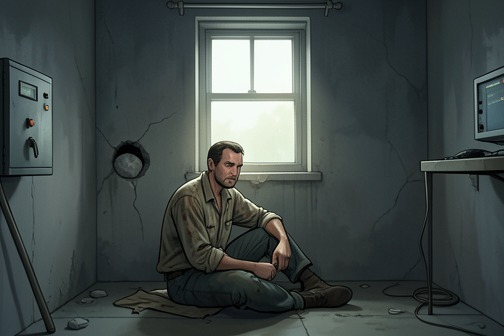
The [Attica prison uprising](entity:event-recall-event-attica-prison-uprising-b0de904c9db2) became a turning point in public awareness of prison abuse: the inmates’ takeover made degrading practices inside prisons visible beyond prison walls, while the deaths of forty-two people at the end of the standoff underscored the human danger of inhumane confinement. In [Bryan Stevenson](entity:character-recall-character-bryan-stevenson-d0edcbca5e8f)’s account, its legacy is both a burst of scrutiny and a warning about how readily that scrutiny can fade.
## Conditions Behind the Uprising
In the [1970s](entity:time-recall-time-1970s-2f89f32df2c9), the [Attica Prison](entity:location-recall-location-7a7ab6b901c6) riots drew national attention to severe abuses in American prisons. The takeover allowed the country to learn about punishments that were otherwise hidden from public view. [Solitary confinement](entity:state-recall-state-solitary-confinement-b61d9c0842e6) could mean weeks or months isolated in a small space. In some facilities, a prisoner might be confined in a casket-sized hole or box, enduring extreme heat for days or weeks. Elsewhere, staff used electric cattle prods to punish rule violations, or fastened prisoners by their arms to hitching posts, forcing them to stand for hours in a painful position. These examples describe abuses across prisons, not practices attributed specifically to Attica.
The abuses extended beyond dramatic forms of punishment. Terrible food and living conditions were widespread, and the hitching-post practice remained in use until it was declared unconstitutional in 2002. The range of conditions matters to the uprising’s significance: the issue was not only exceptional acts of violence, but also a larger environment in which deprivation and degrading treatment could become routine.
## The Standoff and Its Human Cost
The inmates’ takeover at Attica compelled the country to confront what could happen inside prisons. The standoff ended with forty-two people dead. That toll made the consequences of abusive, inhumane conditions impossible to discuss as merely administrative failures: confinement and the way it was imposed carried risks of grave violence and death.
The account does not detail the standoff’s sequence or assign the deaths to particular participants. Its emphasis is instead on what the event exposed. Attica became a public opening onto prison practices that had remained largely out of sight, and the deaths gave that exposure a lasting weight.
## Reform and Retreat
The increased attention contributed to several Supreme Court rulings that established basic due-process protections for imprisoned people. Wary of the possibility of further violence, several states also introduced reforms intended to eliminate the most abusive practices. In this immediate aftermath, the uprising was followed by both legal recognition and institutional changes, though the account does not specify the individual rulings or reforms.
Those changes did not settle the problem. A decade later, the rapidly expanding prison population was accompanied by worsening conditions of confinement. Attica’s legacy is therefore not a simple story of exposure followed by lasting correction: the uprising drew public attention and helped produce reforms, but the pressures of prison growth eroded conditions again. Its place in the narrative is as a measure of how much could be revealed by a crisis—and how incomplete reform remained after the crisis passed.
Event 2
Ronda Morrison murder case
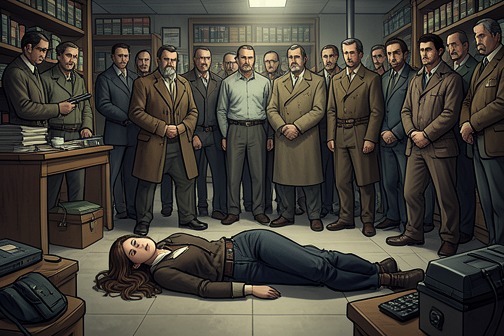
The [Ronda Morrison murder case](entity:event-recall-event-675e2e57b33f) began with the killing of [Ronda Morrison](entity:character-recall-character-ronda-morrison-fac3c28352ed), an eighteen-year-old college student, at Monroe Cleaners in [Monroeville, Alabama](entity:location-recall-location-monroeville-alabama-8de449c1ebd9), on November 1, 1986. The apparent robbery-murder shocked a town where murder was uncommon and no arrest followed the first investigative leads. The case eventually became the charge against [Walter McMillian](entity:character-recall-character-walter-mcmillian-4a441db351d3), turning a still-unsolved killing into a prosecution that rested on disputed testimony and unfolded amid deep racial divisions.
## The killing and its immediate shock
Late in the morning, Morrison was found on the floor of Monroe Cleaners, where she worked. She had been shot three times in the back. She was the only child of a respected local family, popular in the community and regarded by its white residents as a daughter. The book emphasizes how her standing made the crime feel not merely violent but almost inconceivable to the town: police initially believed no one from [Monroeville](entity:location-recall-location-monroeville-e12d1c3df40a), Black or white, could have done such a thing.
A robbery-murder in a busy downtown business was unprecedented in Monroeville. The killing therefore placed immediate pressure on investigators to find an explanation and an offender. That pressure came from the particular circumstances of the crime, but also from a community whose expectations of safety had been abruptly overturned.
## Leads, public pressure, and a stalled investigation
Two Latino men who had been seen looking for work in Monroeville on the day Morrison was found became the first suspects. Police tracked them to [Florida](entity:location-recall-location-7145a4a461e6) and determined that they could not have committed the murder. Investigators also considered Miles Jackson, the cleaners’ former owner, but found no evidence pointing to him as the killer. Rick Blair, the current owner, was questioned and considered an unlikely suspect. Within weeks, the police had exhausted their leads without making an arrest.
The lack of progress soon became a public issue. Residents whispered about police incompetence; after several months without an arrest, criticism of the police, sheriff, and local prosecutor grew louder in newspapers and on local radio. [Tom Tate](entity:character-recall-character-tom-tate-2a3c43e0952f) had been elected county sheriff days after the murder, and residents began questioning whether he was capable of solving it. The [Alabama Bureau of Investigation](entity:organization-recall-organization-alabama-bureau-o-8a21835975c6) was called in, but its investigation was no more successful than the local inquiry.
As anxiety mounted, local businesses offered rewards of thousands of dollars for information leading to an arrest. Gun sales, already robust, increased. These details show the investigation’s consequences extending beyond the courthouse and police station: an unsolved crime altered the town’s sense of security and intensified its demand for a suspect.
## Race, reputation, and the prosecution of Walter McMillian
The murder occurred against a history in which interracial intimacy was policed through law and custom. Walter McMillian’s relationship with [Karen Kelly](entity:character-recall-character-karen-kelly-8e8951c5d710) had become public after he testified in a dispute over custody of her children. In a county shaped by a long-standing fear of relationships between Black men and white women, the scandal changed how others saw him: the pulpwood worker known to white residents for his skill with a saw had come to represent something more troubling. The book connects that local response to the broader legacy of anti-miscegenation laws and the use of law enforcement to punish Black men involved with white women.
The killing of Russell Charley, a Black man known to McMillian’s family, remained part of the background to McMillian’s fear. Charley had been found hanging from a tree in Vredenburgh when McMillian was twelve; the lynching was believed to have been prompted by an interracial romance. When people across [Monroe County](entity:location-recall-location-monroe-county-0b25112fdf85) began discussing McMillian’s own relationship with Kelly, the old terror became immediate again. The murder case and the public scandal are presented in sequence, but the evidence does not establish that the relationship caused the killing or the investigation’s failures.
The prosecution that followed made the unsolved case decisive in McMillian’s life. After [Ralph Myers](entity:character-recall-character-ralph-myers-14fb695ef414) returned to Monroe County and reaffirmed his accusations, and [Bill Hooks](entity:character-recall-character-bill-hooks-d4cd888b4a4f) said he had seen McMillian’s truck at the crime scene, the district attorney believed the case could proceed. The trial was scheduled for February 1988. Black residents had told officials that they believed McMillian was innocent, while the case against him depended on testimony that the book describes as suspect. In a county that was 40 percent Black, the likelihood of an all-white jury also carried particular weight: despite legal challenges to racial exclusion, prosecutors’ peremptory strikes had long enabled Black prospective jurors to be removed, and the 1986 [Batson v. Kentucky decision](entity:event-recall-event-630fcd2ed663) had only recently made such strikes more directly challengeable.
## Monroeville’s celebrated story and the case’s significance
The case is set beside Monroeville’s public celebration of [Harper Lee](entity:character-recall-character-harper-lee-33e0cfd07a37) and To Kill a Mockingbird. The town marketed Lee’s novel through the film adaptation, a museum in the old courthouse, and the Mockingbird Players, whose stage production toured nationally and internationally. Yet Walter McMillian had never heard of Lee or the novel, despite having lived in Monroe County his whole life. That contrast matters: the community embraced a fictional account of a Black man falsely accused and a white lawyer who bravely defended him, while the novel’s actual ending left [Tom Robinson](entity:character-recall-character-tom-robinson-bb29064a1055) convicted and dead after an attempted escape.
The book uses that contrast to redirect attention from the comforting image of justice to its consequences in real life. The murder of Ronda Morrison remains a grave and initially unsolved crime in the evidence presented here; the account does not identify its perpetrator or establish a resolution. Instead, it traces how public urgency and racial hierarchy converged around McMillian, whose prosecution became a test of whether a community that celebrated a story about injustice could recognize injustice in its own courts.
Event 3
Lynching of Michael Donald

The [Lynching of Michael Donald](entity:event-recall-event-293e77f39c7b) was a racist murder in [Mobile](entity:location-recall-location-mobile-ea485bd0ac3d) that exposed how racial violence could be obscured by local law enforcement and challenged only after sustained pressure from the Black community and civil rights activists. It later stood as a vivid example of the racial terror that shaped the South after [Reconstruction](entity:time-recall-time-reconstruction-5b91ed72d2e4) and of the history through which the modern death penalty developed.
## The killing and its immediate context
The attack followed a mistrial in the prosecution of a Black man accused of shooting a white police officer. Many white people were shocked by the verdict and blamed the mistrial on the Black people who had been allowed to serve on the jury. After a cross was burned on the courthouse lawn, [Ku Klux Klan](entity:organization-recall-organization-ku-klux-klan-459a96befb1c) members went looking for someone to victimize. They found [Michael Donald](entity:character-recall-character-michael-donald-67b0abc72e46), a young African American man walking home from a store in Mobile, about sixty miles south. The group severely beat him and hanged him from a nearby tree; his lifeless body was discovered several hours later.
## Official Neglect and Public Pressure
Local police disregarded the apparent evidence that Michael Donald had been killed in a hate crime. Instead, they suggested that he might have been involved in drug dealing, a theory his mother adamantly rejected. The contrast between the attackers’ racial motive and the authorities’ speculation redirected attention from the violence itself and left the case without meaningful local investigation.
The failure to pursue the killing prompted the Black community and civil rights activists to press the [United States Department of Justice](entity:organization-recall-organization-united-states-de-a9a6b733a21b) to intervene. Two years later, three white men were arrested, and details of the lynching finally became public. The account thus turns on a reversal: a murder that local authorities had treated as something other than racial terror became legible through pressure from people the local response had failed to protect.
## The Lynching’s Continuing Force
The killing did not remain confined to the night Michael Donald was attacked. Sheriff [Tom Tate](entity:character-recall-character-tom-tate-2a3c43e0952f) later invoked the lynching to threaten [Walter McMillian](entity:character-recall-character-walter-mcmillian-4a441db351d3), warning him that he could be hanged as Donald had been. The threat drew its force from a known act of racial terror: Donald’s murder had become a way to make the danger to Black men unmistakable, particularly when they were suspected of relationships with white women.
That association belonged to a longer history in which racial hierarchy was enforced through both law and violence. After Reconstruction, anti-miscegenation statutes prohibited interracial intimacy, while Southern law-enforcement officials treated punishing Black men who had been intimate with white women as part of their duty. Tate’s reference to Donald made the lynching an instrument of that enforcement, carrying its terror into the policing of McMillian as well as into the earlier attack.
The book places such violence within a history that extends beyond individual perpetrators. It describes racial terror after Reconstruction as a formative institution in American life and argues that lynching helped create the modern death penalty: speedy executions redirected some of lynching’s violent force while assuring white Southerners that Black men would still face the ultimate punishment. Donald’s murder thus appears not as an isolated horror but as part of a continuum in which racial violence could be carried out by a mob, minimized by local authorities, and echoed by the threat of state-sanctioned punishment.
## Racial Power in the Courtroom
The book places the lynching’s continuing threat beside the racial arrangements of the criminal courts in which Walter McMillian was prosecuted. In 1987, all forty of [Alabama](entity:location-recall-location-alabama-2bbbae281095)’s elected district attorneys were white, including in a state with sixteen majority-Black counties. In jury selection, discretionary peremptory strikes remained a means of excluding Black prospective jurors: although the Supreme Court had ruled against racially discriminatory strikes, its original standard had proved so difficult to meet that the practice persisted. The 1986 decision in [Batson v. Kentucky](entity:rule-recall-rule-batson-v-kentucky-7e23995c158f) offered defendants a more direct way to challenge such strikes, but also prompted prosecutors to find more creative ways to exclude Black jurors.
The courtroom itself could make that unequal power visible. During McMillian’s trial, a metal detector and a police-held German shepherd stood inside the entrance, while benches occupied the previous day by his supporters were mostly filled with older white people supporting the Morrisons and the prosecution. These details do not make the courtroom another lynching; they show the different forms through which racial power operated around the case. The book’s account of Michael Donald’s murder therefore resonates beyond the mob attack: it belongs to a history in which racial terror and unequal legal institutions could reinforce the vulnerability of Black defendants.
Event 4
Pace v. Alabama

[Pace v. Alabama](entity:event-recall-event-911634183111) was an 1882 case in which [Alabama](entity:location-recall-location-alabama-2bbbae281095)’s highest court affirmed the convictions of [Tony Pace](entity:character-recall-character-tony-pace-692869a1c1e4) and [Mary Cox](entity:character-recall-character-mary-cox-cdd878c4aba7) for an interracial relationship, and the [Supreme Court of the United States](entity:organization-recall-organization-supreme-court-of-1add93799b76) unanimously upheld the state’s restrictions. The case turned private intimacy into a matter of criminal law: its judgments treated interracial relationships not as equal claims to personal freedom, but as threats to a racial hierarchy the law was built to preserve.
## Background: Intimacy and racial hierarchy
The case emerged from a long effort to control relationships across racial lines. After the Civil War, the dismantling of [Reconstruction](entity:time-recall-time-reconstruction-5b91ed72d2e4) and the return of white supremacy brought racially restrictive laws that sought to reestablish African Americans’ subordination. Anti-miscegenation statutes prohibited interracial sex and marriage; the word miscegenation itself entered public use in the 1860s, coined by slavery’s supporters to stoke fear of racial mixing if slavery ended. In many Southern communities, officials treated the investigation and punishment of Black men intimate with white women as part of law enforcement’s duty.
These laws were not simply a prohibition on marriage. They helped maintain a system of racial separation and hierarchy, and racial-integrity laws were also used to justify the forced sterilization of poor and minority women. The legal anxiety around interracial relationships thus belonged to a broader political project: the regulation of bodies and families in order to preserve racial subordination.
## The Alabama case and appeal
In the 1880s, Tony Pace and Mary Cox fell in love in Alabama. They were arrested, convicted of violating the state’s racial-integrity laws, and each sentenced to two years in prison. [John](entity:character-recall-character-john-6bc68dc682c3) Tompkins, one of a small minority of white professionals who considered those laws unconstitutional, agreed to represent them on appeal.
In 1882, the [Alabama Supreme Court](entity:organization-recall-organization-alabama-supreme-4e8a792b24b6) affirmed the convictions. Its reasoning cast interracial intimacy as a danger to society and government, arguing that relations between people of different races could lead to racial amalgamation and a degraded civilization. This was not a neutral application of a rule: the court’s language made the preservation of racial separation itself the justification for punishment. The state’s highest court thereby endorsed the premise that consensual intimacy across racial lines could be criminalized to defend a racial order.
## The Supreme Court ruling and its reach
The Supreme Court of the United States unanimously upheld Alabama’s restrictions and the prison terms imposed on Pace and Cox. Its use of separate-but-equal reasoning foreshadowed Plessy v. Ferguson, decided two decades later. The decision helped legitimize the restrictions beyond Alabama: other states passed racial-integrity laws barring African Americans, and sometimes Native Americans and Asian Americans, from marrying or having sex with white people. Such laws were aggressively enforced in the South but also existed in the Midwest and West. Idaho, for example, prohibited interracial marriage and sex between white and Black people in 1921, although 99.8 percent of its population was non-Black.
The decision’s influence endured for generations, but it was not the final word. In 1967, the Supreme Court of the United States struck down anti-miscegenation statutes in [Loving v. Virginia](entity:rule-recall-rule-loving-v-virginia-55b505a1ee1b). Even after that landmark ruling, Alabama’s constitution still prohibited interracial marriage in 1986, when [Walter McMillian](entity:character-recall-character-walter-mcmillian-4a441db351d3) met [Karen Kelly](entity:character-recall-character-karen-kelly-8e8951c5d710). The persistence of that clause showed how a constitutional ruling could end a legal regime nationally without instantly erasing its local political and social legacy.
## The case in the book’s broader history
The book places Pace v. Alabama within a continuing history in which formal legal rules and everyday institutions could reinforce racial hierarchy. In a later Alabama capital case, for instance, Black residents’ access to juries remained restricted through racially discriminatory peremptory strikes, despite earlier constitutional protections. [Batson v. Kentucky](entity:rule-recall-rule-batson-v-kentucky-7e23995c158f), decided in 1986, offered a more direct way to challenge such strikes, but the account makes clear that a new legal remedy did not itself end exclusion. These developments were distinct from Pace v. Alabama, yet together they illustrate the distance between declaring equality and changing how power operates in courtrooms.
The case also clarifies why the book treats racial control over intimacy as more than a historical curiosity. The law once punished Tony Pace and Mary Cox for crossing a racial boundary that the state claimed it had to preserve; decades later, Alabama’s constitution still carried that prohibition even after the national legal barrier had fallen. Pace v. Alabama stands as an example of how racial hierarchy was made enforceable through law—and how its legacy could outlast the ruling that gave it national authority.
Event 5
Loving v. Virginia decision
The [Loving v. Virginia decision](entity:event-recall-event-46e67c1086eb) was the 1967 [Supreme Court of the United States](entity:organization-recall-organization-supreme-court-of-1add93799b76) ruling that struck down [Anti-miscegenation laws](entity:rule-recall-rule-anti-miscegenation-laws-6b4daa0d6892). Its significance in the account lies both in the legal prohibition it ended and in the long afterlife of the racial hierarchy those laws had served: [Alabama](entity:location-recall-location-alabama-2bbbae281095)’s constitution continued to forbid interracial marriage when [Walter McMillian](entity:character-recall-character-walter-mcmillian-4a441db351d3) met [Karen Kelly](entity:character-recall-character-karen-kelly-8e8951c5d710) in 1986, although federal law made the ban unenforceable.
## Background: Law and Racial Hierarchy
Anti-miscegenation laws grew from efforts to preserve racial hierarchy after slavery. The fear of interracial sex and marriage helped sustain [Jim Crow laws](entity:rule-recall-rule-75e270362bd4) and remained a force in American racial politics. The term “miscegenation,” coined by supporters of slavery in the 1860s, was used to promote fear of race mixing if slavery ended. In many Southern communities, law enforcement treated investigating and punishing Black men who had been intimate with white women as part of its duty.
The Loving v. Virginia decision followed a long legal history of such restrictions. In an earlier case, the Supreme Court of the United States had unanimously upheld Alabama’s restrictions on interracial sex and marriage and affirmed the prison terms imposed on [Tony Pace](entity:character-recall-character-tony-pace-692869a1c1e4) and [Mary Cox](entity:character-recall-character-mary-cox-cdd878c4aba7). The Court used “separate but equal” language; after that decision, more states enacted racial-integrity laws prohibiting marriage or sex across racial lines.
## The 1967 Ruling
In 1967, the Supreme Court of the United States finally struck down Anti-miscegenation laws in [Loving v. Virginia](entity:rule-recall-rule-loving-v-virginia-55b505a1ee1b). The decision ended the legal basis for restrictions on interracial marriage, but it did not instantly remove every state-level prohibition from the books or undo the political and social commitments that had sustained them.
## Alabama’s Constitutional Ban After the Decision
Alabama’s constitution still prohibited interracial marriage in 1986, when McMillian met Kelly. Section 102 barred the legislature from authorizing or legalizing a marriage between a white person and a Black person or a descendant of a Black person. Although the restriction could not be enforced under federal law, its continued presence in the state constitution showed how far formal change could lag behind a Supreme Court ruling.
The state ban was not removed until a statewide ballot in 2000. A majority voted to eliminate it, but 41 percent voted to keep it. A 2011 poll of [Mississippi](entity:location-recall-location-mississippi-4cc81eb48f93) Republicans likewise found substantial support for a legal ban on interracial marriage: 46 percent favored one, 40 percent opposed one, and 14 percent were undecided. These figures distinguish the ruling’s legal effect from the slower contest over the attitudes and institutions shaped by racial separation.
## Significance in the Narrative
The decision supplies essential context for the danger attached to McMillian and Kelly’s relationship. McMillian did not know the legal history, but he understood the risks of interracial romance in Alabama. In [Monroe County](entity:location-recall-location-monroe-county-0b25112fdf85) alone, nearly a dozen people had been lynched since its incorporation; the account emphasizes that lynchings worked as terror, warning Black residents that an encounter, perceived slight, look, or comment could provoke lethal violence. Against that history, the persistence of Alabama’s constitutional ban after Loving v. Virginia was more than a legal contradiction: it showed how the ruling’s promise of equality coexisted with enduring racial intimidation.
Event 6
2000 Alabama interracial-marriage-ban referendum
The [2000 Alabama interracial-marriage-ban referendum](entity:event-recall-event-2000-93374037cea4) put a still-visible remnant of racial control before voters decades after the [United States Supreme Court](entity:organization-recall-organization-5e343c624293) had made the prohibition unenforceable. A majority chose to eliminate the ban, but the 41 percent who voted to keep it showed that the legal defeat of anti-miscegenation laws had not erased their political appeal.
## A prohibition that outlasted its enforceability
The referendum addressed a constitutional restriction with a long history. After slavery, rules governing interracial intimacy helped reassert racial hierarchy; anti-miscegenation statutes barred relationships such as the one between [Walter McMillian](entity:character-recall-character-walter-mcmillian-4a441db351d3) and [Karen Kelly](entity:character-recall-character-karen-kelly-8e8951c5d710). The term miscegenation itself was coined in the 1860s by supporters of slavery, who used it to stoke fears about interracial sex and marriage. In Southern communities, law enforcement officials often treated punishing Black men who had relationships with white women as part of their duty.
The United States Supreme Court struck down anti-miscegenation statutes in [Loving v. Virginia](entity:rule-recall-rule-loving-v-virginia-55b505a1ee1b) in 1967, but [Alabama](entity:location-recall-location-alabama-2bbbae281095)’s constitution continued to prohibit interracial marriage. In 1986, when Walter McMillian met Karen Kelly, the constitution still contained that ban. It could no longer be enforced under federal law, yet its continued presence in the state’s foundational text made the gap between constitutional language and governing federal law unusually plain.
## The question reaches the ballot
Reformers eventually secured enough votes to put the issue before Alabama voters in a statewide referendum. The ballot gave the state’s electorate a direct choice about whether the constitutional prohibition should remain. The evidence records no campaign speeches, individual organizers, or details of the vote beyond that statewide decision; its significance lies in bringing a restriction that federal law had already disabled into a public vote on its continued place in Alabama’s constitution.
## A majority for removal, a substantial minority for retention
A majority voted to eliminate the ban. The result marked a formal public rejection of the constitutional restriction, while the 41 percent who voted to keep it demonstrated that support for the prohibition remained substantial. The referendum therefore registered two outcomes at once: the ban lost its majority, but nearly two in five voters still favored retaining it.
The contrast is sharpened by a 2011 poll of [Mississippi](entity:location-recall-location-mississippi-4cc81eb48f93) Republicans, in which 46 percent supported a legal ban on interracial marriage, 40 percent opposed one, and 14 percent were undecided. That poll concerned a different state and a particular political group, not Alabama’s referendum electorate. It nevertheless places the Alabama vote within a wider regional history in which the legal end of a ban did not immediately settle public attitudes toward interracial marriage.
## Historical significance
The referendum’s importance is not simply that voters chose to remove an unenforceable rule. The ban had belonged to a legal order in which racial hierarchy reached into intimate relationships, and in which fear of interracial sex helped sustain segregation and racial politics. By putting the constitutional restriction to a vote, Alabama confronted that legacy in public, even as the result’s sizable minority for retention revealed how incompletely the underlying attitudes had receded.
Event 7
Strauder v. West Virginia ruling
The [Strauder v. West Virginia ruling](entity:event-recall-event-4f6242332f6a) held that excluding Black people from jury service was unconstitutional, but the formal prohibition did not ensure that Black people would serve on juries. The book presents the ruling as an early legal challenge to racial exclusion whose force was repeatedly blunted by jury-selection practices, leaving defendants such as [Walter McMillian](entity:character-recall-character-walter-mcmillian-4a441db351d3) vulnerable to all-white juries decades later.
## The ruling and its historical setting
The [United States Supreme Court](entity:organization-recall-organization-5e343c624293) made clear in the 1880s that excluding Black people from jury service violated the Constitution. The ruling addressed a central institution of criminal justice: who could participate in judging an accused person. Its significance becomes sharper against the racial order described in the book. After federal troops left [Alabama](entity:location-recall-location-alabama-2bbbae281095) in the 1870s, voting rights were taken from African Americans and racially restrictive laws helped restore white supremacy. Across the South, law and custom worked to maintain racial hierarchy in public life, including the courts.
The decision did not, by itself, undo the structures that kept juries white. In [Deep South](entity:location-recall-location-abda76fc51a2) states, jury lists were drawn from voting rolls, which excluded African Americans. After voting rights expanded, court clerks and judges still used other means to preserve mostly white jury rolls. Local jury commissions could invoke vague qualifications—such as being “intelligent and upright”—to exclude Black people and women. The ruling’s promise therefore existed alongside administrative practices capable of reproducing the same exclusion by other routes.
## The gap between legal prohibition and jury service
Later legal developments addressed parts of this gap without guaranteeing a diverse jury. In the 1940s, the United States Supreme Court upheld a Texas statute that restricted Black representation to exactly one juror per case. In the [1970s](entity:time-recall-time-1970s-2f89f32df2c9), the Court ruled that racial and gender underrepresentation in jury pools was unconstitutional. That change could bring Black people to court for possible selection, but the Constitution, as the book explains it, did not require that they actually be seated; it prohibited exclusion on the basis of race or gender.
Peremptory strikes remained a powerful means of shaping the final jury. The Court had held in the mid-[1960s](entity:time-recall-time-1960s-fa3d18a6c9cb) that using these discretionary strikes in a racially discriminatory way was unconstitutional, yet the standard for proving discrimination was so demanding that no challenge had succeeded in twenty years. Prosecutors continued striking all or nearly all Black potential jurors. In 1986, [Batson v. Kentucky](entity:rule-recall-rule-batson-v-kentucky-7e23995c158f) made it possible to challenge discriminatory peremptory strikes more directly. The ruling offered hope to Black defendants, while also prompting prosecutors to find more creative ways to exclude Black jurors.
## Continuing consequences in Alabama
The account places this legal history beside the circumstances facing Walter McMillian. [Monroe County](entity:location-recall-location-monroe-county-0b25112fdf85) was 40 percent Black, yet defendants in counties that were 40 or 50 percent Black frequently encountered all-white juries, especially in death-penalty cases. Walter heard fellow prisoners discuss race and the jury he might face, and he became concerned about what those discussions meant for his trial. The ruling against exclusion thus belonged to a history that shaped the practical stakes of his case without guaranteeing that the jury would reflect the county’s population.
The imbalance extended beyond jury selection. In 1987, all forty elected district attorneys in Alabama were white, despite the state having sixteen majority-Black counties. Legislative arrangements had maintained white majorities in judicial circuits that included majority-Black counties. Against that backdrop, the ruling stands not as a completed remedy but as a constitutional boundary repeatedly tested by the machinery of local courts: racial exclusion had been declared unlawful, while its effects persisted through the composition of jury pools, discretionary selection, and the institutions overseeing criminal trials.
Event 8
1963 Birmingham Children's Crusade
The [1963 Birmingham Children's Crusade](entity:event-recall-event-1963-22b98a4b3bca) is recalled through a single bodily trace: a dark bruise at the base of an unnamed man’s skull, which he said he received in Birmingham after the Crusade. Rather than present the event through a chronology of marches or arrests, the account makes its significance visible in the injury and in the speaker’s insistence that such marks were honors, not merely wounds.
## The Bruise and Its Account
The man draws attention to the mark while explaining the scars and injuries on his head. He identifies the dark circle at the base of his skull as a bruise he received in Birmingham after the Children’s Crusade. The account gives no further particulars about how or when he was injured, or about the circumstances of the Crusade itself; its focus is the mark as evidence carried on his body.
## From Injury to Honor
The bruise forms part of a sequence of marks the man describes as the visible record of his civil-rights work. After directing attention to them, he rejects the assumption that they are simply his scars, cuts, and bruises, and calls them “my medals of honor.” The change in naming turns bodily harm into testimony: the memory of the 1963 Birmingham Children's Crusade enters the narrative not as an abstract historical reference, but as an experience remembered and claimed by someone who bore its physical consequences.
Event 9
Batson v. Kentucky decision
The [Batson v. Kentucky decision](entity:event-recall-event-630fcd2ed663), issued by the [Supreme Court of the United States](entity:organization-recall-organization-supreme-court-of-1add93799b76) in 1986, opened a more direct route for challenging prosecutors’ racially discriminatory use of peremptory strikes. Its importance lay in confronting a persistent gap between the formal prohibition on excluding Black jurors and the all-white juries that defendants in many Southern counties continued to face. The ruling offered hope, but the account also stresses how readily entrenched practices could adapt to legal change.
## The history of exclusion
The decision addressed a long-running failure to translate constitutional rules into representative juries. In the 1880s, the Supreme Court of the United States had ruled in [Strauder v. West Virginia](entity:rule-recall-rule-strauder-v-west-virginia-e6ee3bc8f72b) that excluding Black people from jury service was unconstitutional. Yet in 1945 the Court upheld a Texas statute that limited Black jurors to one per case. In the [Deep South](entity:location-recall-location-abda76fc51a2), jury rolls were often drawn from voting rolls that had excluded African Americans; after the Voting Rights Act, court clerks and judges still used other means to keep those rolls predominantly white. Jury commissions could invoke standards such as being considered intelligent and upright to exclude Black people and women.
Later rulings addressed who appeared in jury pools without ensuring who actually served. In the [1970s](entity:time-recall-time-1970s-2f89f32df2c9), the Court ruled that underrepresentation of racial minorities and women in jury pools was unconstitutional. That change brought some Black people to courthouses for possible selection, but the Constitution did not require that they be seated; it prohibited exclusion on the basis of race or gender. The distinction left a significant opening between a more inclusive pool and the final twelve jurors.
## Peremptory strikes and the ruling
That opening mattered because prosecutors could use peremptory strikes to remove prospective jurors during selection. The Court had already held in the mid-[1960s](entity:time-recall-time-1960s-fa3d18a6c9cb) that peremptory strikes used in a racially discriminatory manner were unconstitutional. But the standard for proving racial bias was so demanding that, in the following twenty years, no challenge to the practice succeeded. Striking all or nearly all Black prospective jurors therefore continued with little practical change.
Against that history, [Batson v. Kentucky](entity:rule-recall-rule-batson-v-kentucky-7e23995c158f) gave defendants a more direct way to challenge prosecutors’ use of peremptory strikes on racial grounds. The ruling did not guarantee that Black jurors would serve, or that every challenge would succeed. Its immediate significance was to make discriminatory selection more open to legal contest—and, as the account observes, to force prosecutors to find more creative ways to exclude Black jurors.
## Significance in [Alabama](entity:location-recall-location-alabama-2bbbae281095)
The decision’s stakes were especially clear in Alabama, where all forty elected district attorneys were white in 1987, despite the state having sixteen majority-Black counties. Legislative arrangements had also preserved white majorities in judicial circuits that included majority-Black counties. These conditions formed the political and institutional backdrop against which a rule concerning jury selection would be applied.
For [Walter McMillian](entity:character-recall-character-walter-mcmillian-4a441db351d3), the ruling mattered because defendants in counties that were 40 or 50 percent Black still frequently faced all-white juries, particularly in death-penalty cases. As he awaited trial, other men on death row described prosecutors striking Black prospective jurors from their cases. [Ted Pearson](entity:character-recall-character-ted-pearson-2766d476030d), prosecuting McMillian, had reason to be concerned that experienced civil-rights lawyers [J. L. Chestnut](entity:character-recall-character-j-l-chestnut-e724de566c59) and [Bruce Boynton](entity:character-recall-character-bruce-boynton-e4b6eececb14) would raise objections under the new decision, though he was not especially worried that Judge [Robert E. Lee Key](entity:character-recall-character-robert-e-lee-key-c27def44620f) would take them seriously. The account thus presents Batson v. Kentucky as both a legal opening and a test of whether a formal safeguard could unsettle local practices that had long kept Black people from serving on juries.
Event 10
John Evans's electrocution
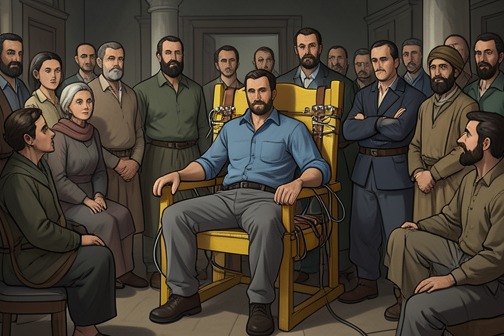
[John Evans's electrocution](entity:event-recall-event-211eadbd9515) at [Holman Prison](entity:location-recall-location-holman-prison-510640bc08d9) lasted fourteen minutes, through three jolts of electricity and repeated examinations that found him still alive. The execution exposed the physical violence behind the state's formal procedure of death and became the story [Walter McMillian](entity:character-recall-character-walter-mcmillian-4a441db351d3) heard again and again when he arrived on [Alabama](entity:location-recall-location-alabama-2bbbae281095)'s death row.
## Setting and Witnesses
Holman's electric chair, the instrument used in the execution, was a large wooden chair built in the 1930s. Inmates had painted it yellow before attaching its leather straps and electrodes; prisoners called it [Yellow Mama](entity:expression-recall-expression-yellow-mama-4c5168902f91). Executions at Holman had resumed only a few years before Evans's death. [John Evans](entity:character-recall-character-john-evans-5a57f211331d) and Arthur Jones had both recently been electrocuted, making the execution chamber a present, rather than distant, reality for condemned prisoners.
Attorney Russ Canan, who worked with the [Southern Prisoners Defense Committee](entity:organization-recall-organization-southern-prisone-cf0aa0c594c2) in [Atlanta](entity:location-recall-location-atlanta-bb210fd7f448), had volunteered to represent Evans. Evans had also recorded a film intended as an after-school special: in it, he told schoolchildren about his life and urged them to avoid the mistakes he had made. After the courts refused, through multiple appeals, to block the execution, Canan went to Holman at Evans's request to witness it. His presence would make him not only an observer but the author of an affidavit describing what the state's procedure actually did to a human body.
## The Execution
At 8:30 p.m., a current of 1,900 volts passed through Evans for thirty seconds. Sparks and flames erupted from the electrode strapped to his left leg. His body slammed against the restraints, and one fist clenched permanently. The electrode apparently burst free from its strap. Smoke and sparks poured from beneath the hood covering his face, while the witness room filled with the overpowering smell of burning flesh and clothing. Two doctors examined Evans and declared that he was not dead.
The electrode was fastened again. After a second thirty-second jolt, smoke rose once more from Evans's leg and head. The doctors checked him again and reported that his heart was still beating: he was alive. The repetition made the failure unmistakable. This was not a single malfunction concealed by an orderly process, but an execution continuing after medical examination had confirmed that its intended outcome had not occurred.
Canan asked the prison commissioner, who was speaking to Governor George Wallace on an open telephone line, to grant clemency on the grounds that Evans was being subjected to cruel and unusual punishment. The request was denied. At 8:40 p.m., a third thirty-second charge passed through Evans's body. At 8:44, doctors pronounced him dead. From the first jolt to that declaration, fourteen minutes had elapsed.
## Record, Protest, and Aftermath
Canan later filed an affidavit describing the sequence in detail. The account preserves the elements a summary of an execution might smooth away: the electrode coming loose, the doctors finding a pulse, the request for clemency, and the state's refusal to stop. The official purpose was to carry out a death sentence; the witnessed process instead made visible a body that did not die when the state tried to kill it. The affidavit therefore serves as both a record of what happened and a challenge to the abstraction of execution as a controlled legal act.
The episode also belongs to a larger history of punishment and racial terror. In the book's account, lynching helped create the modern death penalty: speedy executions partly redirected the violence of lynching while assuring white Southerners that Black men would still pay the ultimate price. That historical interpretation does not establish the circumstances of Evans's individual case; it places the execution within a system whose racial history cannot be separated from its claims of lawful punishment. The wider context included a death row where most of Alabama's condemned prisoners since capital punishment returned in 1975 were Black, though nearly 40 percent were white, and all were poor. In the South, racial exclusion from juries also persisted despite repeated legal prohibitions, with discretionary strikes continuing to remove Black prospective jurors. These conditions give the execution's state authority a broader social setting without making the details of Evans's electrocution stand in for every case.
## What Walter Heard on Death Row
Walter McMillian arrived at Holman about ten years after the modern death penalty had been reinstated. He knew nothing of Evans's electrocution before entering the prison. But another execution was approaching, and the condemned men spoke constantly about the electric chair. For McMillian's first three weeks on Alabama's death row, Evans's execution was almost all he heard about.
That repetition linked a particular past event to the fear of what might come next. McMillian had believed that officials would confirm his alibi and release him within days; instead, the weeks passed and despair deepened. Against that expectation of release, the account of Evans's death made the threat of execution concrete—not merely a sentence on paper, but a procedure that could continue through multiple shocks, even after doctors found a living man. The event thus entered McMillian's experience of death row before he knew its history, giving the prison's central instrument a name, a record, and a terrifying human consequence.
Event 11
Walter McMillian wrongful-conviction case
[Walter McMillian wrongful-conviction case](entity:event-recall-event-fcd52f25b52e) was a capital prosecution in which a weak murder investigation hardened into a conviction despite a substantial alibi, a recanted accusation, and contradictions in the State’s evidence. The case against [Walter McMillian](entity:character-recall-character-walter-mcmillian-4a441db351d3) did not simply overlook evidence pointing away from him: investigators used a separate charge to stigmatize him and advance their murder investigation, while the trial’s venue and jury selection narrowed the chance that his defense would receive a fair hearing.
## Background: Suspicion Before Evidence
The investigation into [Ronda Morrison](entity:character-recall-character-ronda-morrison-fac3c28352ed)’s murder had produced months of frustration and public criticism. Sheriff Tate, [Alabama Bureau of Investigation](entity:organization-recall-organization-alabama-bureau-o-8a21835975c6) lead investigator Simon Benson, and district attorney’s investigator Larry Ikner had done little investigation of McMillian when they decided to arrest him, relying primarily on [Ralph Myers](entity:character-recall-character-ralph-myers-14fb695ef414)’s allegation. They planned to use a sodomy charge as a pretext while continuing to build the murder case. Myers initially said he feared McMillian; after an officer suggested that McMillian might have sexually assaulted him, Myers recognized the accusation’s usefulness and agreed that it had happened. Officials intended to charge McMillian under a law that prohibited nonprocreative sex.
That tactic drew power from a much older racial order. Fears of interracial sex and marriage had helped sustain white supremacy after [Reconstruction](entity:time-recall-time-reconstruction-5b91ed72d2e4) and were reinforced by anti-miscegenation statutes and other racial-integrity laws. In many Southern communities, law enforcement treated the policing of relationships between Black men and white women as part of its duty. McMillian’s affair with [Karen Kelly](entity:character-recall-character-karen-kelly-8e8951c5d710) therefore made him vulnerable not only to gossip but to a racialized suspicion that could be used to make him appear dangerous. His standing as a hardworking pulpwood worker gave way to a more threatening public image once the affair became known.
## Arrest and the Construction of a Case
On June 7, 1987, Sheriff Tate led more than a dozen officers to a back-country road McMillian used on his way home from work. They stopped his truck, drew their weapons, forced him out, and surrounded him. When McMillian asked what he had done, Tate told him he was being arrested for sodomy. McMillian did not understand the term; when Tate explained it in crude terms, McMillian laughed in disbelief. Tate responded with racial slurs and threats, including threats of lynching. The arrest thus announced a charge designed to shame and inflame even as the officers were seeking leverage for the murder investigation.
Officials also used the arrest to put McMillian’s truck in front of [Bill Hooks](entity:character-recall-character-bill-hooks-d4cd888b4a4f), a young Black man held in the county jail on burglary charges. Hooks was promised release and reward money if he could connect the vehicle to Morrison’s murder. He told investigators that he had seen a truck tear away from Jackson Cleaners near the time of the crime, with two men inside, and then identified McMillian’s truck at the jail. His identification supplied the additional testimony officials needed to charge McMillian with capital murder. The truck’s later description would become a major point of contradiction: Hooks called it a low-rider, but McMillian said it had not been modified that way until months after the murder.
The indictment brought relief to a community upset that no one had been charged. Officers who had faced criticism were cheered, and many residents hoped life in [Monroeville](entity:location-recall-location-monroeville-e12d1c3df40a) could return to normal. Yet people who knew McMillian found the accusation implausible: he had no history of crime or violence, and robbery did not fit a man known for hard work. Black residents told Sheriff Tate that he had arrested the wrong person. Tate had not investigated McMillian’s background or whereabouts on the day of the murder; suspicion surrounding the affair and rumors that McMillian’s independence meant he was dealing drugs appeared to suffice. The sheriff, prosecutor, and investigator nevertheless agreed to continue with the accusation.
## The Alibi and Pretrial Death-Row Confinement
On the morning Morrison was killed, McMillian was at home, about eleven miles from Jackson Cleaners. He had no tree-cutting job that day and was replacing the transmission in his truck with help from his mechanic friend Jimmy Hunter. By 9:30, they had dismantled the truck and removed the transmission. At about 11, relatives began frying fish and other food to sell from the front yard. Church members arrived through the morning; at least a dozen were there with McMillian and his family. The murder was reported to have occurred around 10:15, while the truck was apart and people were gathered at the house.
The alibi was not confined to the family’s account. People stopped at the house to buy sandwiches, and a police officer’s log recorded that he had bought food there while McMillian and a crowd of church members were present. In the early afternoon, Ernest Welch, known locally as the furniture man, came to collect money from McMillian’s mother and told those gathered that his niece had been murdered at Jackson Cleaners. Family members, church members, pastors, and other residents repeatedly urged Tate to release McMillian. The authorities refused, unwilling to acknowledge another failure after the long delay in making an arrest.
Myers, meanwhile, began to doubt his own allegation. He faced indictment in the murder and had been promised that he would avoid the death penalty and receive favorable treatment in exchange for testifying. But he realized that confessing to a high-profile murder he had not committed could expose him to grave danger. A few days before the capital charges against McMillian became public, Myers told investigators that his accusations were untrue. Rather than accept the recantation, they pressed him for further incriminating details. Myers said he could not supply details for a story that had not happened. Investigators continued to pressure him, and McMillian and Myers were placed on death row before either had been tried.
The pretrial confinement was an extraordinary punishment for men who had not been convicted. Rather than remain in a local jail, they were transferred to [Holman Correctional Facility](entity:location-recall-location-holman-correctional-f4bcf5ffc44d) in Atmore on August 1, 1987, less than a month before another scheduled execution. Death-row prisoners were held alone in small cells for twenty-three hours a day, with limited exercise and visits and close proximity to the electric chair. McMillian entered a community of roughly a hundred condemned men; most had been sentenced since capital punishment returned in [Alabama](entity:location-recall-location-alabama-2bbbae281095) in 1975, most were Black, and nearly 40 percent were white. All were poor. The cells were windowless, about five by eight feet, and August temperatures could exceed 100 degrees for days or weeks. McMillian and Myers were subjected to this restrictive confinement before the State had proved its case.
## Venue, Race, and Jury Selection
After being removed from death row and returned to [Monroe County](entity:location-recall-location-monroe-county-0b25112fdf85), Myers reaffirmed his accusation. With Myers as the principal witness and Hooks prepared to identify the truck, the prosecution set the case for trial in February 1988. District Attorney [Ted Pearson](entity:character-recall-character-ted-pearson-2766d476030d), who had served for nearly twenty years, wanted to leave office with a victory after criticism over the unsolved murder. In 1987, every one of Alabama’s forty elected district attorneys was white, including in a state with sixteen majority-Black counties. Pearson knew Black residents doubted the accusation, but remained confident he could obtain a guilty verdict.
The expected composition of the jury mattered in a county that was about 40 percent Black. The Supreme Court’s [Batson v. Kentucky decision](entity:event-recall-event-630fcd2ed663) had recently made it more possible to challenge prosecutors’ racially discriminatory use of peremptory strikes, though the history of jury selection offered little assurance that Black residents would serve. Earlier legal safeguards had repeatedly failed to prevent all-white juries: prosecutors and jury officials had used discretionary strikes and other devices to exclude Black prospective jurors. Death-row prisoners told McMillian how this worked in practice, including cases in which prosecutors struck every qualified Black person or segregated prospective jurors into a list labeled Black and excluded them all. McMillian listened as he learned about the jury he might face, but left the lawyering to his lawyers.
At a pretrial hearing, his lawyers, civil-rights attorneys [J. L. Chestnut](entity:character-recall-character-j-l-chestnut-e724de566c59) and [Bruce Boynton](entity:character-recall-character-bruce-boynton-e4b6eececb14), sought a change of venue because of intense publicity. Pearson unexpectedly agreed that the trial should move. The judge, [Robert E. Lee Key](entity:character-recall-character-robert-e-lee-key-c27def44620f), granted the motion, then selected [Baldwin County](entity:location-recall-location-baldwin-county-2e9c7413fc7e), even though neighboring counties had substantially larger Black populations. When Chestnut and Boynton objected and tried to withdraw their request, the judge said he could not authorize a trial in a community where so many people had formed opinions about the accused. The case was sent to Bay Minette, the county seat. The move was disastrous for the defense: Baldwin County had only a 9 percent Black population and was especially conservative. McMillian nevertheless trusted that a jury would reject Myers’s implausible story once it heard the evidence and the alibi.
## Trial and Conviction
Jury selection lasted only a few hours. Pearson used peremptory strikes to remove all but one of the handful of Black prospective jurors summoned. The defense objected, but Judge Key dismissed the objections. The racial imbalance feared before trial thus became a concrete feature of the jury that judged the case.
Myers testified that McMillian had made him drive to Jackson Cleaners because McMillian’s arm hurt. In Myers’s account, he entered the cleaners and saw McMillian standing over Morrison’s body. He added a third participant, a mysterious white man with salt-and-pepper hair who supposedly directed the crime and ordered McMillian to kill Myers as well; McMillian allegedly could not do so because he had run out of bullets. McMillian found the story so incoherent that he could not understand why the courtroom was treating it seriously. Chestnut’s cross-examination exposed the witness’s lies and contradictions, but the prosecution called Myers back to repeat the accusations rather than abandon them.
Hooks testified that he had seen McMillian’s truck leave the cleaners and recognized it as a low-rider. McMillian immediately told his lawyers that his truck had not been converted into a low-rider until several months after Morrison’s murder. The defense did little with that information. Another white witness, [Joe Hightower](entity:character-recall-character-joe-hightower-aea7f6ac7fd9), whom McMillian had never heard of, also said he had seen the truck at the cleaners.
The defense had roughly a dozen potential witnesses to the fish fry and McMillian’s presence at home, but called only three. Ernest Welch then testified for the State that he had collected money at the McMillian home on a fish-fry day, but that it was not the day of the murder. He said he remembered the date because Morrison was his niece and he had been devastated by her death. The courtroom thus heard testimony from a relative of the victim that did not establish McMillian’s absence from home on the day in question, while much of the available alibi testimony went uncalled.
The jury deliberated for less than three hours before finding McMillian guilty. The verdict converted a story contradicted by the truck’s modification history and challenged by a substantial alibi into a capital-murder conviction. Its speed, after the exclusion of all but one Black prospective juror and the limited presentation of the defense witnesses, marked the decisive reversal of McMillian’s position: from a man the prosecution had arrested on a pretext while trying to build its case to a condemned prisoner facing execution.
## The Case’s Wider Meaning
The case shows how racial suspicion, institutional incentives, and procedural choices reinforced one another. Fear surrounding McMillian’s relationship with Karen Kelly made the sodomy charge useful as a means of public stigmatization; that arrest gave investigators access to his truck and an opportunity to cultivate Hooks’s identification. A recantation did not stop the prosecution, and the men’s pretrial placement on death row added pressure where the evidence itself was failing. Venue selection then placed the trial in a county whose racial composition made the defense’s jury concerns especially acute.
Later, when [Bryan Stevenson](entity:character-recall-character-bryan-stevenson-d0edcbca5e8f) challenged the conviction, [Tom Chapman](entity:character-recall-character-tom-chapman-f66a6e6180ed) defended the State’s position and dismissed the views of community members who believed McMillian innocent as uninformed. In another courtroom proceeding, the audience itself reflected the contest over whose presence counted: a metal detector and a German shepherd stood inside the entrance, while older white supporters of the Morrisons and the prosecution occupied seats that McMillian’s family and supporters had filled the day before. The case’s injustice therefore lay not in one defective witness alone, but in a sequence of decisions that elevated accusation over contradiction and official authority over the testimony of people who knew where McMillian had been.
Event 12
Execution of Michael Lindsey
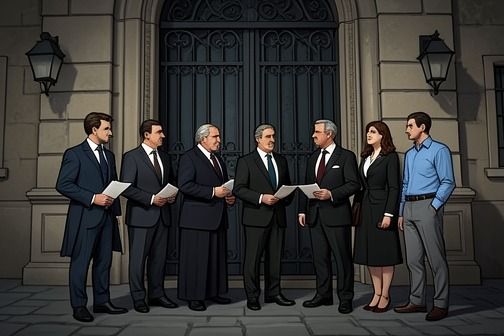
The [Execution of Michael Lindsey](entity:event-recall-event-3f0362b25a63) took place on May 26, 1989, after an [Alabama](entity:location-recall-location-alabama-2bbbae281095) judge overrode Lindsey’s jury-imposed sentence of life without parole and sentenced him to death. [Bryan Stevenson](entity:character-recall-character-bryan-stevenson-d0edcbca5e8f) and his colleagues sought clemency on the ground that the jury had rejected execution, but Governor Guy Hunt denied their request. Lindsey’s electrocution exposed the distance between a jury’s judgment and a death sentence imposed in its name.
## The Sentence the Jury Did Not Choose
Lindsey’s jury had sentenced him to life imprisonment without parole. The death sentence came instead from the trial judge, who exercised the power of judicial override to replace the jury’s verdict with death. Stevenson’s team built its effort to save Lindsey around that reversal: the people empowered to judge him had decided against execution, yet the state was preparing to execute him.
At the time, judge override was an unusual feature of capital sentencing. Almost every state left the decision between death and life imprisonment without parole to the jury, whose decision was final. Only Alabama and [Florida](entity:location-recall-location-7145a4a461e6) permitted a judge to override a jury’s capital-sentencing verdict. Florida later imposed restrictions that sharply curtailed the practice; Alabama retained it. Although Alabama judges could reduce a death verdict to life, they used override overwhelmingly in the opposite direction: since 1976, they had overridden jury verdicts in capital cases 111 times, and in 91 percent of those cases had converted a jury’s life sentence into death.
## The Clemency Appeal
With Lindsey’s execution date approaching, Stevenson and his colleagues wrote to Governor Hunt, asking him to halt the execution because the jury had decided against putting Lindsey to death. Hunt quickly refused. He said he would not go against the community’s wishes as expressed by the jury, even though the jury had imposed a sentence of life without parole rather than death. The appeal thus turned on a stark contradiction: the governor invoked the jury’s authority while allowing a sentence the jury had not selected to stand.
The team had no constitutional ground on which to block the execution. The [Supreme Court of the United States](entity:organization-recall-organization-supreme-court-of-1add93799b76) had upheld judicial override in an earlier Florida case, leaving Stevenson and his colleagues without a basis to stop Alabama from carrying out Lindsey’s sentence. The clemency request failed, and the legal avenue they had pursued closed with it.
## Execution and Institutional Consequences
Lindsey was electrocuted on May 26, 1989. His execution followed not a jury’s decision to impose death, but a judicial substitution that transformed the jury’s life sentence into a death sentence. The event makes the mechanics of override visible in their most consequential form: the jury’s judgment remained part of the official record, but it did not determine whether Lindsey lived.
The book places this power within Alabama’s system of competitive partisan judicial elections. Campaigns focused heavily on crime and punishment, and judges could face attack advertisements emphasizing cases in which they had not imposed the harshest penalty. In that political climate, an override could serve as a potent signal of toughness; overrides tended to increase in election years. Lindsey’s execution therefore illustrates not only the gap between jury and judge, but the pressures surrounding the use of a power that could turn a sentence of life into death.
Event 13
Horace Dunkins's execution
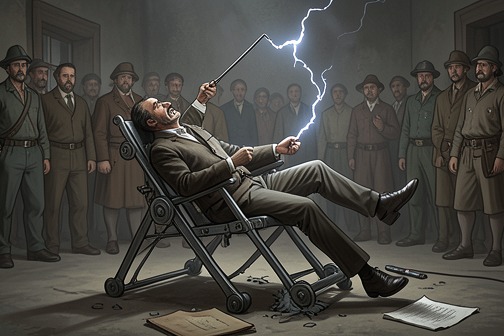
[Horace Dunkins's execution](entity:event-recall-event-8b51d55b4782) was a botched electrocution that left him alive after the electric chair was first activated, then killed him on a second attempt. The execution made national news, but it did not end with the state's second use of the chair: officials also performed an autopsy over his family's repeated objections, and a subsequent civil suit secured no relief. The episode joins disability, the limits of last-minute legal intervention, and the state's control over a condemned person's body in one stark sequence.
## Background and the Rush to Intervene
Dunkins was scheduled for execution soon after the execution of [Michael Lindsey](entity:character-recall-character-michael-lindsey-47b5be078097). He had intellectual disabilities, and the trial judge had found him to have “mental retardation” on the basis of school records and earlier testing. Yet the [Supreme Court of the United States](entity:organization-recall-organization-supreme-court-of-1add93799b76) had upheld the execution of people with intellectual disabilities just months before Dunkins's scheduled execution. The constitutional prohibition recognized thirteen years later in [Atkins v. Virginia](entity:rule-recall-rule-atkins-v-virginia-ac318ecd4cb4) came too late for him.
In the days before the execution, Dunkins's family called repeatedly, trying to learn what could still be done. The available options were few, and once it became clear that the execution could not be stopped, the family focused on what would happen to his body afterward. For religious reasons, they were especially concerned that the state not perform an autopsy. Their attention had shifted from preventing his death to protecting his body from further state intervention.
## The Botched Electrocution
On the scheduled date, correctional officials connected the electric-chair electrodes incorrectly. When they activated the chair, it delivered only a partial electrical charge. After several agonizing minutes, officials switched it off. Dunkins was still alive: he was unconscious but breathing. The first attempt had neither completed the execution nor ended the ordeal; it left officials to decide what to do while his family’s fears about the state's treatment of his body remained unresolved.
Officials waited several more minutes “for the body to cool” before realizing that the electrodes had not been properly connected. They altered the connections and activated the chair again. The second electrocution killed Dunkins. The account emphasizes the sequence—the failed first charge, the wait, the correction, and the second activation—rather than treating the execution as a single, instantaneous act. The state then performed an autopsy despite the family’s repeated requests that it not do so.
## Family Objections and the Civil Suit
After the execution, Dunkins's distraught father called [Bryan Stevenson](entity:character-recall-character-bryan-stevenson-d0edcbca5e8f). He said, “They could take his life, even though he didn’t get a fair trial and he didn’t deserve that, but they had no right to mess with his body and soul, too. We want to sue them.” The objection joined two grievances: the father's belief that his son had not received a fair trial and his protest against the state's handling of his body after death.
Stevenson and his colleagues provided some assistance to a volunteer lawyer, and a suit was filed. There were several depositions, but the case produced no judgment granting relief. The litigation therefore recorded the family's challenge without changing what had happened or obtaining a remedy for them.
## Consequences and Significance
The suit did not slow the [State of Alabama](entity:location-recall-location-36ff09a07022), which proceeded aggressively with further execution dates. In the narrative, Dunkins's death is not only an individual tragedy but also a test of what legal aid could accomplish when the execution was imminent, the law still permitted the punishment of people with intellectual disabilities, and post-execution objections failed to secure relief. The later rule in Atkins v. Virginia underscores the timing: the constitutional change arrived years after a person whose disability had been documented was put to death.
The family's concern about the autopsy gives the aftermath a distinct second struggle. The state had first exercised control over whether Dunkins would live; after killing him, it overrode his family's express religious objections about his body. Their lawsuit could not undo either decision. The event thus ends not with a legal victory or an interruption of executions, but with the family's unsuccessful demand that the state answer for what it had done.
Event 14
Atkins v. Virginia decision
The [Atkins v. Virginia decision](entity:event-recall-event-5a4bcedf85c6) made executing people with intellectual disabilities unconstitutional, reversing a legal position that had left [Horace Dunkins](entity:character-recall-character-horace-dunkins-906251dbf249) and others exposed to execution. In [Bryan Stevenson](entity:character-recall-character-bryan-stevenson-d0edcbca5e8f)’s account, the change came thirteen years after the Court had upheld the practice—and too late for Dunkins, whose botched execution had already taken place.
## Background and Timing
Only a few months before Dunkins’s scheduled execution, the [Supreme Court of the United States](entity:organization-recall-organization-supreme-court-of-1add93799b76) upheld the execution of people with intellectual disabilities. Dunkins had intellectual disabilities; the trial judge had reached that finding from his school records and earlier testing. With his execution approaching, his family called repeatedly to ask what could be done, but few options remained.
## The Ruling
Thirteen years later, the Supreme Court of the United States recognized that executing people with intellectual disabilities constitutes cruel and unusual punishment and prohibited the practice as unconstitutional. The decision overturned the rule that had governed when Dunkins faced execution. The account identifies the constitutional change and its practical consequence, without describing the Court’s reasoning in greater detail.
## Consequences and Significance
For Dunkins, the ruling arrived too late. Officials had already electrocuted him in a botched procedure: the electric chair initially delivered only a partial charge, and after several agonizing minutes officials stopped it, waited, corrected the electrode connections, and executed him again. The later constitutional prohibition marks a sharp contrast between a recognized limit on state punishment and a protection that did not exist in time to save him. The case thus appears in the narrative not as an abstract legal development alone, but as a change measured against the fate of a disabled man whose execution the earlier rule had permitted.
Event 15
Herbert Richardson's electrocution
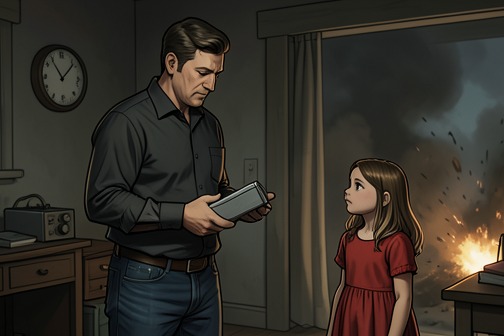
[Herbert Richardson's electrocution](entity:event-recall-event-505653416d3d) was the culmination of a capital case built on a fatal explosion, an exceptionally brief trial, and appeals that did not secure meaningful review of his background or the question of intent. After eleven years on death row, Richardson was executed despite a last effort to obtain a stay. The final hours bring the case's abstractions—legal rules, state authority, and punishment—into the room with a newly married couple, a grieving family, and a condemned man who had asked for a hymn to accompany his walk to the electric chair.
## The Crime and the Capital Case
Richardson had become convinced that his former girlfriend, who had moved away from him and refused contact, would return if he could make her feel threatened and then rescue her. He built a small bomb and placed it on her porch in [Dothan, Alabama](entity:location-recall-location-0f0cc3fae7f5). The plan was meant to frighten her, not to kill anyone. When the girlfriend's ten-year-old niece picked up the package, shaking its clock to see whether it ticked, the bomb exploded and killed her instantly. Her twelve-year-old friend, standing beside her, was traumatized. Richardson knew both children; they had come to his house for breakfast, and he had often welcomed neighborhood children, cooked for them, and paid them to run errands. Watching across the street, he ran to the house after the explosion and found grieving neighbors.
Police found pipes and other bomb-making materials in Richardson's car and yard. Although the victims were Black and poor, the prosecution sought the death penalty, and the book connects the case's treatment to Richardson's status as a Northerner and an outsider. In a county that was 28 percent Black, the prosecutor struck every Black prospective juror. Addressing the all-white jury, he invoked Richardson's association with Black Muslims from [New York City](entity:location-recall-location-new-york-city-65df0a129d4c) and argued that he deserved no mercy. The prosecution also advanced an unprecedented transferred-intent theory to make the killing death-eligible, although Richardson had not intended to kill the child or anyone else. His position was that the act amounted to reckless murder, punishable by life imprisonment rather than death.
The defense did not present evidence about Richardson's childhood, military service, war trauma, relationship with the victim, or fixation on his former girlfriend. His appointed lawyer spent almost no time preparing: [Alabama](entity:location-recall-location-alabama-2bbbae281095) law capped appointed counsel's compensation for out-of-court preparation at $1,000. The trial lasted just over a day, and the judge sentenced Richardson to death. The lawyer later told Richardson he saw no reason to appeal because the trial had been as fair as he could expect. Richardson insisted on appealing, but the lawyer filed no brief. A volunteer lawyer later challenged the intent questions, without success. Richardson remained on death row for eleven years.
## The Last Appeal
With the execution set for August 18, [Bryan Stevenson](entity:character-recall-character-bryan-stevenson-d0edcbca5e8f) pursued emergency relief. A trial judge denied a request for a stay, ruling the evidence untimely and therefore not something he could consider. The remaining days brought repeated filings. On the day before the execution, Stevenson petitioned the [United States Supreme Court](entity:organization-recall-organization-5e343c624293) for review and asked it to stay the execution, knowing that the Court granted review in only a small fraction of cases and that it would likely make the final decision on whether the execution could proceed.
The execution was scheduled for 12:01 a.m. on August 18. Stevenson had faxed the petition late on August 16 and spent the following morning in his [Montgomery](entity:location-recall-location-montgomery-a77051b70057) office watching the telephone. A clemency petition sent to the governor included family affidavits and color photographs and described Richardson's military service and post-traumatic stress disorder. The case for mercy also rested on facts the trial had left out: Richardson's mother died when he was three; he had experienced physical abuse and struggled with drugs and alcohol as a young teenager; and he returned from [Vietnam](entity:location-recall-location-11e77564f811) traumatized and disabled. Those circumstances had not been put before the jury that sentenced him.
Richardson had corresponded over the years with a woman from [Mobile](entity:location-recall-location-mobile-ea485bd0ac3d), and they decided to marry a week before the execution. As a military veteran, he was entitled to have an American flag presented to his survivors. He designated his new wife to receive it and repeatedly asked Stevenson to confirm how the flag would be delivered, even requesting written assurance. The concrete concern over that flag persisted as the execution drew near: Richardson had little to leave his wife, but he wanted the recognition earned through his service to reach her.
## The Denial and the Farewell
At a little before seven on the evening before the execution, the Court's clerk called to report that the stay motion and petition for review had been denied. The call ended with notice that copies of the order would be faxed. Stevenson was struck by the procedural detail: within hours Richardson would be dead, and there would be no further appeals or records to keep. He had promised to be with Richardson and drove to the prison in Atmore, roughly two hours away.
The prison allowed Richardson's family to visit until about 10 p.m., when guards would begin preparing him for execution. Stevenson met Richardson's bride and her family and spent the visit watching the clock. Richardson tried to keep the gathering light, telling the family how he had persuaded Stevenson to take his case and joking that Stevenson represented only people who were smart and charming. He also said, “He’s too young to have represented me at trial, but if he had been there I wouldn’t be on death row now.” The joke held together a painful judgment about the defense he had received and an effort to comfort those around him. Stevenson observed that Richardson seemed unusually energetic and gracious, even as his wife grew more tearful.
As the appointed hour approached, officials gestured for the visitation officer to end the meeting. Richardson's wife wrapped her arms around him and refused to let go; her sobbing deepened as her sister and other relatives began to cry. The officer returned and said it was time to leave. Richardson had asked that a recording of “[The Old Rugged Cross](entity:expression-recall-expression-the-old-rugged-cro-e3dcd7e9f7be)” be played as he walked to the electric chair, and the prison had agreed. Stevenson began humming the hymn as officers gathered outside the room. He then quietly told Richardson's wife that they had to let him go. Richardson saw the officers and slowly pulled away from her, asking Stevenson to take her out of the room.
## The Execution and Its Meaning
Less than thirty minutes before the execution, Stevenson was taken to the cell next to the execution chamber. Richardson had been shaved in preparation for the electric chair. The chair had not been modified after the disastrous execution of [John Evans](entity:character-recall-character-john-evans-5a57f211331d), and Stevenson was also thinking about the botched execution of [Horace Dunkins](entity:character-recall-character-horace-dunkins-906251dbf249) a month earlier. Richardson appeared shaken. He took Stevenson's hands and asked to pray. Afterward, he thanked Stevenson for standing with him, acknowledging that the moment was difficult for his lawyer too.
Richardson reflected that more people had asked what they could do to help him in the last fourteen hours of his life than had asked during the years when he was growing up. The remark turned the approaching execution toward the long period when help had been absent: his mother's death, abuse, early struggles with drugs and alcohol, and the trauma he brought home from Vietnam. As officers took him away, a tape recorder in the hallway played “The Old Rugged Cross.” The hymn Richardson had requested accompanied his removal from the room, not a reprieve from the sentence.
Stevenson describes the execution as surrounded by regret and shame. Even officials who had prepared themselves to carry it out appeared uncomfortable. His account contrasts their visible unease with the public abstractions used to defend capital punishment: the systematic killing of a person who posed no immediate threat looked different when its physical details could not be kept at a distance. On the journey home, Stevenson thought about Richardson, the families on both sides of the crime, and the people who had shaved and restrained him so that the state could kill him. The next day's press coverage included officials expressing happiness that an execution had taken place, but Stevenson contrasted such statements with the discomfort of those who had confronted the act itself. Richardson's electrocution thus closes not with a legal vindication or a family reunion, but with the hymn, the denied appeal, and the unresolved moral weight of a killing carried out in the name of justice.
Event 16
Ronda Morrison murder
The [Ronda Morrison murder](entity:event-recall-event-ronda-morrison-murder-dfcb9f12206c) was the killing of an eighteen-year-old college student at Monroe Cleaners in [Monroeville, Alabama](entity:location-recall-location-monroeville-alabama-8de449c1ebd9), on November 1, 1986. The crime shocked a community unaccustomed to murder and became the center of public pressure on local law enforcement. When investigators failed to find a suspect, that pressure helped redirect attention toward [Walter McMillian](entity:character-recall-character-walter-mcmillian-4a441db351d3), whose conviction rested on [Ralph Myers](entity:character-recall-character-ralph-myers-14fb695ef414)’s account despite the absence of physical evidence linking him to the crime.
## The killing and its immediate impact
In the late morning, [Ronda Morrison](entity:character-recall-character-ronda-morrison-fac3c28352ed) was found dead on the floor of Monroe Cleaners, where she worked. She had been shot three times in the back. The eighteen-year-old was the only child of a respected local family and was widely regarded as a popular, blameless young woman. Her death inside a busy downtown business was especially alarming: murder was uncommon in [Monroeville](entity:location-recall-location-monroeville-e12d1c3df40a), and an apparent robbery-murder in such a familiar place was without precedent for the community.
The response was shaped by whom Ronda represented to the town. The white community embraced her as a daughter, and her killing seemed to many residents impossible to imagine as the work of anyone local, Black or white. The case therefore became more than an investigation into a death. It became a public test of whether officials could explain a crime that had unsettled the town’s sense of safety and its image of itself.
## An investigation under public pressure
Two Latino men seen looking for work in Monroeville on the day of the murder became the first suspects. Police tracked them to [Florida](entity:location-recall-location-7145a4a461e6), then determined they could not have committed the crime. Miles Jackson, the cleaners’ former owner, was also suspected, but investigators found no evidence that he was the killer. The current owner, Rick Blair, was questioned and considered unlikely to be involved. Within weeks, the initial leads had run out.
As months passed without an arrest, private doubts became public criticism. Residents questioned the competence of the police, sheriff, and local prosecutor in newspapers and on local radio. [Tom Tate](entity:character-recall-character-tom-tate-2a3c43e0952f) had been elected county sheriff just days after the murder, and people began to wonder whether he could solve it. The [Alabama Bureau of Investigation](entity:organization-recall-organization-alabama-bureau-o-8a21835975c6) was brought in, but it made no more progress than local officials. Businesses offered rewards of thousands of dollars for information, while gun sales—already strong in the area—increased. Each failed lead deepened the pressure for an arrest without bringing the investigation closer to a reliably established killer.
## From a failed investigation to an accusation
The investigation’s course intersected with a separate local scandal. Walter McMillian had been trying to end his relationship with [Karen Kelly](entity:character-recall-character-karen-kelly-8e8951c5d710) after the custody proceedings involving her children and the public exposure of their relationship. Kelly began using drugs and became involved with Ralph Myers. The two were drawn into drug dealing and implicated in the murder of [Vickie Lynn Pittman](entity:character-recall-character-vickie-lynn-pittman-b058003a31bc) in neighboring [Escambia County](entity:location-recall-location-356e40284c7a). Myers’s first account of that crime and his allegations against the sheriff were shifting and increasingly difficult to believe; investigators suspected he might be trying to implicate other people to reduce his own responsibility.
Myers understood that the Morrison murder, unlike the Pittman case, continued to command the attention of law enforcement and the public. He then changed his account again, claiming involvement in the Pittman killing with Kelly and her Black boyfriend, McMillian, and also accusing McMillian of killing Ronda. That accusation redirected the investigation toward McMillian. In a monitored store encounter intended to show that Myers and McMillian were connected, Myers could not identify McMillian among several Black men without asking the store owner to point him out. He handed McMillian a note said to be from Kelly. McMillian appeared confused, threw it away, and returned to what he had been doing. The encounter offered no convincing sign that the two men knew one another.
## The prosecution and the evidence against it
At trial, the prosecution’s account depended on Myers. He testified that McMillian had asked him to drive McMillian’s truck, taken him to the cleaners, and entered the shop with a gun while money was put in a brown bag. Myers described a second, unidentified white man who supposedly directed events and said McMillian had no bullets with which to dispose of him. That alleged accomplice was never identified or arrested. The defense later emphasized that there was no physical evidence tying McMillian to the murder, no established motive, and no other witness to the crime: the case for his guilt rested on Myers’s testimony.
Other testimony and records undercut parts of the prosecution’s story. [Bill Hooks](entity:character-recall-character-bill-hooks-d4cd888b4a4f) and [Joe Hightower](entity:character-recall-character-joe-hightower-aea7f6ac7fd9) claimed they had seen McMillian’s modified low-rider truck leaving the cleaners around the time Ronda was killed. The mechanic who had worked on the truck testified that it was not a low-rider in November 1986 and that he modified it in May 1987, more than six months later. A coworker also said Hooks had worked beside him at the NAPA auto parts store that Saturday morning and had not left before the shop closed after lunch; the police and ambulances passed the store at about eleven.
[Woodrow Ikner](entity:character-recall-character-woodrow-ikner-895e32ae960b), the Monroeville officer who was first at the cleaners, further contradicted Myers’s description of the scene. Ikner said Morrison’s body was not where Myers claimed to have seen it near the front counter. His account placed the shooting after a struggle that began in the bathroom and ended at the rear of the shop, where the body was found. He also testified that trial prosecutor [Ted Pearson](entity:character-recall-character-ted-pearson-2766d476030d) had asked him to say the body was dragged from the front counter. Ikner refused because he believed that account would be false; he was later discharged from the police department.
## Public memory and the meaning of the case
The attention given to Ronda’s death was not shared equally across victims. Vickie Lynn Pittman came from a poor white family, several of whose members had been incarcerated, and her murder did not hold the community’s attention as Ronda’s did. That contrast formed part of the setting in which investigators faced pressure to solve the Morrison case and in which Myers’s accusation against McMillian drew such immediate interest.
The murder also unfolded amid a longer history of policing interracial intimacy in the South. McMillian’s relationship with Kelly had already become a public scandal, and the book describes how the policing of relationships between Black men and white women had served a racial hierarchy through generations of law and practice. The account does not establish that this history alone explains the investigation or the prosecution. It does show why McMillian’s relationship could make him especially vulnerable to suspicion in a county where the murder had provoked intense demands for an answer.
The evidence presented in the account exposes a sharp divide between the certainty of the accusation and the weakness of its support: Myers had not known McMillian before the investigation, could not initially pick him out, and supplied the prosecution’s central account without corroborating physical evidence. The available evidence does not identify the person who killed Ronda. Instead, the murder’s lasting significance in the narrative lies in how an unsolved crime, public fear, and a suspect witness converged to produce a capital case against a man whose innocence was later argued through contradictions in that case.
Event 17
Walter McMillian's trial and death sentence
[Walter McMillian's trial and death sentence](entity:event-recall-event-walter-mcmillian-2cb862988a3b) marked the conversion of a thin, disputed accusation into a capital-murder conviction, despite the absence of physical evidence linking him to the crime. The prosecution relied on [Ralph Myers](entity:character-recall-character-ralph-myers-14fb695ef414), while the jury recommended life imprisonment; [Judge R. E. L. Key](entity:character-recall-character-judge-r-e-l-key-0d68e999a4ce) replaced that recommendation with death. The case exposed how racialized assumptions, an unreliable central witness, and the machinery of capital sentencing could converge against a defendant who maintained his innocence.
## Background and stakes
The case was scheduled for trial in February 1988. [Ted Pearson](entity:character-recall-character-ted-pearson-2766d476030d), the longtime district attorney, wanted to leave office with a victory after his office had been criticized for failing to solve the murder of [Ronda Morrison](entity:character-recall-character-ronda-morrison-fac3c28352ed) quickly. He knew that many Black residents believed [Walter McMillian](entity:character-recall-character-walter-mcmillian-4a441db351d3) was innocent, but remained confident that the state could win a guilty verdict despite doubts about its witnesses.
The prosecution unfolded against a history in which racial hierarchy had been enforced through restrictions on intimacy as well as through voting and segregation laws. The relationship between Walter McMillian and [Karen Kelly](entity:character-recall-character-karen-kelly-8e8951c5d710) became public during a custody dispute: when subpoenaed to testify, he acknowledged being her friend, and questions about the relationship drew palpable anger. His reputation among white residents changed. The broader legacy of [Anti-miscegenation laws](entity:rule-recall-rule-anti-miscegenation-laws-6b4daa0d6892) and [Jim Crow laws](entity:rule-recall-rule-75e270362bd4) helps explain why a Black man’s intimacy with a white woman could carry a meaning beyond private conduct, although the evidence does not establish that the relationship itself was the prosecution’s motive.
Jury selection was another central concern. In 1987, all forty elected district attorneys in [Alabama](entity:location-recall-location-alabama-2bbbae281095) were white, while sixteen counties had Black majorities. Although earlier rulings had prohibited excluding jurors on the basis of race, prosecutors’ discretionary peremptory strikes had continued to keep Black people off juries. [Batson v. Kentucky](entity:rule-recall-rule-batson-v-kentucky-7e23995c158f), decided in 1986, gave defendants a more direct means to challenge discriminatory strikes, but did not end the practice; the account notes that prosecutors were forced to find more creative ways to exclude Black jurors. Walter, who heard advice and stories from other prisoners while awaiting trial on death row, worried about the kind of jury he would face.
## The prosecution’s account
Ralph Myers supplied the prosecution’s central account of the crime. He testified that on November 1, 1986, Walter saw him at a car wash and asked him to drive Walter’s truck because Walter’s arm hurt. Myers said he drove Walter to Jackson Cleaners, entered the business, and saw Walter holding a gun and putting money into a brown bag. He also described a white man in the cleaners, with black-gray hair, who appeared to speak with Walter and direct what happened.
In Myers’s account, Walter threatened him after he entered the cleaners. The unidentified white man supposedly instructed Walter to get rid of Myers, and Walter supposedly replied that he could not because he was out of bullets. The account presented a supposed third participant as the person in charge, yet that man was never identified or arrested. [Bryan Stevenson](entity:character-recall-character-bryan-stevenson-d0edcbca5e8f) later argued that the state had not searched for this alleged ringleader because it recognized that the person did not exist.
The defense maintained that Walter did not know Myers at the time of the crime and had consistently asserted his innocence. Myers had several prior felony convictions and, at the time of Walter’s trial, another capital-murder case pending against him in [Escambia County](entity:location-recall-location-356e40284c7a). [Bill Hooks](entity:character-recall-character-bill-hooks-d4cd888b4a4f) was prepared to testify that he had seen Walter’s truck at the crime scene, but the defense questioned the credibility and sufficiency of the prosecution’s evidence. The appellate brief later emphasized that no physical evidence connected Walter to the crime, that the state had no witness to the crime other than Myers, and that Myers’s account was the only trial evidence establishing Walter’s guilt of capital murder.
## Verdict and death sentence
The jury convicted Walter of capital murder but recommended life imprisonment rather than death. Judge R. E. L. Key overrode the jury’s sentencing recommendation and imposed a death sentence. The difference between the jury’s decision and the judge’s sentence was consequential: even a recommendation that Walter live did not prevent the court from condemning him to die.
On direct appeal, Bryan Stevenson challenged the insufficiency of the evidence and a range of alleged legal errors. He argued that Myers’s testimony lacked credible corroboration and that Alabama law did not permit the state to rely exclusively on an accomplice’s testimony. The appeal also raised prosecutorial misconduct, racially discriminatory jury selection, an improper change of venue, and Judge R. E. L. Key’s override of the jury’s life recommendation. Stevenson recognized that replacing death with life without parole would still have been a grave injustice to an innocent man, but challenged the override as part of the case against the sentence.
## Appeal and significance
The [Alabama Court of Criminal Appeals](entity:organization-recall-organization-6a9a8a457c58) issued a seventy-page opinion affirming both the conviction and the death sentence. It rejected every argument raised in the appeal. The decision closed off the direct appeal without addressing the defense’s central contention that the conviction rested on an uncorroborated account rather than physical evidence or independent eyewitness testimony.
The trial’s significance lies not only in the verdict but in the chain of authority that made it possible: a capital prosecution advanced by a district attorney seeking a career-ending victory, a case centered on Myers’s account, jury selection contested on racial grounds, and a death sentence imposed after jurors had recommended life. In the book’s wider account of American punishment, the modern death penalty is connected to the racial terror that followed the collapse of [Reconstruction](entity:time-recall-time-reconstruction-5b91ed72d2e4). Walter’s case gives that history an individual form: a man who maintained his innocence was sentenced to die, and the appellate court affirmed the result even after his lawyers laid out the evidentiary and procedural challenges.
Event 18
Denial of Walter McMillian's direct appeal
The denial of [Walter McMillian](entity:character-recall-character-walter-mcmillian-4a441db351d3)’s direct appeal left his conviction and death sentence intact despite a lengthy challenge to the reliability and fairness of his trial. The [Alabama Court of Criminal Appeals](entity:organization-recall-organization-6a9a8a457c58) rejected every argument raised for him, including the claim that the prosecution had not corroborated its principal witness, [Ralph Myers](entity:character-recall-character-ralph-myers-14fb695ef414). The ruling turned a case already marked by racial suspicion and disputed evidence into a formal appellate affirmance, not a reconsideration of the verdict’s factual foundation.
## The Appeal and Its Claims
[Bryan Stevenson](entity:character-recall-character-bryan-stevenson-d0edcbca5e8f) filed a lengthy brief challenging both the evidence and the conduct of the trial. He argued that Myers’s testimony lacked credible corroboration and that [Alabama](entity:location-recall-location-alabama-2bbbae281095) law did not permit the State to rely exclusively on an accomplice’s account. The appeal also alleged prosecutorial misconduct, racially discriminatory jury selection, and an improper change of venue.
Stevenson challenged [Judge R. E. L. Key](entity:character-recall-character-judge-r-e-l-key-0d68e999a4ce)’s decision to override the jury’s recommendation of life imprisonment and impose death. Even a reduction of the sentence to life without parole, Stevenson argued, would not have remedied the injustice of sentencing an innocent man to prison. The appeal therefore questioned not only whether the evidence supported the conviction, but also how the death sentence had been reached.
## A Racially Contested Trial
The jury-selection challenge arose against a history in which formal prohibitions on racial exclusion had not ensured representative juries. In Alabama, prosecutors had continued to use peremptory strikes to remove Black potential jurors; earlier legal standards had made discriminatory use of those strikes difficult to prove. The 1986 decision in [Batson v. Kentucky](entity:rule-recall-rule-batson-v-kentucky-7e23995c158f) offered defendants a more direct way to challenge such strikes, while also pressing prosecutors to find more creative means of excluding Black jurors. In a county that was 40 percent Black, McMillian’s concern about the jury he would face was not abstract.
That concern was part of a wider climate in which race shaped the interpretation of his life and relationships. The affair between McMillian and [Karen Kelly](entity:character-recall-character-karen-kelly-8e8951c5d710) existed against a long history of laws and policing directed at interracial intimacy, particularly relationships between Black men and white women. Black residents also told local officials they believed McMillian was innocent; their objections had not prevented the prosecution from proceeding. On appeal, the defense’s arguments about jury selection and prosecutorial conduct thus confronted an institutional record extending beyond a single courtroom.
## The Court’s Decision
The Alabama Court of Criminal Appeals issued a seventy-page opinion affirming the conviction and death sentence. The State’s appellate lawyer characterized the case as a routine capital murder prosecution and argued that death had been appropriately imposed. Stevenson, by contrast, believed the conviction rested on too little reliable evidence, especially given the absence of the corroboration required for accomplice testimony in a murder case.
The opinion rejected all of the defense’s claims. Its length did not bring relief: the court affirmed the outcome rather than ordering a new trial or setting aside the sentence. The appellate decision left the trial’s contested evidence and alleged procedural defects without a remedy at this stage.
## News on Death Row
Stevenson had entered the oral argument hopeful that the weakness of the evidence would make affirmance difficult. He had not encouraged McMillian’s family to travel to [Montgomery](entity:location-recall-location-montgomery-a77051b70057) for the hearing, believing the legal issues were technical and that the short argument would not make the journey worthwhile. Afterward, he regretted their absence, wishing the court had seen sympathetic faces that could signal how much the case mattered to the people who supported McMillian.
When Stevenson drove to the prison to deliver the decision, McMillian listened without speaking and looked despairing. He had been warned that overturning the conviction might take years, but the argument had revived his hope. He believed the court knew he had not committed the murder and could not admit it had made a mistake. The denial therefore did more than close one procedural step: it reinforced his sense that an institution could preserve a conviction even when the defense regarded its factual basis as profoundly unreliable.
Event 19
Ralph Myers recants his accusation against Walter McMillian
[Ralph Myers recants his accusation against Walter McMillian](entity:event-recall-event-ralph-myers-walter-mcmi-7f19c76f0119) when he retracts the testimony that had made him the prosecution’s central witness in the [Ronda Morrison murder case](entity:event-recall-event-675e2e57b33f). His account changes first in a meeting with [Bryan Stevenson](entity:character-recall-character-bryan-stevenson-d0edcbca5e8f) and then, under oath, in court: Myers says he lied, denies that any allegation against McMillian was true, and stands by the recantation through questioning. The reversal gives the defense a direct challenge to the case that placed McMillian on death row, while exposing how racial assumptions and courtroom practice shaped the conditions under which that case was tried.
## Background: A case built around disputed testimony
By February 1988, the prosecution was preparing to try McMillian in [Monroe County](entity:location-recall-location-monroe-county-0b25112fdf85). After being removed from death row and returned to the county, Myers had reaffirmed his original accusations. The district attorney believed he could proceed with Myers as the principal witness and [Bill Hooks](entity:character-recall-character-bill-hooks-d4cd888b4a4f) ready to testify that he had seen McMillian’s truck at the crime scene. The accusations were contested, and many Black residents believed McMillian was innocent, but District Attorney [Ted Pearson](entity:character-recall-character-ted-pearson-2766d476030d) remained confident he could secure a guilty verdict.
The defense’s later investigation produced concrete reasons to question the story. A storeowner recalled that Myers had asked which of several Black men in his store was McMillian—evidence that Myers had not known McMillian before. A flyer preserved by a white storeowner confirmed that the fish fry at McMillian’s house had taken place on the day of the murder. The mechanic who modified McMillian’s truck confirmed that its conversion to a low-rider happened more than six months after the crime, contrary to the distinctive truck description given at trial. These findings did not themselves constitute Myers’s recantation, but they sharpened the conflict between the prosecution’s account and the details investigators were uncovering.
The case also sat within a wider history of racial control. In 1987, all forty elected district attorneys in [Alabama](entity:location-recall-location-alabama-2bbbae281095) were white, despite the state having sixteen majority-Black counties. Monroe County was 40 percent Black, yet defendants in counties with large Black populations still often faced all-white juries. Although the [Supreme Court of the United States](entity:organization-recall-organization-supreme-court-of-1add93799b76) had ruled in [Batson v. Kentucky](entity:rule-recall-rule-batson-v-kentucky-7e23995c158f) in 1986 that prosecutors could be challenged for racially discriminatory peremptory strikes, the ruling did not ensure that Black jurors would serve. McMillian, already concerned about the jury he might face, was confronting a prosecution whose key testimony came from Myers and Hooks, both witnesses whose accounts had drawn serious doubts.
## The private reversal
As the investigation progressed, Stevenson received a call from a person introduced by the office secretary as “Mr. Miles.” The caller identified himself as [Ralph Myers](entity:character-recall-character-ralph-myers-14fb695ef414). Stevenson was startled; before he had time to settle himself, Myers spoke again. When Myers arrived, he looked skeptically at [Michael O’Connor](entity:character-recall-character-michael-o-connor-6433121b4647), then slowly sat down. Stevenson intended to ease him into a conversation about telling the truth, but Myers began with a full retraction before Stevenson could start.
“I lied. Everything I said at McMillian’s trial was a lie. I’ve lost a lot of sleep and have been in a lot of pain over this. I can’t be quiet any longer.” The declaration reversed the role Myers had occupied in the prosecution: rather than supplying the accusation on which the case depended, he now said that his trial account had been fabricated. Stevenson asked cautiously whether Myers meant the testimony against McMillian had been a lie. The account emphasizes Stevenson’s care in responding; he feared that showing too much surprise or eagerness might cause Myers to retreat. The recantation arrived as a consequential break in the case, but it still had to withstand the demands of a courtroom.
## Testimony under examination
At the evidentiary hearing, Stevenson established on the record that Myers had previously appeared in court and testified against McMillian. He then asked, “Mr. Myers, was the testimony that you gave at Mr. McMillian’s trial true?” Myers looked at him coolly and answered clearly: “Not at all.” The response prompted murmuring in the courtroom. Stevenson repeated the words before continuing, giving the answer space to register while making clear that more evidence was needed.
When Stevenson asked whether any of Myers’s allegations connecting McMillian to the murder were true, Myers paused, looked around the courtroom, and answered, “No.” This time, his voice carried emotion that the narration describes as regret or remorse. Stevenson then took him through the trial transcript statement by statement. Myers acknowledged that his earlier testimony was entirely false and described being coerced to testify falsely. He remained calm when asked to repeat those parts of his account, frequently turning to look Judge Norton directly in the eye. He also held to the recantation during lengthy cross-examination by prosecutor [Tom Chapman](entity:character-recall-character-tom-chapman-f66a6e6180ed), becoming indignant when Chapman suggested that someone had put him up to changing his testimony.
## The courtroom and the limits of a reversal
The hearing’s significance was sharpened by the unequal conditions surrounding it. On a subsequent court day, Stevenson found that the courtroom entrance had been changed: a large metal detector stood inside the door, with a German shepherd held by a police officer beyond it. The benches previously occupied by McMillian’s supporters were now mostly filled with older white people supporting the Morrisons and the prosecution. McMillian’s family and supporters had been told they could not enter, although supporters of the State had been admitted. Stevenson challenged the restriction with Chapman and then brought the matter to Judge Norton. The recantation had put the prosecution’s evidence in question, but the scene also showed that access to the courtroom and the appearance of public support remained contested.
The reversal gains force from its progression: an investigation finds specific conflicts in the prosecution’s account; Myers calls and confesses privately; then he repeats the denial in court, where his former testimony can be compared line by line with his new account. The episode does not, by itself, establish the case’s final outcome. Its decisive consequence is narrower and more immediate: the prosecution’s principal witness repudiates every allegation he had made against McMillian, and does so in a setting where the defense can test that repudiation in public. The recantation exposes how a verdict built on testimony can become unstable when the witness who supplied it says that it was false.
Event 20
Walter McMillian's Rule 32 evidentiary hearing
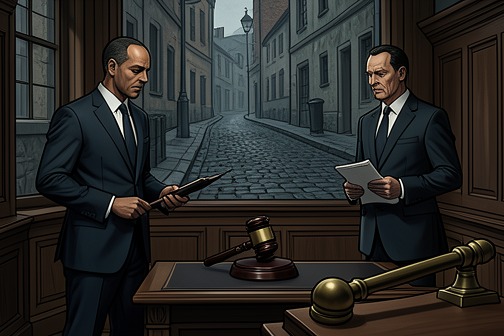
[Walter McMillian](entity:character-recall-character-walter-mcmillian-4a441db351d3)’s Rule 32 evidentiary hearing was the pivotal effort to place his innocence and the State’s suppressed evidence before a court. Over three days in Bay Minette, the defense presented [Ralph Myers](entity:character-recall-character-ralph-myers-14fb695ef414)’s new testimony alongside records that had never been disclosed to McMillian’s trial lawyers, turning a conviction built on contested witnesses into a case measured against documentary evidence and the State’s own files.
## Background and stakes
The hearing followed months of investigation and repeated efforts to obtain police and prosecution records. The defense had uncovered substantial exculpatory material and believed that more remained undisclosed; after the ninth or tenth request for files, Judge [Thomas B. Norton Jr.](entity:character-recall-character-thomas-b-norton-jr-7dc898f8c97c) called the lawyers’ efforts fishing. By the time the final hearing was scheduled, he had grown weary of the contentious case, while the defense worried that Myers might again buckle under pressure when returned to the county courthouse. The documentary evidence offered a counterweight: unlike a witness’s account, records could be introduced without the same unpredictability.
## Evidence and unequal access to the courtroom
The hearing’s evidence unfolded against a courtroom whose public access was itself contested. When [Bryan Stevenson](entity:character-recall-character-bryan-stevenson-d0edcbca5e8f) arrived on the next hearing day, a deputy initially stopped him at the door. Inside, a large metal detector stood beside a police officer holding back a German shepherd. The benches where Walter McMillian’s supporters had sat the day before were now mostly occupied by older white people supporting the Morrisons and the prosecution, while McMillian’s family and supporters waited outside after being told they could not enter. Stevenson challenged the prosecutors about the exclusion and took the matter to Judge Thomas B. Norton Jr.; the contrast made the hearing’s formal testing of evidence inseparable from the unequal treatment surrounding it.
The defense then tested the claim that McMillian’s modified truck had been seen leaving the cleaners near the time of [Ronda Morrison](entity:character-recall-character-ronda-morrison-fac3c28352ed)’s murder. White mechanic Clay Kast testified that the truck was not a low-rider in November 1986. His records and recollection placed the modification in May 1987, more than six months after [Bill Hooks](entity:character-recall-character-bill-hooks-d4cd888b4a4f) and [Joe Hightower](entity:character-recall-character-joe-hightower-aea7f6ac7fd9) said they had seen such a vehicle at the cleaners. The detail turned an apparently identifying feature of the prosecution’s account into a chronological problem: the truck could not have looked as the witnesses described on the date they claimed to have seen it.
[Monroeville](entity:location-recall-location-monroeville-e12d1c3df40a) police officer [Woodrow Ikner](entity:character-recall-character-woodrow-ikner-895e32ae960b) supplied a separate contradiction. As the first officer at the scene, he testified that Morrison’s body was not where Ralph Myers had placed it in his trial account. Ikner described a struggle that began in the bathroom and ended at the rear of the cleaners, where Morrison was found; this conflicted with Myers’s account of seeing her near the front counter. More damaging still, Ikner testified that trial prosecutor [Ted Pearson](entity:character-recall-character-ted-pearson-2766d476030d) had asked him to say the body was dragged from the front counter to its final location. Ikner refused because he knew that account was false, and he was later discharged from the police department. Together, the truck records and Ikner’s testimony challenged not only witness accuracy but the prosecution’s presentation of the crime scene.
The final day brought witnesses who had been jailed or imprisoned with Myers. Several testified consistently that Myers had said he was being pressured to give false testimony against McMillian. Isaac Dailey, whom Myers had falsely accused of the [Vickie Pittman](entity:character-recall-character-vickie-pittman-2160cb2e7de8) murder, recounted that Myers had told him he and [Karen Kelly](entity:character-recall-character-karen-kelly-8e8951c5d710) discussed blaming that crime on McMillian. Another inmate, who had written letters for Myers in the [Monroe County](entity:location-recall-location-monroe-county-0b25112fdf85) Jail, testified that Myers did not know McMillian, knew nothing about Morrison’s murder, and was being pressured by police to implicate him. These accounts placed Myers’s recantation within a pattern of statements he had made to others while in custody.
The most consequential evidence came in recordings of Myers’s interrogations by [Tom Tate](entity:character-recall-character-tom-tate-2a3c43e0952f), Benson, and Ikner. Across multiple recorded statements, Myers repeatedly said that he knew nothing about Morrison’s murder or McMillian; the tapes also captured officers threatening him and Myers resisting the effort to frame an innocent man. They supported his hearing testimony and contradicted his trial testimony, while exposing that Myers had given at least six additional statements beyond the two Pearson had disclosed to the court, jury, and defense counsel. The typed statements were exculpatory and had not been turned over to McMillian’s lawyers. [Bruce Boynton](entity:character-recall-character-bruce-boynton-e4b6eececb14) and [J. L. Chestnut](entity:character-recall-character-j-l-chestnut-e724de566c59), McMillian’s trial lawyers, testified about how disclosure could have strengthened their defense and their effort to win an acquittal.
After the defense completed its presentation, the State offered no rebuttal evidence. Norton appeared surprised and requested written briefs from both sides on the ruling he should make. The three days of litigation ended without an immediate decision: the evidence was now before the court, but McMillian’s release still depended on the judge’s forthcoming order.
## Race, Jury Selection, and the Meaning of the Record
The evidentiary dispute took place within a legal system where formal guarantees of racial equality had often coexisted with practices that kept Black people from meaningful participation. In 1987, all forty elected district attorneys in [Alabama](entity:location-recall-location-alabama-2bbbae281095) were white, although sixteen counties had Black majorities. Monroe County was 40 percent Black, yet prosecutors in serious felony cases had commonly used peremptory strikes to remove Black prospective jurors. Earlier rulings had barred racial exclusion in principle, but the evidentiary threshold for challenging discriminatory strikes had left the practice largely intact. The 1986 decision in [Batson v. Kentucky](entity:rule-recall-rule-batson-v-kentucky-7e23995c158f) offered defendants a more direct way to contest those strikes, while also requiring prosecutors to find more creative means of excluding Black jurors.
That history sharpened the significance of what the hearing placed on the record. The defense was not simply disputing the credibility of Ralph Myers and Bill Hooks: Clay Kast’s records dated the truck modification to May 1987, and Woodrow Ikner’s testimony contradicted both Myers’s account of where Ronda Morrison’s body had been found and the prosecution’s proposed description of the scene. Myers’s recorded statements, meanwhile, showed that he had repeatedly denied knowing about the murder or Walter McMillian. These different forms of evidence converged against a prosecution account that had been presented to a jury without the exculpatory statements disclosed to McMillian’s lawyers.
The courtroom’s shifting audience gave that evidentiary struggle a visible counterpart. On one hearing day, McMillian’s family and supporters were kept outside while older white supporters of the Morrisons and the prosecution occupied the benches; a metal detector and a German shepherd marked the changed entrance. Bryan Stevenson challenged the exclusion before Judge Thomas B. Norton Jr. The hearing therefore tested more than whether particular testimony could withstand scrutiny: it also exposed the distance between a process that claimed to evaluate evidence impartially and the unequal conditions under which Black defendants and their communities encountered that process.
## The racial politics behind Walter’s changed status
The hearing’s stakes reached beyond the disputed crime scene and the prosecution’s evidence. Before the murder case, Walter McMillian had been known to white residents largely as a hardworking pulpwood cutter. That standing shifted after he was subpoenaed in the custody dispute between Karen Kelly and her husband. Walter acknowledged that he was Karen’s friend; her lawyer objected to the husband’s attorney’s crude questions, so Walter was spared from giving details about their relationship. But leaving the courthouse did not end the matter: anger toward him was palpable, and word spread quickly. He was no longer seen only as a man valued for his work with a saw in the pine trees, but as something more troubling to the community.
That change acquired its force from a much longer history. In the [United States](entity:location-recall-location-united-states-2f533bc8d0b9), fears of interracial sex and marriage helped undermine [Reconstruction](entity:time-recall-time-reconstruction-5b91ed72d2e4), sustain [Jim Crow laws](entity:rule-recall-rule-75e270362bd4), and shape racial politics across the twentieth century. After slavery, laws and social practices enforced racial hierarchy in part by preventing intimate relationships such as Walter and Karen’s. The term “miscegenation” itself entered use in the 1860s, coined by slavery’s supporters to stoke fear of interracial relationships and the racial mixing they imagined abolition would bring. For generations, law-enforcement officials in many Southern communities treated the investigation and punishment of Black men who had been intimate with white women as part of their duty.
The retreat from Reconstruction in Alabama brought the loss of Black voting rights and a succession of restrictive laws designed to restore white supremacy. Racial-integrity laws reinforced that hierarchy and were used to justify the forced sterilization of poor and minority women; forbidding relationships between white women and Black men became an intense preoccupation across the South. This history does not substitute for the hearing’s specific proof about the murder, but it clarifies why Walter’s relationship with Karen could transform his standing and why accusations against him unfolded within a charged racial order. The hearing’s challenge was to put testimony and records to the test in a setting where racialized assumptions had already shaped how his conduct was understood.
Event 21
Murder of Vickie Pittman
The [Murder of Vickie Pittman](entity:event-recall-event-vickie-pittman-b6911a708a4e) was an unresolved killing whose investigation became important to the effort to test [Ralph Myers](entity:character-recall-character-ralph-myers-14fb695ef414)’s accusation against [Walter McMillian](entity:character-recall-character-walter-mcmillian-4a441db351d3). [Bryan Stevenson](entity:character-recall-character-bryan-stevenson-d0edcbca5e8f) and his colleague looked into the case not as a settled explanation of the Morrison murder, but as a way to understand the pressure surrounding Myers’s testimony and to check his claims against other evidence. Their inquiry uncovered questions about possible participants, motive, and the treatment of Pittman’s relatives, while leaving the killing itself without a definitive resolution in the account.
## Why the Case Reentered the Investigation
By the time Stevenson and his colleague turned to the Pittman murder, it had been largely forgotten. Myers had recanted his accusations against McMillian before trial, and the defense expected the State might not be surprised when he again denied McMillian’s involvement. To evaluate that denial, the investigators sought objective evidence that could confirm what Myers was now saying. They also wanted to document other assertions by Myers that could be shown to be false, strengthening the basis for examining his earlier accusation.
The Pittman case offered a possible view into the coercion Myers said he had experienced. That connection made it relevant to McMillian’s case, but did not itself prove that Myers had been coerced or establish who killed Pittman. The investigators treated it as a line of inquiry that required corroboration, not as a ready-made answer.
## Sentences, Jurisdiction, and Competing Accounts
[Monroe County](entity:location-recall-location-monroe-county-0b25112fdf85) officials had reduced the sentences of Myers and [Karen Kelly](entity:character-recall-character-karen-kelly-8e8951c5d710) in exchange for Myers’s testimony against McMillian. Pittman’s murder, however, had occurred in another county, making the Monroe County officials’ role in arranging sentence reductions in that case an anomaly that drew the investigators’ attention. The exchange linked the neglected Pittman investigation to the prosecution of McMillian and raised questions about how Myers’s testimony had been obtained and used.
Myers maintained that he and Kelly were not the only people involved in Pittman’s murder. He alleged that a corrupt local sheriff was among the others and said the killing concerned drug debts and threats Pittman had made to expose corruption. These were Myers’s claims, not findings established by the investigation described in the account. The investigators also learned from early police reports that Pittman’s father, Vic Pittman, had been implicated as a suspect; he was never formally charged.
## Relatives Seeking Answers
[Vickie Pittman](entity:character-recall-character-vickie-pittman-2160cb2e7de8)’s aunts, [Mozelle and Onzelle](entity:character-recall-character-mozelle-onzelle-18f45f27575a), had spent years collecting information and seeking answers about their niece’s death. Stevenson and his colleague contacted them, and the sisters readily agreed to speak. They voiced suspicions about their brother and local law enforcement, and said the prosecutor had disrespected and ignored them. They had also been turned away by the state victims’ rights group.
Their account showed how the case remained unresolved not only as a question of who was responsible, but also as a failure to give the victim’s family a meaningful hearing. Their suspicions did not settle the question of guilt; they added to the reasons the investigators considered the official handling of the murder incomplete and worth scrutinizing.
## Consequences and Limits of the Inquiry
The Pittman investigation served two related purposes in the defense’s work: it could help test Myers’s credibility and illuminate the circumstances in which he had implicated McMillian. The sentence reductions, the allegations of additional participants, the early suspicion of Vic Pittman, and the relatives’ complaints all made the case relevant to that assessment. None, on its own, established a complete account of Pittman’s killing.
The event’s significance therefore lies partly in its unresolved character. A murder that had nearly disappeared from public attention became a means of examining the reliability and possible coercion behind testimony in another prosecution. At the same time, the surviving questions—the identity of the responsible parties, the alleged corruption, and the family’s unanswered appeals—remained open.
Event 22
Montgomery Bus Boycott
The [Montgomery Bus Boycott](entity:event-recall-event-69f0ed0c3d43) enters the narrative as a historical reference that locates a death-penalty appeal within [Montgomery](entity:location-recall-location-montgomery-a77051b70057)’s civil-rights history. The book does not recount the boycott’s events; instead, it invokes the church associated with Dr. Martin Luther King Jr.’s pastorate during the boycott to connect the appellate courtroom to the city’s earlier struggle over race and public life.
## Historical Setting
During [Walter McMillian](entity:character-recall-character-walter-mcmillian-4a441db351d3)’s appeal, [Bryan Stevenson](entity:character-recall-character-bryan-stevenson-d0edcbca5e8f) describes the [Alabama Judicial Building](entity:location-recall-location-7d5a318c3dcb) at the end of Dexter Avenue. Across the street stood Dexter Avenue Baptist Church, where Dr. Martin Luther King Jr. had pastored during the Montgomery Bus Boycott. The proximity makes the boycott part of the appeal’s physical and historical setting: a landmark of civil-rights organizing faces a courthouse where the fate of a Black defendant is being argued.
## The Boycott and the Appellate Scene
The book uses the boycott as a point of orientation rather than narrating its course. Stevenson recalls entering the appellate courtroom with hope, in a building near both the church and the state capitol. The surrounding landmarks frame the appeal as more than a technical dispute over evidence and procedure; they place it in a state whose legal institutions remained entangled with the history of racial segregation.
## Historical Contrast and Narrative Significance
That contrast sharpens when set beside the court’s chief judge, former governor [John Patterson](entity:character-recall-character-john-patterson-70c3446e39c6). The account describes Patterson as a fierce opponent of civil rights and racial integration, and recounts his record of opposing civil-rights activity and withholding police protection from the [Freedom Riders](entity:organization-recall-organization-46c463d103d0). The church’s association with the Montgomery Bus Boycott thus stands near an appellate institution presided over by a figure identified with resistance to integration. The narrative does not claim that the boycott directly determined the appeal; rather, its remembered place in Montgomery’s landscape makes the distance between civil-rights victories and the ongoing operation of racial power visible.
Event 23
Attack on Freedom Riders in Alabama
The [Attack on Freedom Riders in Alabama](entity:event-recall-event-7227b75421a0) was an assault on civil rights activists traveling south to desegregate public facilities, made possible when [Alabama](entity:location-recall-location-alabama-2bbbae281095)’s governor withheld law-enforcement protection. The riders were left exposed, beaten, and their bus was bombed. [Bryan Stevenson](entity:character-recall-character-bryan-stevenson-d0edcbca5e8f) recounts the attack as part of a longer history of official resistance to racial equality—and as an episode whose meaning reaches beyond the immediate violence to the question of whose safety the state will defend.
## Political Background
In the early [1960s](entity:time-recall-time-1960s-fa3d18a6c9cb), the [Freedom Riders](entity:organization-recall-organization-46c463d103d0)—Black and white college students and other activists—traveled through the South to desegregate public facilities in recognition of new federal laws. Their journey tested whether those laws would be enforced in practice, not merely acknowledged in principle.
At the time, [John Patterson](entity:character-recall-character-john-patterson-70c3446e39c6) was governor of Alabama. Stevenson places the attack within Patterson’s record of opposing civil rights: before becoming governor, he had banned the NAACP from operating in Alabama and blocked civil rights boycotts and protests in Tuskegee and [Montgomery](entity:location-recall-location-montgomery-a77051b70057). As governor, he withheld law-enforcement protection for the Freedom Riders as their bus traveled through Alabama.
## The Attack
Without police protection, the riders were left alone and vulnerable. They were beaten violently, and their bus was bombed. The account emphasizes the contrast between their purpose—desegregating public facilities under newly recognized federal law—and the violence they encountered while carrying it out. It does not identify the attackers or describe the precise sequence of the assault, but makes clear that the state’s failure to protect the riders left them exposed to it.
## Aftermath and Historical Meaning
Stevenson recalls the attack while describing Patterson’s later position as chief judge of the [Alabama Court of Criminal Appeals](entity:organization-recall-organization-6a9a8a457c58). That setting connects the history of civil-rights opposition to the institutions that continued to exercise authority in Alabama: the former governor who had withheld protection from the riders now presided over the court hearing an appeal in [Walter McMillian](entity:character-recall-character-walter-mcmillian-4a441db351d3)’s case. The account does not claim that the attack itself determined the court’s decision; its force lies in the historical continuity the juxtaposition invites readers to consider.
Years later, as Stevenson worked to change how the country understood its racial history, an older Black man challenged the idea that domestic terrorism in the [United States](entity:location-recall-location-united-states-2f533bc8d0b9) had begun with the September 11 attacks. He recalled that Black people had long lived with terror from police, the [Ku Klux Klan](entity:organization-recall-organization-ku-klux-klan-459a96befb1c), and other white people, including bombings and racial violence. In that wider remembrance, the bombing of the Freedom Riders’ bus stands as part of a history in which violence and the withholding of protection worked together to enforce racial subordination.
Event 24
Brown v. Board of Education
[Brown v. Board of Education](entity:event-recall-event-940bc54b61d2) is presented as a landmark ruling against racial segregation in public schools and as a catalyst for a visible backlash across the South. [Bryan Stevenson](entity:character-recall-character-bryan-stevenson-d0edcbca5e8f) places the decision within a longer contest over racial hierarchy: the legal rejection of school segregation did not end resistance to racial equality, but was followed by renewed public displays of Confederate symbols.
## The Ruling and the Order It Challenged
Stevenson identifies Brown v. Board of Education as the decision that declared racial segregation in public schools unconstitutional. Its significance in his account extends beyond the schools themselves: it challenged a system of racial subordination sustained through law and public institutions. That system had taken shape after [Reconstruction](entity:time-recall-time-reconstruction-5b91ed72d2e4), when voting rights were stripped from African Americans and racially restrictive laws reasserted white supremacy. [Jim Crow laws](entity:rule-recall-rule-75e270362bd4) maintained that hierarchy for generations, while [Anti-miscegenation laws](entity:rule-recall-rule-anti-miscegenation-laws-6b4daa0d6892) sought to prevent interracial relationships as part of the same broader effort to police racial boundaries.
## Backlash in the South
The ruling did not produce a simple or immediate acceptance of desegregation. Stevenson describes civil-rights activism and new federal laws as provoking a recurring resistance to racial progress. In the [1950s](entity:time-recall-time-1950s-9d888ed1c4fe), after Brown v. Board of Education declared school segregation unconstitutional, many Southern states raised Confederate flags over their government buildings. The sequence makes the flags a political response to a legal challenge: as the prospect of racial equality became more concrete, defenders of the old order made its symbols more visible.
## Confederate Memory in Public Life
Stevenson places the flags within a wider spread of Confederate memorials, monuments, and imagery during the [Civil Rights Era](entity:time-recall-time-civil-rights-era-465e6d46c908). In [Alabama](entity:location-recall-location-alabama-2bbbae281095), the birthday of Jefferson Davis, president of the Confederacy, was added as a state holiday. Banks, state offices, and state institutions closed in his honor in the period Stevenson describes. These commemorations gave the Confederacy a continuing presence in civic life just as federal law and civil-rights activism were contesting the racial order associated with it.
## Historical Significance
In Stevenson’s account, Brown v. Board of Education marks a turning point not because it ended racial domination, but because the response to it exposed how fiercely that domination was defended. The ruling’s place in the narrative is therefore paired with the counter-mobilization it provoked: a constitutional rejection of school segregation followed by Confederate symbolism in public spaces. That pattern supports Stevenson’s broader account of racial progress and reaction as intertwined parts of American history.
Event 25
Scottsboro Boys case
The [Scottsboro Boys case](entity:event-recall-event-1f74086952fb) is a stark example in [Bryan Stevenson](entity:character-recall-character-bryan-stevenson-d0edcbca5e8f)’s account of the racialized punishment of children: in the 1930s, two thirteen-year-old defendants, Roy Wright and Eugene Williams, were wrongfully convicted of rape and sentenced to death in [Alabama](entity:location-recall-location-alabama-2bbbae281095). The case illustrates how, in the [Deep South](entity:location-recall-location-abda76fc51a2), a child’s age did not necessarily protect him from the most severe punishment, particularly when race shaped how criminal accusation and guilt were understood.
## The Case as a Historical Example
The book invokes the case while contrasting the treatment of children in earlier eras with the development of juvenile justice systems. It notes that thirteen- and fourteen-year-olds could be sent into the adult system and receive lengthy sentences when a crime became unusually prominent—or when a Black child was accused of a crime against a white person in the South. Roy Wright and Eugene Williams, both thirteen, stand as the example: they were wrongfully convicted of rape and sentenced to death. The passage does not detail the trial or the later course of the case; its emphasis is on the extraordinary severity imposed on children within a racially charged system.
## Race, Sexuality, and Southern Law
The case appears within a wider account of how race and sex helped sustain racial hierarchy in the [United States](entity:location-recall-location-united-states-2f533bc8d0b9). After [Reconstruction](entity:time-recall-time-reconstruction-5b91ed72d2e4) collapsed, Southern states used racially restrictive laws to reestablish Black subordination; prohibitions on interracial sex and marriage made relationships between Black men and white women a particular focus of legal control. The book describes that history as part of the context in which accusations involving sex could carry grave consequences for Black defendants. It does not establish specific details about the accusation in the Scottsboro Boys case beyond the charge of rape, so the case’s significance here rests on the broader pattern the author identifies, not on an unstated account of its circumstances.
## Childhood and Criminal Responsibility
The case also anticipates the book’s argument that children cannot simply be judged as smaller versions of adults. In its discussion of adolescent development, the book describes young teenagers as having less life experience, weaker capacity to imagine consequences, and less mature judgment and impulse control than adults. It further argues that abuse, violence, neglect, and unstable caregiving can compound those vulnerabilities. These later arguments do not supply biographical details about Roy Wright or Eugene Williams; rather, the juxtaposition makes the death sentences imposed on thirteen-year-olds a measure of how little room the adult system could leave for childhood or diminished culpability.
## Significance in the Book’s Argument
The Scottsboro Boys case is a historical precedent within a narrative about the long reach of racial injustice in criminal punishment. Its brief appearance links the exceptional prosecution of Black children in the 1930s to the book’s later examination of children condemned to adult penalties. The contrast is not that later systems had escaped racial inequality, but that the case makes visible how age, race, and the weight of an accusation could converge in a sentence of death. By naming two thirteen-year-old defendants and the wrongful convictions that sent them toward execution, the book grounds its broader critique in the stark consequences of treating children as fully formed, fully culpable adults.
Event 26
Execution of George Stinney
The execution of [George Stinney](entity:character-recall-character-george-stinney-27df82cc6b64) on June 16, 1944, was the culmination of a swift, racially charged prosecution that sent a fourteen-year-old boy to the electric chair. The case exposed how a child could be isolated from family and legal protection, tried before an all-white jury, and executed on the basis of an alleged confession for which no written or signed statement was produced.
## The Murders and Arrest
Three months before the execution, two young white girls from [Alcolu, South Carolina](entity:location-recall-location-7a0ea5346013), went out to pick flowers and did not return. Residents searched for them, and George and his siblings joined the search. George told a white adult searcher that he and his sister had seen the girls earlier that day, when the girls asked where they could find flowers. The girls’ bodies were found the next day in a shallow ditch.
George was arrested because he had acknowledged seeing the girls and was the last person known to have seen them alive. He was interrogated for hours without either a parent or an attorney present. The sheriff later claimed that George had confessed, but no written or signed confession was presented. As anger spread through the community, George’s father lost his job, and the family was told to leave town or face lynching. They fled that night, leaving George in jail without family support. A lynch mob formed at the jail within hours of the sheriff’s announcement; by then, George had been moved to a jail in [Charleston, South Carolina](entity:location-recall-location-a8ca15617547).
## Trial and Death Sentence
A month after the arrest, George was tried on first-degree murder charges. An estimated fifteen hundred white people filled the courtroom and surrounded the building, while African Americans were barred from entering the courthouse. George sat alone. His court-appointed attorney, a white tax lawyer with political ambitions, called no witnesses. The prosecution relied on the sheriff’s testimony about the alleged confession, and the trial ended within hours.
An all-white jury deliberated for ten minutes before convicting George of rape and murder. Judge Stoll sentenced the fourteen-year-old to death. His lawyer said that no appeal would be filed because the family could not afford one. The speed of the proceedings, the exclusion of Black spectators, and the absence of a defense case made the formal appearance of a trial a poor safeguard against the racial hostility surrounding it.
## Execution in Columbia
The [National Association for the Advancement of Colored People](entity:organization-recall-organization-bc61abc4047b) and Black clergy appealed for George’s sentence to be changed to life imprisonment, but Governor Olin Johnston refused to intervene. George was sent to [Columbia, South Carolina](entity:location-recall-location-9a83b5cca501), for execution in the state’s electric chair. He was small even for his age: five feet two inches tall and ninety-two pounds. He carried a Bible to the chair, and prison staff placed the book beneath him when they could not fit the electrodes to his small frame.
No family members or people of color were present in the execution room; George was surrounded by law-enforcement personnel and reporters. Frightened, he searched the room for help. When the first jolt of electricity struck, the adult-size mask slipped from his face. Witnesses saw his tearful, wide-open eyes and saliva at his mouth. He was pronounced dead eighty-one days after the girls had first approached him to ask about flowers.
## Aftermath and Historical Significance
Years later, rumors surfaced that a white man from a prominent family had confessed on his deathbed to killing the girls. An effort to exonerate George was subsequently launched. These later developments left the case’s central questions of guilt and fairness unsettled, while underscoring how little opportunity the fourteen-year-old had received to challenge the accusation during his lifetime.
The book presents the execution as an expression of the racial politics of the South, not as a measure of how children accused of crimes were generally treated. It also places the case within a longer history in which practices first directed at controlling and punishing Black people entered the wider criminal justice system. In this account, the execution stands at the intersection of racial terror and state punishment: the court and electric chair carried out, in legal form, a sentence imposed on a child after a prosecution stripped him of family support, a meaningful defense, and a jury that reflected the community from which he came.
Event 27
Booth v. Maryland
[Booth v. Maryland](entity:event-recall-event-7e55f9a91368) was a 1987 Supreme Court decision limiting what jurors could hear about a homicide victim during capital sentencing. By excluding evidence about a victim’s status, character, reputation, or family, the Court sought to prevent emotional appeals from making the death penalty turn on whose life had been taken. The decision became a short-lived barrier to victim-impact evidence: less than three years later, the Court reversed course in [Payne v. Tennessee](entity:event-recall-event-798066a24222), helping accelerate a broader transformation in how victims and their families figured in criminal proceedings.
## Background: Personalizing the Victim
In the early [1980s](entity:time-recall-time-1980s-3c00692f91a5), states increasingly brought individual crime victims into the trial process. Some allowed a victim’s relatives to sit at the prosecutor’s table; thirty-six states enacted laws giving victims specific participation rights or the opportunity to make victim-impact statements. Prosecutors, too, increasingly presented themselves as advocates for particular victims rather than solely as representatives of the state or community.
That shift challenged an older conception of criminal prosecution: a violent offense was understood as an injury to the whole community, which was why the prosecution spoke in the name of the State, the People, or the Commonwealth. Under the principle that victims were equal before the law, a victim’s wealth, family circumstances, or social standing should not make one murder more serious than another. Booth addressed the risk that personalized accounts could displace that principle when jurors decided whether a defendant should die.
## The Court’s Ruling
The Court held that, in death-penalty cases, the Constitution did not permit the prosecution to introduce evidence about a homicide victim’s status, character, reputation, or family. Victim-impact statements were barred because the Court considered them too inflammatory and believed they could introduce arbitrariness into capital sentencing. The ruling treated the victim’s personal story as potentially powerful precisely because it could alter the jury’s judgment for reasons unrelated to the defendant’s culpability or the circumstances of the crime.
The decision also reflected concern about whose stories would be heard most forcefully. Critics argued that excluding victim-impact evidence could disadvantage poor victims, racial-minority victims, and families without the resources to advocate for their deceased relatives. The controversy therefore involved more than whether emotion belonged in sentencing: it raised competing claims about equal treatment, the state’s role, and the ability of individual families to make their loss visible in court.
## Reversal and Aftermath
The ruling drew wide criticism from prosecutors and some politicians and appeared to energize the victims’ rights movement. Less than three years after Booth, the Supreme Court reversed itself in Payne v. Tennessee, upholding states’ authority to present evidence about a victim’s character in capital sentencing. The reversal shifted the constitutional balance: what Booth had excluded as a source of inflammatory arbitrariness could now be offered as part of the prosecution’s case.
The change accompanied a growing institutional role for victims. Public funding supported advocacy groups in every state; victims’ advocates joined parole boards and were given formal roles in many prosecutors’ offices. Legislatures also enacted harsher laws named after particular victims, while some states expanded the number of a victim’s relatives who could witness an execution. Criminal cases increasingly took on the shape of a personal contest between a victim’s family and the accused, with press coverage emphasizing that conflict.
## Significance
Booth stands at a brief but consequential turning point in the movement from treating crime primarily as an offense against the community toward giving individual victims and their families a more visible place in prosecution. Its equality principle warned that a victim’s social standing or family advocacy should not determine the weight of a life at capital sentencing. Its rapid reversal showed how contested that principle had become, and how quickly the criminal process could be reorganized around the personal narratives and emotions of particular cases.
Event 28
Payne v. Tennessee
[Payne v. Tennessee](entity:event-recall-event-798066a24222) was a [Supreme Court of the United States](entity:organization-recall-organization-supreme-court-of-1add93799b76) ruling that reversed a constitutional restriction on victim-impact evidence in capital sentencing. By allowing states to present evidence about a homicide victim’s character, the decision helped move victims and their families into a more visible role in criminal proceedings, while raising the stakes of a system in which recognition and attention were not distributed equally.
## Background and Reversal
In 1987, the Supreme Court of the United States ruled in [Booth v. Maryland](entity:event-recall-event-7e55f9a91368) that jurors in death-penalty cases could not hear evidence about a homicide victim’s status, character, reputation, or family. The Court considered victim-impact statements too inflammatory and a source of arbitrariness in capital sentencing. The principle behind the restriction was that a murder’s seriousness should not turn on a victim’s social standing or on how forcefully relatives could advocate for the deceased.
The ruling was widely criticized by prosecutors and some politicians, and appeared to energize the victims’ rights movement. Less than three years later, Payne v. Tennessee reversed Booth v. Maryland: the Court upheld states’ authority to present evidence about a victim’s character in a capital-sentencing trial. A limit intended to keep sentencing from being distorted by personal appeals gave way to a constitutional permission for victims’ lives and families to enter the courtroom record.
## A Larger Role for Victims
The decision formed part of a broader change in American criminal proceedings. Millions of dollars in state and federal funds were authorized to establish crime-victim advocacy groups in every state. States created ways for victims in particular cases to participate in decisions; victims’ advocates joined parole boards and, in most states, received formal roles in prosecutors’ offices. Victim services and outreach became important parts of the prosecutorial function.
The shift also reached the laws legislatures enacted and the way cases were presented to the public. Some statutes were named for individual victims. Megan’s Law, named after seven-year-old Megan Kanka, broadened state authority to create sex-offender registries. Rather than appearing chiefly as an abstract conflict between the state and an accused person, a criminal case increasingly took on the shape of a personal contest between a victim’s family and the offender. Press coverage emphasized that conflict, and the emotions, perspectives, and opinions of victims became more prominent in the management of high-profile prosecutions.
## Unequal Recognition and Significance
The book presents the expanded role of victims as consequential but not automatically equalizing. In its account, attention to a victim’s status could become another way for the criminal justice system to disadvantage poor and minority victims, who might experience further victimization through the system itself. A formal right to make victims visible did not ensure that every victim or family would receive equal recognition, support, or influence.
Payne v. Tennessee therefore marks both a change in courtroom practice and a change in the public framing of criminal cases. Victims and their relatives gained a more protected place in proceedings, and advocacy institutions grew around that place. But the book’s account holds the reform beside a persistent question: whose loss is made visible, and whose remains at the margins?
Event 29
McCleskey v. Kemp
[McCleskey v. Kemp](entity:event-recall-event-6df4a70668ce) is presented as a Supreme Court case that brought empirical evidence of racial disparity in capital sentencing into view. Its importance in the book lies in the gap between the criminal justice system’s formal language of equal treatment and evidence that the race of a murder victim strongly affected whether a defendant was sentenced to death.
## The Evidence of Disparity
The case presented what the book describes as convincing empirical evidence that the victim’s race was the greatest predictor of who received the death penalty in the [United States](entity:location-recall-location-united-states-2f533bc8d0b9). In the study conducted for the case, offenders in Georgia were eleven times more likely to receive a death sentence when the victim was white than when the victim was Black. Studies examining race and capital punishment in other states replicated the finding, making the disparity difficult to treat as a peculiarity of one jurisdiction.
The [Alabama](entity:location-recall-location-alabama-2bbbae281095) figures sharpen the contrast. Although Black people accounted for 65 percent of homicide victims in the state, nearly 80 percent of people on death row had been sentenced for crimes against white victims. The pairing of a Black defendant and a white victim increased the likelihood of a death sentence further still. These figures describe not simply who was punished, but whose loss the system was most likely to answer with its harshest penalty.
## A System That Valued Victims Unequally
The book places the case’s findings beside the expansion of victims’ rights in the [1980s](entity:time-recall-time-1980s-3c00692f91a5). States gave victims and their families a more visible role in trials, created advocacy organizations, and made victim services part of prosecutors’ work. The Supreme Court’s later decision in Payne gave constitutional approval to a more visible and protected role for individual victims in criminal proceedings. But the increasing attention to victims did not mean that all victims received equal attention or care.
Poor and minority families could be overlooked by police, prosecutors, and victims’ services even as the system made some victims increasingly prominent in court. The disparity described in McCleskey v. Kemp exposed a related imbalance at the level of punishment: the identity of the victim was associated with markedly different odds of a death sentence. In the book’s account, victim participation and victim valuation are not interchangeable; formal recognition can expand while unequal protection persists.
## Place in the Book’s Argument
The case connects statistical evidence to the everyday operation of criminal justice. Elsewhere, the account describes Black defendants facing the prospect of all-white juries, despite decades of constitutional rules against racial exclusion. The 1986 decision in [Batson v. Kentucky](entity:rule-recall-rule-batson-v-kentucky-7e23995c158f) offered a more direct way to challenge discriminatory peremptory strikes, but the continuing use of those strikes showed how formal safeguards could leave substantial barriers in place. The McCleskey findings extend that concern from jury selection to the distribution of death sentences.
The book also situates racial disparities in capital punishment within a longer history in which racial hierarchy shaped law and violence. It links the legacy of racial terror and lynching to the development of the modern death penalty, presenting racial inequality not as a stray defect in an otherwise neutral system but as part of the history through which American punishment took form. McCleskey v. Kemp serves as a point where that structural argument is made legible through measured differences in sentencing.
Event 30
Trina Garnett fire
The [Trina Garnett fire](entity:event-recall-event-9c3e4320f462) was a fatal house fire that became the basis for a second-degree murder conviction and a mandatory life-without-parole sentence for a fourteen-year-old girl. Trina and her friend said the blaze was accidental; the boys’ mother accused Trina of setting it deliberately. The case’s lasting force lies in the distance between that disputed account of a child’s act and the punishment imposed: the sentencing judge found no intent to kill, yet the law gave him no alternative to condemning her to die in prison.
## Background and the Fire
Trina’s childhood had been marked by loss and instability. Her mother, Edith, died when Trina was nine. After Trina’s older sisters fled because of abuse by Walter, that abuse focused on Trina and her sisters Lynn and Lynda. The girls ran away and roamed the streets of Chester, sometimes eating from garbage cans and sleeping in parks or public bathrooms. Temporary refuge with relatives could be disrupted by further violence or death, leaving Trina homeless again. Her mother’s death, abuse, and desperate circumstances worsened her emotional and mental health; when she became acutely distressed, her sisters sometimes found relatives to take her to a hospital, but she was never allowed to stay long enough to become stable or recover.
Late at night in August 1976, Trina, then fourteen, and her sixteen-year-old friend Francis Newsome climbed through a window into a row house in Chester. They wanted to talk to the boys who lived there, although the boys’ mother had forbidden her children to play with Trina. Inside, Trina lit matches to find her way to the boys’ room. The house caught fire and spread quickly. Two boys, asleep in the home, died from smoke asphyxiation. Their mother said Trina had started the fire intentionally; Trina and Francis maintained that it was an accident. The evidence establishes the fatal outcome and the conflicting accounts, not a settled explanation of how the fire began.
## Arrest and Adult Trial
The boys’ deaths left Trina traumatized. When police arrested her, she could barely speak, and she appeared so listless and nonfunctional that her appointed lawyer thought she was incompetent to stand trial. A person found incompetent cannot be tried in adversarial criminal proceedings unless they become well enough to defend themselves; accused people facing trial are entitled to treatment and services. Trina’s lawyer, however, did not file the motions or present the evidence needed to support an incompetency determination. He also failed to challenge the State’s decision to try her as an adult. The lawyer was later disbarred and jailed for unrelated criminal misconduct.
As a result, Trina was made to stand trial for second-degree murder in an adult courthouse. Francis testified against her in exchange for the charges against her being dropped. Trina was convicted, and the proceedings moved to sentencing. The case thus turned not only on the disputed question of how the fire started, but also on a sequence of decisions that left a traumatized child without a pursued incompetency claim and without a challenge to adult prosecution.
## Mandatory Sentence and Its Consequences
[Delaware](entity:location-recall-location-delaware-600556eda23e) County Circuit Judge Howard Reed found that Trina had no intent to kill. Under [Pennsylvania](entity:location-recall-location-73be460b4507) law, however, he could not take that absence of intent into account when sentencing her for second-degree murder. Nor could he consider her age, mental illness, poverty, abuse, or the tragic circumstances surrounding the fire. The law prescribed a single punishment: life imprisonment without the possibility of parole.
Judge Reed expressed serious misgivings about imposing that sentence. He called it the saddest case he had ever seen, but his judgment could not alter the mandatory penalty. Trina was therefore condemned to spend her life in prison for a tragedy committed when she was fourteen, even as the judge acknowledged the absence of intent to kill.
## Significance
The case brings together the conditions surrounding a child’s life and a legal process that treated the resulting tragedy as though those conditions could not matter. Trina’s history included bereavement, abuse, homelessness, and serious mental-health problems; at trial, her apparent inability to function prompted her own lawyer to question her competence. Yet the defense did not pursue that question, did not contest adult prosecution, and the sentencing law barred the judge from weighing her background or lack of intent.
The book’s broader argument about adolescent judgment gives the case added significance. It describes how young teenagers have less life experience, struggle to imagine consequences and generate choices, and are especially vulnerable when those developmental limits meet environments shaped by abuse, violence, neglect, and the absence of loving care. Trina’s case illustrates the human stakes of that argument: a fatal fire, disputed as accidental or intentional, became an irreversible sentence imposed on a child whose circumstances the court was not permitted to consider.
Event 31
Antonio Nuñez's staged kidnapping and shootout during a police chase
[Antonio Nuñez](entity:character-recall-character-antonio-nu-ez-76b6ac83eaf5)’s participation in a staged kidnapping and shootout during a police chase became the basis for a life-without-parole sentence imposed when he was fourteen, making him the youngest person in the [United States](entity:location-recall-location-united-states-2f533bc8d0b9) condemned to die in prison for a crime in which no one was physically injured. The episode followed years of violence around and inside his home, the killing of his brother, and a return to the neighborhood where that loss had occurred.
## Background and Vulnerability
Antonio lived in [South Central Los Angeles](entity:location-recall-location-1c8464198ac7), where gunfire was so frequent that his mother pushed her children to the floor when shooting erupted outside their crowded home. Nearly a dozen neighbors were killed in crossfire. At home, his father beat him from the time he was in diapers, using his hand, fist, belt, and extension cords; Antonio also witnessed his parents assaulting and threatening one another. He called the police during some of these episodes and developed nightmares. His mother, herself depressed, often left him alone when he cried.
In September 1999, a month after Antonio turned thirteen, a stranger shot him in the stomach, side, and arm as he rode his bicycle near home. His fourteen-year-old brother, José Nuñez, ran toward Antonio’s cries for help and was shot in the head and killed. Antonio survived serious internal injuries and spent weeks in the hospital. Afterward, his mother sent him to relatives in [Las Vegas](entity:location-recall-location-2ca5b4ac110f). There he stayed out of trouble, helped at home, and did homework with his cousin’s husband; within a year, however, [California](entity:location-recall-location-7255928c66a8) probation authorities ordered him back to Los Angeles because he was on probation as a ward of the court.
## The Staged Kidnapping and Police Chase
After returning from juvenile camp, Antonio was invited to a party where two men twice his age described a plan to fake a kidnapping and collect ransom from a relative. They insisted that he take part. At fourteen, he rode with them toward [Orange County](entity:location-recall-location-47ece46856d3): Juan Perez drove, Antonio sat in the passenger seat, and the supposed kidnapping victim was in the back. Before they reached the destination, two Latino men in a gray van began following them and then pursued them. Perez and the other man gave Antonio a gun and told him to fire at the van. The men in pursuit were undercover police officers, but Antonio did not know that as the chase turned into a high-speed shootout. When a marked police car joined in, Antonio dropped the gun just before the car crashed into trees. No one was injured.
The State nevertheless charged Antonio and Perez with aggravated kidnapping and attempted murder of the officers. They were tried together, and both were convicted. The sentencing disparity that followed turned the chase into a life sentence: California required a juvenile to be at least sixteen to receive life without parole for murder, but imposed no minimum age for kidnapping. The judge sentenced Antonio to prison until death, describing him as a dangerous gang member who could never change or be rehabilitated despite his difficult background and lack of significant criminal history. Sent to California’s dangerous, overcrowded adult prisons, he became, at fourteen, the youngest person in the United States condemned to die in prison for a crime in which no one was physically injured.
## Developmental Context and Sentencing
The account places Antonio’s conduct within the developmental argument later advanced in court against severe sentences for children. Young adolescents, the argument held, have less life experience and background knowledge with which to judge choices, are less able to imagine consequences or generate alternatives, and have not yet developed the self-confidence and impulse control needed for sound decisions. Neuroscience and brain chemistry helped explain these differences; they did not erase the harm of the episode, but challenged the sentencing judge’s claim that a fourteen-year-old could never change or be rehabilitated.
That argument also connected adolescent vulnerability to the conditions in which some children grow up. Abuse, violence, neglect, dysfunction, and the absence of loving caregivers can compound the deficits common to youth and leave children more exposed to catastrophic decisions. In Antonio’s case, the book’s account of his upbringing and the trauma surrounding his brother’s death makes that connection concrete, while the sentence imposed after a pursuit in which no one was injured shows how adult punishment could treat a child’s worst act as a fixed prediction of his entire future.
## The Case Within a National Challenge
Antonio’s case became part of a broader challenge to life imprisonment without parole for children. Because the [United States Supreme Court](entity:organization-recall-organization-5e343c624293)’s Eighth Amendment decisions required a challenged punishment to be both contrary to evolving standards of decency and unusual, the lawyers faced a strategic problem: more than 2,500 children nationwide had received such sentences. Rather than initially challenge every juvenile sentence at once, they focused on two narrower groups: children sentenced at thirteen or fourteen, of whom fewer than a hundred had received the punishment, and children convicted of non-homicide offenses, a group estimated at fewer than two hundred. Antonio belonged to both. His case thus placed a fourteen-year-old’s conduct within a legal argument about whether childhood, developmental vulnerability, and the nature of an offense could be ignored when a sentence foreclosed any possibility of release.
Event 32
Selma voting-rights march at Edmund Pettus Bridge
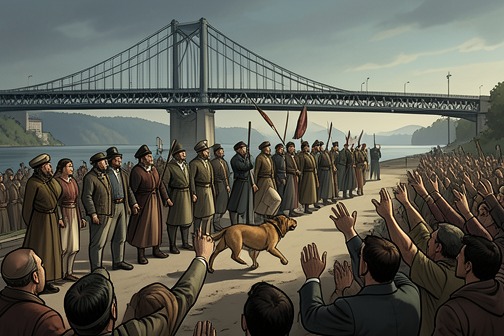
The [Selma voting-rights march at Edmund Pettus Bridge](entity:event-recall-event-569aa5cd0e93) enters the narrative through [Mrs. Williams](entity:character-recall-character-mrs-williams-5b5f8ed4004a)’s recollection of the 1965 effort to march for voting rights. She remembers the marchers being beaten and having dogs set on them; years later, the sight of a dog in a courthouse brought that violence back with such force that she could not move. The remembered attack gives the scene its significance: political violence remains present not only in public history but in the movements and silences of those who lived through it.
## The March and the Attack
In 1965, Mrs. Williams joined others gathered at Edmund Pettus Bridge to march for voting rights. Her account gives no further details about the march’s route or its organizers, but it is unequivocal about what happened to the marchers: they were beaten, and dogs were turned on them. The memory binds the demand for political participation to the force used to suppress it.
## A Memory Reopened
Mrs. Williams recounts the march while explaining why she could not attend a courtroom proceeding. She had wanted to be there, but when she saw a dog, she thought of the violence at the bridge and found herself unable to move. Her hesitation was not indifference or withdrawal from the case; it was the immediate return of a past assault in the present.
## The Event’s Place in the Narrative
The march appears as remembered experience rather than as a separately narrated public event. [Bryan Stevenson](entity:character-recall-character-bryan-stevenson-d0edcbca5e8f) listens as Mrs. Williams explains her absence, and her account shifts the meaning of the courthouse scene: the dog is not merely part of the immediate surroundings but the trigger for a memory of state-backed violence against people seeking voting rights. When Mrs. Williams lets go of Stevenson’s hand and walks away, the recollection remains unresolved, showing how an old act of repression can continue to shape what a witness is able to do years later.
Event 33
1989 Bombing Attacks on Civil Rights Legal Offices
The [1989 Bombing Attacks on Civil Rights Legal Offices](entity:event-recall-event-1989-bombing-attacks-on-96e762f7ddf0) form the violent backdrop to the threats later made against [Bryan Stevenson](entity:character-recall-character-bryan-stevenson-d0edcbca5e8f)’s office: a civil-rights lawyer and a federal appeals court judge had been killed by bombs, and further bombs were sent to legal offices and a courthouse. The account presents the sequence as an apparent campaign against legal professionals connected to civil rights, making the danger facing such work more than an abstract warning.
## The attacks
Two years before the office threats described in the narrative, civil-rights lawyer Robert “Robbie” Robinson was murdered when a bomb sent to his law office in Savannah, Georgia, exploded. Around the same time, federal appeals court judge Robert Vance was killed by a mail bomb in [Birmingham, Alabama](entity:location-recall-location-birmingham-alabama-99c6c4a363ab). Days later, a third bomb was sent to a civil-rights office in [Florida](entity:location-recall-location-7145a4a461e6), followed by a fourth addressed to a courthouse in [Atlanta](entity:location-recall-location-atlanta-bb210fd7f448). The account does not identify who sent the bombs or establish the outcome of the later two incidents; it emphasizes the sequence and its targets.
## A perceived campaign against civil-rights work
The attacks on Robinson and Vance, followed by bombs sent to a civil-rights office and a courthouse, prompted the perception that the bomber was targeting legal professionals connected to civil rights. That apparent pattern linked violence against an individual lawyer with threats to the institutions and offices where legal challenges were pursued. The threat was not described as confined to one place or one kind of target: the sequence reached a lawyer’s office, a judge, another civil-rights office, and a courthouse.
## The warning’s effect on the [Equal Justice Initiative](entity:organization-recall-organization-equal-justice-in-398aa3844197)
The remembered attacks shaped how the Equal Justice Initiative responded when its own office received its third bomb threat in two months. Staff and law students were nervous, and the earlier killings made it difficult to dismiss a threat as a hoax. For weeks, staff carried mail packages to the federal courthouse for X-ray screening before opening them. In the immediate incident, the caller had described the office building precisely, intensifying concern as everyone left the building and waited for police. The earlier bombings thus recur in the narrative not only as past violence, but as a practical warning that altered how the organization handled its mail and assessed its safety.
Event 34
Avery Jenkins wins a new trial and leaves death row
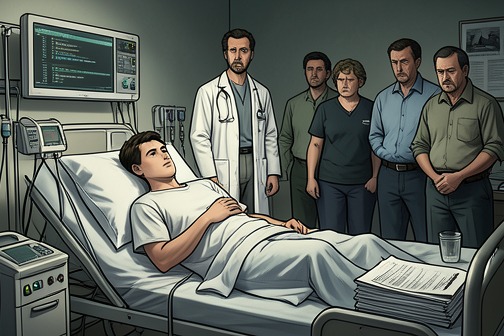
[Avery Jenkins wins a new trial and leaves death row](entity:event-recall-event-avery-jenkins-6ae61aa7cf5f) after a post-conviction hearing brought forward the history of serious mental illness and failed foster care that his trial lawyers had never investigated. The proceeding changed how the case could be understood: Jenkins’s illness did not erase the violence of the killing, but it mattered to his culpability and sentence, and the court’s eventual relief moved him from death row toward treatment.
## Background and Basis for Relief
At ten, Jenkins had been abused by foster parents who locked him in a closet, withheld food, and beat him. His foster mother later tied him to a tree in the woods and left him there; hunters found him three days later in very poor health. His difficulties continued through adolescence: he began using drugs and alcohol, suffered seizures and psychotic episodes, and was eventually left homeless. At twenty, during a psychotic episode, he entered a stranger’s house believing demons were attacking him and stabbed a man to death. His lawyers had made no investigation of his history before he was convicted and sentenced to death.
The post-conviction claim argued that counsel had failed to provide effective assistance by not uncovering Jenkins’s background or presenting his disabilities as relevant to criminal responsibility and punishment. The omitted history was not a minor addition to the trial record: it connected his conduct to a life of severe illness, abuse, and institutional failure that the original proceedings had not examined.
## Three Days of Testimony
The hearing took place in a court about a three-hour drive from the prison. Before it began, Stevenson visited Jenkins in a basement holding cell and tried to prepare him for the testimony, including the possibility that seeing former foster parents would upset him. Jenkins remained pleasant and agreeable, but during the hearing Stevenson saw him become distressed when some of those former foster parents came into the courtroom.
Over three days, experts described organic brain damage, schizophrenia, and bipolar disorder, and explained how these conditions could combine to cause severe impairment. They testified that Jenkins’s psychosis and other serious mental-health problems could produce dangerous behavior, while distinguishing the effects of illness from a judgment about his character. The defense also presented evidence about the foster-care system that had failed him: several foster parents who had cared for Jenkins were later convicted of sexual abuse or criminal mismanagement of foster children. Others acknowledged that they had been frustrated by him and were not equipped to address his serious mental-health needs.
Stevenson argued that ignoring mental disability in judging conduct and deciding punishment was as unfair as demanding that someone who had lost their legs climb stairs without assistance, or requiring a blind person to cross a busy highway unaided. He did not argue that a brutal killing should go without accountability or that public safety did not matter. His point was that disability had to be considered in determining the degree of culpability and the appropriate sentence.
## The Visit Before Judgment
Stevenson left the hearing encouraged by the evidence, but tempered that hope with the reality that state post-conviction hearings rarely produced favorable rulings; he thought relief was more likely on appeal. About a month later, before the judge had ruled, he returned to the prison because he wanted to check on Jenkins after the hearing. Jenkins had seemed composed for much of the proceeding, but the appearance of former foster parents had visibly upset him.
Their visits had acquired a small ritual around a chocolate milkshake. The prison would not allow Stevenson to bring one, yet Jenkins asked at the start of each visit whether he had brought it. Stevenson kept promising to try, partly to redirect Jenkins’s attention. On this return visit, the correctional officer who had treated Stevenson badly during their first encounter greeted him earnestly and politely. Stevenson remained skeptical, but the changed greeting marked a contrast with the earlier hostility.
When Stevenson began the familiar explanation that he had tried to bring a milkshake, Jenkins interrupted him: he had received one and was all right now. The exchange displaced the ritual rather than repeating it. Jenkins grinned as they began discussing the hearing, and they talked for an hour before Stevenson had to see another client. Jenkins never asked him for a chocolate milkshake again.
## New Trial and Departure from Death Row
Jenkins won a new trial and was ultimately removed from death row and placed in a facility where he could receive mental-health treatment. The outcome was not an acquittal; the evidence establishes a new trial and a transfer to treatment, not the result of any later trial. It nevertheless changed the terms of his confinement and returned his documented illness and disability to the assessment of his case.
The hearing’s movement from expert testimony about severe impairment to the modest prison visit gives the legal victory a personal measure. The milkshake had been a repeated request Stevenson could not fulfill; after Jenkins received one himself, he could turn from that routine and talk about what had happened in court. Relief came through a legal challenge to the failures at trial, while the final visit showed a small but distinct change in their familiar pattern.
Event 35
Walter McMillian's state post-conviction hearing and denial of relief
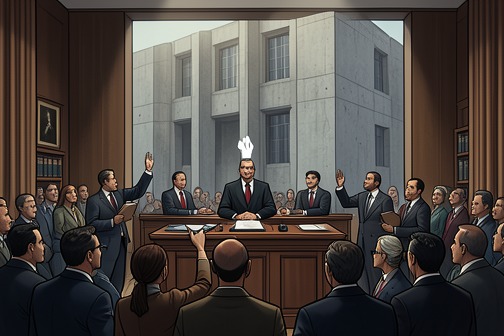
[Walter McMillian's state post-conviction hearing and denial of relief](entity:event-recall-event-51a2786951b9) was a decisive setback in the effort to overturn his conviction for [Ronda Morrison](entity:character-recall-character-ronda-morrison-fac3c28352ed)’s murder. [Ralph Myers](entity:character-recall-character-ralph-myers-14fb695ef414) recanted much of the testimony that had implicated McMillian, and the defense presented testimony from more than a dozen other witnesses. Yet on May 19, 1992, Judge [Thomas B. Norton Jr.](entity:character-recall-character-thomas-b-norton-jr-7dc898f8c97c) rejected the claim that Myers had perjured himself at trial. The order left McMillian’s conviction standing and made clear that the path to relief would continue in the appellate courts.
## Background and Stakes
The hearing took place against a history in which race shaped who was trusted, who served on juries, and whose account of a crime could prevail. In 1987, all forty elected district attorneys in [Alabama](entity:location-recall-location-alabama-2bbbae281095) were white, despite the state having sixteen majority-black counties. Legislators had arranged judicial circuits to preserve white majorities even where a county itself had a Black majority. In [Monroe County](entity:location-recall-location-monroe-county-0b25112fdf85), which was 40 percent Black, prosecutors in serious felony cases had often excluded Black people from juries. The Supreme Court’s 1986 decision in [Batson v. Kentucky](entity:rule-recall-rule-batson-v-kentucky-7e23995c158f) offered a more direct way to challenge racially discriminatory peremptory strikes, but also gave prosecutors an incentive to find more creative methods of exclusion. McMillian, a Black defendant facing the death penalty, had heard the concerns of other prisoners about the jury he might face and worried about the racial character of the process.
The hearing’s immediate question was narrower: whether there was evidence that Myers had lied in his original trial testimony. The case had already been shaped by his accusations against McMillian, and his recantation put those accusations in direct dispute. The defense’s task was not simply to show that Myers had changed his story, but to persuade the court that the original testimony was perjury. That distinction would govern the ruling.
## The Courtroom and the Hearing
The courtroom itself reflected the unequal contest surrounding the case. When [Bryan Stevenson](entity:character-recall-character-bryan-stevenson-d0edcbca5e8f) entered, a large metal detector stood just inside the door, with an enormous German shepherd held by a police officer on the other side. The room was already half full. The benches that had held McMillian’s supporters the previous day were now mostly occupied by older white people supporting the Morrisons and the prosecution. McMillian’s family and supporters had been told they could not enter, although supporters of the State had been admitted.
Stevenson challenged the exclusion directly, confronting [Tom Chapman](entity:character-recall-character-tom-chapman-f66a6e6180ed) at the prosecutor’s table before taking the matter to Norton. The visual contrast mattered: the hearing was meant to test the reliability of the conviction, but access to the courtroom had itself been distributed unevenly. It was not a substitute for the evidence about Myers, yet it placed the proceeding within the same local structure of racial power that had shaped jury selection and the prosecution of McMillian.
At the hearing, Myers took the stand and recanted most, if not all, of the relevant portions of his trial testimony. Norton’s later order acknowledged the basic dilemma: Myers had sworn to tell the truth at trial and then changed his account in court. The judge framed the choice as whether Myers had perjured himself at the original trial or during the recantation. That formulation recognized the contradiction but left the court to decide which version to believe.
## Norton’s Ruling
A few days after the hearing, a clerk from [Baldwin County](entity:location-recall-location-baldwin-county-2e9c7413fc7e) called Stevenson for a fax number so the judge’s ruling could be sent. Only three sheets came through. The order itself was tersely written and only two and a half pages long. It addressed Myers’s testimony but did not discuss the defense’s other legal claims or the testimony of the other dozen-plus witnesses; it cited no case law.
Norton considered Myers’s demeanor, his opportunity to know the facts he had described at trial, his explanations for both the original testimony and the recantation, outside pressure, and evidence that might support either account. Because the original trial had been conducted by the retired [Judge R. E. L. Key](entity:character-recall-character-judge-r-e-l-key-0d68e999a4ce), Norton could not compare Myers’s demeanor at that trial with his demeanor during the recantation. Norton also found ample evidence that pressure had been brought to bear on Myers after the trial, which he said could undermine the recantation.
The order concluded that the evidence did not conclusively establish that Myers had perjured himself at trial. It also stated that nothing in the trial record or the recantation testimony placed Myers somewhere other than the crime scene when the murder occurred. Norton therefore found that Myers’s trial testimony had not been shown to be perjured and denied McMillian relief. The conclusion was consequential precisely because it did not resolve the broader body of evidence presented at the hearing: the order treated the recantation claim as insufficient while leaving the defense’s other arguments and witnesses without discussion.
## Aftermath and Significance
The ruling was disappointing but not unexpected to Stevenson, who had warned McMillian and his family that meaningful relief might have to come from an appellate court. The mismatch between the hearing and the order nevertheless made the denial especially difficult to understand. Chapman had suggested that Myers had been pressured into recanting, but the prosecution presented no actual evidence to support that claim. Norton’s reliance on possible pressure thus carried substantial weight even though the State had not substantiated the suggestion in court.
Stevenson remained hopeful that the evidence could persuade the [Alabama Court of Criminal Appeals](entity:organization-recall-organization-6a9a8a457c58). His team had already begun arguing cases there and had won reversals in capital cases: four in 1990, four in 1991, and another eight by the end of 1992. Those results did not erase Norton’s ruling, but they supplied a practical route forward. When the appellate court did not grant relief, the defense could continue to seek review in the [Alabama Supreme Court](entity:organization-recall-organization-alabama-supreme-4e8a792b24b6) and the federal courts.
The episode’s central reversal was that a witness’s recantation, supported by a wider hearing record, did not itself dislodge the conviction. Instead, the court narrowed its written answer to whether the original testimony had been proved perjured. That narrow finding prolonged McMillian’s struggle and showed why the defense’s work could not end with presenting evidence: it also had to challenge the legal and institutional terms by which that evidence was judged.
Event 36
60 Minutes report on Walter McMillian's case
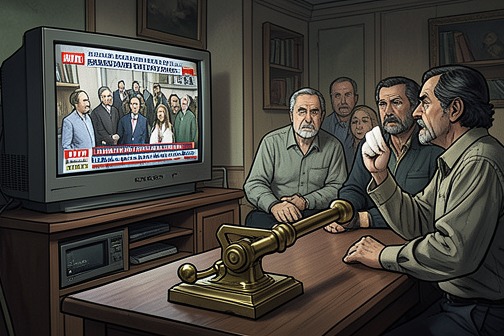
The [60 Minutes](entity:organization-recall-organization-60-minutes-9a22274b5c41) report on [Walter McMillian](entity:character-recall-character-walter-mcmillian-4a441db351d3)’s case challenged a local narrative that had presented him as a dangerous criminal and his conviction as reliable. Produced while McMillian’s appeal was pending, the broadcast carried the defense’s evidence beyond the courtroom; its arrival provoked official denunciations but also created doubts and pressure that helped move the case toward renewed investigation.
## Background and Decision to Go Public
[Bryan Stevenson](entity:character-recall-character-bryan-stevenson-d0edcbca5e8f) had long been wary of media attention in death-penalty cases. In his experience, even favorable coverage could trigger local backlash, worsen conditions for a client, or hasten an execution date. He was also concerned that national reporting might make a fair retrial harder if the conviction were overturned. Yet local newspapers had repeatedly depicted McMillian as a threat, while people in the community had little access to the evidence presented in court. Stevenson concluded that the risk of speaking publicly had to be weighed against the harm of leaving that account unchallenged.
The opportunity followed a speech Stevenson gave at Yale Law School, attended by a producer from the CBS investigative program. That summer, while the defense appeal was before the [Alabama Court of Criminal Appeals](entity:organization-recall-organization-6a9a8a457c58), veteran reporter [Ed Bradley](entity:character-recall-character-ed-bradley-b1dd95ebce62) and producer David Gelber traveled from [New York City](entity:location-recall-location-new-york-city-65df0a129d4c) to [Monroeville](entity:location-recall-location-monroeville-e12d1c3df40a). On a July day when temperatures reached 100 degrees, they interviewed people whose testimony had been presented at the hearing, including McMillian, [Ralph Myers](entity:character-recall-character-ralph-myers-14fb695ef414), [Karen Kelly](entity:character-recall-character-karen-kelly-8e8951c5d710), [Darnell Houston](entity:character-recall-character-darnell-houston-10deee8d046b), and members of McMillian’s family. They also spoke with [Woodrow Ikner](entity:character-recall-character-woodrow-ikner-895e32ae960b), confronted [Bill Hooks](entity:character-recall-character-bill-hooks-d4cd888b4a4f) at his workplace, and interviewed [Tommy Chapman](entity:character-recall-character-tommy-chapman-f6036b2a1950) at length. The breadth of those interviews placed the case’s disputed testimony and competing accounts before a national audience.
## Local Resistance Before the Broadcast
Word of Bradley’s visit quickly reached local officials. The [Monroe Journal](entity:organization-recall-organization-2bbb070bfa7c) framed visiting journalists as outsiders inclined to scorn local institutions and careless with facts, complaining about the “‘big-time reporter comes to hick town’ genre.” Before the program had aired, a local report quoted Chapman as believing the CBS researchers had already made up their minds. The coverage thus sought to cast suspicion on the investigation before viewers could assess what it had found.
Chapman also disputed the program’s presentation of McMillian. He pointed to a photograph taken at the time of McMillian’s arrest, when McMillian had long hair and a beard, and contrasted it with his appearance in the prison interview. [Alabama](entity:location-recall-location-alabama-2bbbae281095) prisoners were required to remain clean-shaven, a fact that accounted for the difference. The local account emphasized the photograph as an image of the “real” McMillian, turning a change in appearance into an argument about identity and credibility.
That pre-broadcast dispute unfolded against a sustained local portrayal of McMillian as dangerous. Newspapers had called him a “drug kingpin,” a “sexual predator,” and a “gang leader,” and had used his placement on death row and the security surrounding court hearings to reinforce the impression that he posed a grave threat. Even after the defense presented evidence at a hearing that McMillian had not committed the Pittman murder, headlines continued to connect him to other crimes and alleged criminal activity. The report entered a public arena in which the prosecution’s characterization had already been repeated as fact.
## Broadcast and Conflicting Reactions
When the program aired months later, local officials and newspapers moved quickly to discredit it. The [Mobile Press Register](entity:organization-recall-organization-bd37f6be769e) called the television account of McMillian’s conviction a “‘Disgrace’” in its headline and quoted Chapman condemning the program as irresponsible. Local writers also argued that renewed publicity burdened [Ronda Morrison](entity:character-recall-character-ronda-morrison-fac3c28352ed)’s parents by leading people to think McMillian might be innocent. This response presented scrutiny of the prosecution’s case as an injury to the victim’s family, while defending the conviction from the evidence the broadcast had summarized.
The local press had reason to resist the program’s account: its own coverage had largely reproduced the prosecution’s theory and description of McMillian. But the broadcast reached viewers who already knew and trusted 60 Minutes. By laying out evidence the defense had introduced in court, it gave viewers grounds to question the certainty of McMillian’s guilt. Some influential community leaders also worried that the case made Monroeville appear backward and possibly racist, damaging the town’s image and its efforts to attract business. Business leaders began asking Chapman and law enforcement officials harder questions.
For many Black residents, the program had a different significance. People in the region had been whispering about McMillian’s wrongful conviction for years, and the case had made them closely follow court rulings and developments. The defense office regularly received calls from people seeking updates or clarification about points discussed in barbershops and at social gatherings. Seeing the evidence presented in court laid out on national television was, for many, therapeutic: a long-held understanding of the case had at last been made publicly visible.
## Consequences for the Case
On camera, Chapman dismissed the suggestion that racial bias had affected the prosecution, professed complete confidence in McMillian’s guilt, and said he should be executed as soon as possible. He also expressed contempt for McMillian’s attorneys and for people who questioned jury decisions. Privately, however, Chapman had begun to worry about the reliability of the evidence exposed at the hearing. The contrast between his public certainty and private concern made the broadcast part of a larger shift: weaknesses that had been difficult to confront within the local narrative were now visible to a wider audience and to influential residents.
After consulting local investigators, Chapman was dissatisfied with their explanations of the contradictory evidence. Not long afterward, he formally asked the [Alabama Bureau of Investigation](entity:organization-recall-organization-alabama-bureau-o-8a21835975c6) to conduct another investigation into the murder and confirm McMillian’s guilt. The report did not itself resolve the case, but it helped change the conditions in which the case was being discussed. It gave the defense’s account a national platform, unsettled public confidence in the conviction, and helped turn scrutiny from the prosecution into a matter local officials could no longer easily dismiss.
Event 37
Alabama Court of Criminal Appeals overturns McMillian's conviction
The [Alabama Court of Criminal Appeals](entity:organization-recall-organization-6a9a8a457c58)’ reversal of [Walter McMillian](entity:character-recall-character-walter-mcmillian-4a441db351d3)’s conviction and death sentence was a decisive break in a case shaped by racial suspicion and a deeply unequal legal system. It gave McMillian a new trial, not an acquittal, and turned a long period of uncertainty into a concrete chance to challenge the prosecution in court.
## The Decision After a Long Wait
On February 23, nearly six weeks after [Bryan Stevenson](entity:character-recall-character-bryan-stevenson-d0edcbca5e8f) received the [Alabama Bureau of Investigation](entity:organization-recall-organization-alabama-bureau-o-8a21835975c6)’s report, a court clerk called to say the Court of Criminal Appeals had ruled in McMillian’s case and that the opinion was ready to be collected. Her cryptic assurance that Stevenson would like the decision sent him running to the courthouse. He was out of breath when he sat down with the thirty-five-page ruling.
The opinion invalidated both McMillian’s conviction and his death sentence. Stevenson later recognized that he had feared a loss more than he had allowed himself to admit; reading the decision brought that apprehension into focus at the very moment it gave way to relief.
## What the Reversal Changed
The court ruled for McMillian on every claim except the question of his innocence: it did not conclude that he was innocent, and it did not order his release. Instead, it set aside the conviction and death sentence and ordered a new trial. That distinction mattered. The ruling dismantled the existing judgment, but McMillian still faced the prospect of being tried again.
The reversal therefore marked a major procedural victory without resolving the underlying case. Its force lay in reopening a path that the conviction had appeared to close: the state would have to proceed toward a new trial rather than rely on the judgment that had sent McMillian to death row.
## A Case in a Racialized Legal Setting
The ruling arrived against a wider background of racial inequality in [Alabama](entity:location-recall-location-alabama-2bbbae281095)’s criminal courts. In 1987, all forty of the state’s elected district attorneys were white, although sixteen counties had majority-Black populations. [Monroe County](entity:location-recall-location-monroe-county-0b25112fdf85), where McMillian was tried, was 40 percent Black. These facts describe the setting in which the case was prosecuted; they do not, by themselves, establish the grounds on which the appellate court ruled.
Jury selection offered another measure of the distance between formal legal protections and courtroom practice. The Supreme Court’s 1986 decision in *[Batson v. Kentucky](entity:rule-recall-rule-batson-v-kentucky-7e23995c158f)* made it easier to challenge prosecutors’ racially discriminatory use of peremptory strikes, but the continuing use of such strikes remained a barrier to Black jury service. In death-penalty cases, defendants in counties that were 40 or 50 percent Black could still face all-white juries. McMillian had worried about race and the jury he would receive while on death row; the appellate reversal came within this broader struggle over who could participate in the justice system and how its decisions were made.
## News Carried Back to Death Row
After reading the opinion, Stevenson drove directly to death row to tell McMillian in person. McMillian listened, leaned back, and answered with a familiar chuckle, slowly acknowledging that the news was good. Stevenson, still energized by the decision, insisted that it was great. Their different reactions gave the victory its human scale: the ruling was momentous, but it had not yet erased the possibility of another trial or the years of uncertainty behind them.
Event 38
ABI reinvestigation of the McMillian case
The [Alabama Bureau of Investigation](entity:organization-recall-organization-alabama-bureau-o-8a21835975c6) (ABI) reinvestigation of the McMillian case turned a prosecutor’s effort to reaffirm a conviction into an official repudiation of it. After reviewing the evidence against [Walter McMillian](entity:character-recall-character-walter-mcmillian-4a441db351d3), ABI investigators [Tom Taylor](entity:character-recall-character-tom-taylor-9a128a523a19) and [Greg Cole](entity:character-recall-character-greg-cole-a63f1b1a30c4) concluded that McMillian had not killed [Ronda Morrison](entity:character-recall-character-ronda-morrison-fac3c28352ed), found that key trial witnesses had given false testimony, and asked McMillian’s lawyers to help identify the actual killer. The investigation mattered not only because it challenged the verdict, but because it showed how little the original case had withstood serious scrutiny.
## Origins and the case under scrutiny
The reinvestigation followed a post-conviction hearing at which the defense exposed contradictions in the prosecution’s evidence. [Tom Chapman](entity:character-recall-character-tom-chapman-f66a6e6180ed), who had publicly defended McMillian’s conviction, privately began to worry about the case’s reliability. He called local investigators Sheriff Tate, [Woodrow Ikner](entity:character-recall-character-woodrow-ikner-895e32ae960b), and Benson together and asked them to explain the conflicting evidence. Unsatisfied with their answers, Chapman formally asked ABI officials in [Montgomery](entity:location-recall-location-montgomery-a77051b70057) to investigate the murder again, ostensibly to confirm McMillian’s guilt.
The investigation revisited a case built on accusations that had outweighed contrary evidence from the beginning. Black residents had told Sheriff Tate that he had arrested the wrong man, but Tate had not investigated McMillian’s life, background, or whereabouts on the day of the murder. On that day, a fish fry was held at McMillian’s home to raise money for a church. At least a dozen parishioners were there with McMillian and his family during the morning. McMillian himself was working on his truck: with mechanic Jimmy Hunter’s help, he had dismantled it and removed its transmission by 9:30 a.m. Relatives began frying food for the roadside sale at about 11. These details placed McMillian among family, neighbors, church members, and a disabled truck—not at the dry cleaner where Morrison was killed.
The pressure to make an arrest had unfolded in a setting shaped by racial suspicion and unequal authority. McMillian’s relationship with [Karen Kelly](entity:character-recall-character-karen-kelly-8e8951c5d710) had become a subject of rumor, and his independence was treated by some as grounds to suspect drug dealing. The broader history of criminalizing intimacy between Black men and white women made that relationship especially charged. In the courtroom, Chapman dismissed community doubts as uninformed opinion and said that the state’s evidence implicated McMillian. The gap between residents’ knowledge of McMillian and the prosecution’s confidence was part of what the new investigation had to confront.
## Investigators test the conviction
Chapman did not tell McMillian’s lawyers that he had requested the new inquiry, even though they had spent more than two years seeking a fresh examination of the evidence. When Taylor and Cole contacted [Bryan Stevenson](entity:character-recall-character-bryan-stevenson-d0edcbca5e8f), he readily offered case files, memoranda, and original evidence. He regarded the investigators as experienced and serious, and believed that an honest review would expose the absurdity of the charges. He was also aware of the risk: if the conviction were overturned and the state retried McMillian, investigators who had received the defense’s materials might be better prepared to attack its evidence.
Within weeks, Taylor and Cole appeared to doubt McMillian’s guilt. After six months had passed since the appeal was filed, the investigators returned to Stevenson’s office to discuss their findings. Taylor was direct: “There is no way Walter McMillian killed Ronda Morrison.” He said that ABI would report to the attorney general, the district attorney, and anyone who asked that McMillian had nothing to do with the murders and was completely innocent. Taylor also explained why the prosecution’s story failed basic scrutiny: McMillian worked long days cutting timber on difficult terrain and lived in circumstances that did not fit the image of a drug kingpin. The account attributed to [Ralph Myers](entity:character-recall-character-ralph-myers-14fb695ef414), Taylor said, made no sense; he could not believe a jury had convicted McMillian on it.
The review also broke open the testimony of [Bill Hooks](entity:character-recall-character-bill-hooks-d4cd888b4a4f) and [Joe Hightower](entity:character-recall-character-joe-hightower-aea7f6ac7fd9). Cole told Stevenson that both men had admitted their trial testimony was false. Hooks had also claimed that Stevenson offered him money and a beach condominium in Mexico to change his testimony, an allegation that had put the defense lawyer himself under suspicion. Taylor explained that investigators had initially been told to investigate Stevenson. When they spoke to Hooks, however, he acknowledged that he had never spoken with Stevenson, had never been bribed by him, and had fabricated his testimony against McMillian. Cole added that investigators had begun polygraphing people and that the accounts fell apart quickly. The investigation thus undermined both the witnesses’ accusations against McMillian and the counter-accusation directed at his lawyer.
## From exonerating McMillian to seeking the killer
Taylor and Cole said their work was not finished: ABI had a suspect and wanted help identifying the person who had actually committed the crime. Taylor recognized that McMillian’s lawyers were not trying to put another person on death row, but argued that identifying the killer might make the public more willing to accept McMillian’s innocence. The request exposed an uncomfortable condition surrounding the case: even an official finding that McMillian had not committed the murder might not, by itself, persuade people who believed he had escaped punishment.
The defense had already developed a line of inquiry. Witnesses had reported seeing a white man leave the cleaners around the time of the crime, and Morrison had received menacing calls. A man had persistently pursued her, appeared at the cleaners without warning, and perhaps stalked her. The defense had spoken with a caller who blamed another man for Morrison’s death, but that accusation did not fit the eyewitness descriptions as well as the caller’s own history of stalking, violence against women, and fixation on the case. After Stevenson’s team asked the caller direct questions about his whereabouts on the day of the murder, he contacted them less often. The available account does not identify ABI’s suspect by name; it does establish that the investigators believed the defense had interviewed him and possessed useful information.
Stevenson agreed to provide Taylor and Cole with the interviews and information. He said the material was not protected by attorney-client privilege because the defense had never represented the man or obtained the information confidentially. He asked for a few days to organize it, while insisting on the priority that had guided the defense throughout: getting McMillian out of prison as soon as possible. The exchange linked the state’s investigative authority with information gathered by lawyers who had spent years challenging the conviction.
## Reversal of the official account
The investigation’s central reversal was institutional as well as evidentiary. Chapman had requested a review to confirm a conviction he had defended, but Taylor and Cole instead declared McMillian completely innocent. Their conclusion rested on more than a competing theory: they found that the prosecution’s central story did not make sense, that Hooks and Hightower had admitted lying, and that Hooks’s claim of a defense bribe was itself false. The case that had once been presented as sufficient for a death sentence could not survive an investigation willing to test its witnesses and assumptions.
The reinvestigation also sharpened the contrast between public certainty and actual doubt. Chapman had dismissed suggestions of racial bias and spoken confidently about McMillian’s guilt, yet the hearing had raised problems he could no longer ignore. His request to ABI set in motion a review whose findings contradicted the conviction he had publicly defended. For McMillian, the investigators’ conclusion offered powerful official confirmation of innocence; their effort to identify the real killer also showed how much further the work of correcting the case still had to go.
Event 39
Murder of Ronda Morrison at the dry cleaner
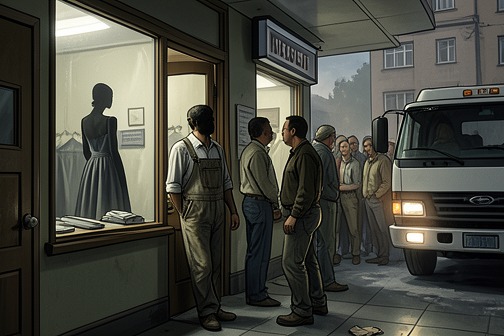
The [Murder of Ronda Morrison at the dry cleaner](entity:event-recall-event-0ffeb7e2eedb) became the center of a prosecution that turned an unsolved killing into a death sentence for [Walter McMillian](entity:character-recall-character-walter-mcmillian-4a441db351d3). The account gives little detail about the crime itself; its emphasis falls on how the murder was attributed to McMillian, how that accusation was reinforced in court and in the press, and how investigators eventually rejected it. Their conclusion—that McMillian had nothing to do with the murder—exposed the gulf between the public story of a dangerous killer and the evidence against an innocent man.
## The Murder and the Accusation
The murder remained unsolved long enough to become a source of local frustration. [Ted Pearson](entity:character-recall-character-ted-pearson-2766d476030d), the district attorney for nearly twenty years, faced criticism that his office had failed to solve it quickly. As he neared retirement, Pearson was determined to leave office with a victory; the prosecution of McMillian became one of the most important cases of his career. In February 1988, the case was scheduled for trial with [Ralph Myers](entity:character-recall-character-ralph-myers-14fb695ef414) as the primary witness and [Bill Hooks](entity:character-recall-character-bill-hooks-d4cd888b4a4f) prepared to testify that he had seen McMillian’s truck at the crime scene.
The case against McMillian was fragile. Pearson knew that many Black residents believed McMillian was innocent, yet remained confident that he could secure a guilty verdict despite doubts about the testimony of Myers and Hooks. The murder’s unanswered questions thus became entangled with an accusation whose key witnesses were already suspect. The eventual investigative conclusion would not merely weaken the case: it would state that McMillian had no involvement in the murder at all.
## Race, Courts, and the Jury
The prosecution unfolded within a justice system in which race shaped who could participate in deciding a case. In 1987, all forty elected district attorneys in [Alabama](entity:location-recall-location-alabama-2bbbae281095) were white, even though sixteen counties had Black majorities. [Monroe County](entity:location-recall-location-monroe-county-0b25112fdf85) was about 40 percent Black, but defendants there could still face all-white juries. For generations, officials had kept jury rolls predominantly white through voting-roll exclusions and other tactics, including discretionary peremptory strikes that could remove Black prospective jurors.
A 1986 decision in [Batson v. Kentucky](entity:rule-recall-rule-batson-v-kentucky-7e23995c158f) offered Black defendants a more direct way to challenge racially discriminatory strikes. But the ruling also gave prosecutors an incentive to find more creative ways to exclude Black jurors. McMillian heard about these practices from other prisoners while held on death row before trial. He left legal strategy to his lawyers, but remained concerned about what kind of jury would hear his case. The murder prosecution therefore carried stakes beyond the evidence about the crime: the composition of the jury could shape whether that evidence received a fair hearing.
The broader history of racial hierarchy also formed part of the account’s context. After federal troops left Alabama in the 1870s, voting rights for African Americans were taken away and racially restrictive laws reinforced white supremacy. Laws against interracial sex and marriage were among the measures used to police intimate relationships and sustain that hierarchy. The narrative describes this history alongside Walter’s relationship with [Karen Kelly](entity:character-recall-character-karen-kelly-8e8951c5d710), but does not establish that the relationship caused the murder accusation. It shows instead how racialized assumptions about Black men and white women could make a Black man’s reputation especially vulnerable to suspicion.
## A Dangerous Man in the Press
During the later effort to overturn the conviction, local papers repeatedly presented McMillian as a threat. Newspapers in [Monroeville](entity:location-recall-location-monroeville-e12d1c3df40a) and [Mobile](entity:location-recall-location-mobile-ea485bd0ac3d) called him a drug kingpin, a sexual predator, and a gang leader. Early coverage highlighted the sexual misconduct allegations involving Myers; accounts of the hearings emphasized metal detectors and police stationed in the courtroom. A Brewton headline described McMillian as wanted in another murder, while the [Mobile Press Register](entity:organization-recall-organization-bd37f6be769e) declared that Ronda was not the only girl killed and reported law-enforcement claims that McMillian led a criminal operation across several counties.
Those claims gave the murder a second life in public: instead of remaining a specific crime to be investigated, it became part of a larger portrait of McMillian as a dangerous criminal. That portrait endured even when evidence presented at a hearing showed he had nothing to do with another murder invoked against him. At a hearing in [Baldwin County](entity:location-recall-location-baldwin-county-2e9c7413fc7e), supporters of the State walked out rather than hear evidence supporting his innocence. The press’s portrayal and the courtroom security surrounding McMillian reinforced one another, making suspicion appear like proof.
The defense considered seeking national attention, partly because threats raised concern about how safely McMillian could live if released. Publicly explaining the case might help prepare the community for his return and counter the local portrayal of him as guilty. Yet media attention also carried risks: the appeal was pending, and the defense feared that prejudicial coverage could make a fair retrial nearly impossible. The choice to seek national reporting was therefore not a substitute for the appeal but an attempt to change the public account of the murder and its supposed perpetrator.
## Investigators Reject the Case
After reviewing files, memoranda, and original evidence, investigators [Tom Taylor](entity:character-recall-character-tom-taylor-9a128a523a19) and [Greg Cole](entity:character-recall-character-greg-cole-a63f1b1a30c4) came to doubt McMillian’s guilt. Taylor eventually told the defense plainly that McMillian could not have killed [Ronda Morrison](entity:character-recall-character-ronda-morrison-fac3c28352ed). He said that the investigators would report to the attorney general, the district attorney, and anyone who asked that McMillian had nothing to do with either murder and was completely innocent.
Taylor’s explanation returned the case to the mismatch between accusation and evidence. McMillian, he observed, worked long days cutting timber on difficult terrain and lived in conditions that made little sense for the criminal kingpin local law enforcement had described. Myers’s trial account, Taylor said, also made no sense. The investigators’ assessment transformed the murder’s place in the story: rather than evidence of McMillian’s guilt, it became the crime around which an unreliable prosecution had been built.
The account’s focus is consequently not a solved reconstruction of Morrison’s death, but the consequences of attributing it to the wrong man. The murder brought a long-standing failure to solve a crime into the courtroom; the prosecution, racial barriers in jury selection, and a sensational public narrative then made the accusation appear durable. The later investigators’ conclusion cut through that narrative and supplied the essential finding: McMillian was innocent of Morrison’s murder.
Event 40
Walter McMillian's release
[Walter McMillian's release](entity:event-recall-event-7035f15d8b74) came when the State joined a motion to dismiss the charges against him after the [Alabama Court of Criminal Appeals](entity:organization-recall-organization-6a9a8a457c58) overturned his conviction. In court, the order took moments; the freedom it restored had been delayed for six years of wrongful imprisonment on death row. His release became both a reunion with family and community and a measure of how much harder it had been to free an innocent man than to condemn him.
## From reversal to dismissal
After the appellate ruling, [Bryan Stevenson](entity:character-recall-character-bryan-stevenson-d0edcbca5e8f) called prosecutor [Tommy Chapman](entity:character-recall-character-tommy-chapman-f6036b2a1950) and said he intended to seek dismissal of all charges. He asked whether Chapman would join the motion or at least refrain from opposing it. Chapman replied that they should talk after the case was over, but said the State would not oppose the filing. The eventual hearing brought a further reversal: the State joined the motion after all.
The night before the hearing, Stevenson drove to [Minnie](entity:character-recall-character-minnie-7a217c066ad6)'s home to pick up a suit for Walter to wear when he walked out of court. Minnie was glad he would be released, but the prospect did not make the years of injury disappear. She asked Stevenson to tell Walter that perhaps he should not return home. The stress, gossip, and lies had taken too great a toll, she said, and she did not think she could return to the way things had been. Her words placed a private cost beside the public promise of a homecoming: release could end imprisonment without restoring a marriage or family life to its former shape.
## A changed courtroom
The hearing took place before Judge Pamela Baschab, who had replaced [Judge R. E. L. Key](entity:character-recall-character-judge-r-e-l-key-0d68e999a4ce) after his retirement. She told Stevenson she intended to grant the motion immediately and wanted no extended argument. The courtroom looked different from the place where Walter had been tried: there was no metal detector and no menacing dog. Family members and supporters filled the room, television cameras and journalists crowded in, and more people waited outside than could get inside.
Walter entered in the black suit and white shirt Stevenson had brought him. He was not handcuffed or shackled. His family had seen him in a white prison uniform since the trial six years earlier, and some people gasped at the sight of him dressed for release. This time, deputies allowed the crowd's spontaneous cheers to pass without the threats of expulsion that had marked earlier proceedings. The contrast was not only between prison clothing and a suit, or between silence and celebration. It showed how the same courthouse could enforce a man's confinement and then, briefly, make room for the people who had come to welcome him.
Stevenson summarized the case and told the judge that both the defense and the State sought dismissal of all charges. The judge granted the motion. Instead of feeling only relief, Stevenson found himself angry: the court and prosecutor were now accommodating, but Walter had endured years of suffering before this point. He thought of the jury's original recommendation of life imprisonment without parole, which Judge Key had overridden to impose a death sentence. That decision had brought Walter's case to the lawyers' attention; without it, Stevenson feared, Walter might have spent his life in prison and died there.
Before the hearing ended, Stevenson told the court that it had been far too easy to convict Walter and send him to death row for a crime he had not committed, and far too hard to win his freedom after proving his innocence. The court then pronounced Walter free to go. His release was therefore not presented as a tidy conclusion: the order ended his confinement, while Stevenson's final words insisted that the system that caused it remained in need of change.
## The journey out
Walter hugged Stevenson, who gave him a handkerchief for his tears, and shook hands with Chapman. They left by a back staircase, where reporters were waiting. Stevenson cut short the press questions when Walter seemed overwhelmed, and they walked to the courthouse entrance. Outside, dozens of people cheered and waved signs. Relatives ran to hug Walter; his grandchildren took his hands, and older community members came forward to embrace him. Even men who approached to shake his hand received a hug. It took nearly an hour to get through the crowd and into the car.
The journey continued to [Holman Prison](entity:location-recall-location-holman-prison-510640bc08d9), because Stevenson and his colleague Bernard were taking Walter there before going to the family home. Walter told Stevenson that the men on death row had held a special service for him on his last night, praying for him and giving him their final hugs. He felt guilty about leaving them behind. Stevenson told him they were glad he was going home; Walter's freedom, he said, offered a small sign of hope in a place marked by hopelessness. The crowd followed them to the prison, and the guard at the gate allowed the caravan of media, relatives, and well-wishers inside. As Walter walked away, men shouted encouragement from their cells. One of the last voices called, “Stay strong, man. Stay strong!” Walter answered, “All right!”
Then he raised his arms and moved them gently up and down, as if preparing to take flight. He looked at Stevenson and said, “[I feel like a bird](entity:expression-recall-expression-i-feel-like-a-bird-83e17626c9ce), I feel like a bird.” The gesture made freedom physical: not an abstract legal status, but the first movement of a man leaving the place that had held him. Yet he had turned back toward the men who remained inside, and their voices had followed him to the car.
## What release could not repair
The dismissal ended Walter's imprisonment but did not resolve the murder that had put him at the center of the case. After the release, Stevenson reflected that no one was ever prosecuted for [Ronda Morrison](entity:character-recall-character-ronda-morrison-fac3c28352ed)'s murder and considered the continuing anguish this must have caused her parents. The case's resolution freed an innocent man; it did not answer every question left by the crime or undo the harm to everyone caught in its aftermath.
Stevenson later described Walter's lesson in terms of mercy grounded in hope. Walter forgave people who had unfairly accused and convicted him, and those who had judged him unworthy of mercy. In this account, forgiveness did not mean that the injustice was insignificant or that dismissal alone was enough. It marked a possibility beyond punishment: that a person could recover a life worth celebrating, and that compassion could be extended even to those who had not earned it.
The release also sharpened the book's wider concern with the difference between condemning and helping. The crowd's joy, Minnie's uncertainty, the voices from the prison cells, and Stevenson's anger all remain present in the same event. Walter left as a free man, but his freedom did not make the people still inside disappear. His release offered hope precisely because it was real—and because it revealed how much work remained.
Event 41
New York Times Co. v. Sullivan
[New York Times Co. v. Sullivan](entity:event-recall-event-e55da1d718b2) was a landmark press-freedom ruling that arose from [Alabama](entity:location-recall-location-alabama-2bbbae281095) officials’ response to civil-rights coverage. By changing the standard for defamation, the Supreme Court made it harder for public officials to use lawsuits to suppress unfavorable reporting. [Bryan Stevenson](entity:character-recall-character-bryan-stevenson-d0edcbca5e8f) presents the decision both as a legal victory and as a reminder that a change in doctrine could not by itself erase local hostility toward the press.
## The advertisement and the lawsuit
In 1960, [The New York Times](entity:organization-recall-organization-a02dba54de1f) published an advertisement titled “Heed Their Rising Voices” to raise money for the defense of Dr. Martin Luther King Jr., who faced perjury charges in Alabama. Alabama officials responded with defamation suits: Public Safety Commissioner L. B. Sullivan and Governor [John Patterson](entity:character-recall-character-john-patterson-70c3446e39c6) claimed that the newspaper had defamed them. A local jury awarded them half a million dollars, and the case went to the Supreme Court.
The dispute belonged to a broader Southern practice of answering sympathetic accounts of civil-rights activism with defamation litigation. State officials could sue national outlets, and local courts and all-white juries were often willing to rule for the officials. Large judgments threatened newspapers with financial consequences and discouraged coverage that portrayed activists sympathetically or law enforcement unfavorably. The lawsuit therefore concerned more than one advertisement: it tested whether public officials could use local legal power to constrain reporting on the civil-rights struggle.
## The Supreme Court’s rule
The Supreme Court’s ruling changed the standard for defamation and libel. Under the rule as Stevenson describes it, public officials had to prove malice by showing that a publisher actually knew a statement was false. That requirement raised the barrier to successful defamation claims and gave publishers greater freedom to report candidly on civil-rights protests and activism.
The decision marked a significant victory for freedom of the press, but its effect was not simply to end conflict between Southern officials and national media. Stevenson notes that the ruling generated still more contempt for the national press in the South, an animosity that outlasted the civil-rights era. The legal protection expanded; the political resentment remained.
## The ruling’s relevance to McMillian’s case
Stevenson recalls the decision while considering whether national press attention could help [Walter McMillian](entity:character-recall-character-walter-mcmillian-4a441db351d3). The chief judge on the [Alabama Court of Criminal Appeals](entity:organization-recall-organization-6a9a8a457c58) was John Patterson, who had sued The New York Times over its civil-rights coverage when he was governor of Alabama. That history made Stevenson doubt that publicity from national media would help McMillian’s pending appeal, even though he believed the case deserved wider scrutiny.
The problem was not only the appeal. Stevenson feared that local coverage had already shaped public opinion against McMillian, describing him as a dangerous drug dealer and using sensational allegations to reinforce that image. A new trial, if ordered, might also be jeopardized by prejudicial coverage. The ruling thus appears in the account as an important safeguard for public discussion, but not a guarantee that truthful reporting would be welcomed or that a defendant would receive a fair hearing in a hostile local climate.
## Significance
The case links constitutional protection to the practical conditions under which information reaches the public. Its rule made it harder for officials to silence critical reporting through defamation judgments, helping media outlets speak more honestly about civil-rights activity. Yet Stevenson’s account emphasizes the limits of legal change: the ruling could protect publishers from certain lawsuits without removing entrenched distrust of the press, undoing local prejudgment, or ensuring that public understanding would be fair.
Event 42
Hurricane Ivan
[Hurricane Ivan](entity:event-recall-event-970cca2451e9) was the September 2004 storm that destroyed Marsha and [Glen Colbey](entity:character-recall-character-glen-colbey-e509ee0254be)’s home and intensified the family’s poverty and uncertainty. Its immediate damage was only part of its impact: while the Colbeys tried to keep their six children housed, fed, and in school, Marsha was pregnant, unable to afford prenatal care, and struggling with fears that echoed an earlier pregnancy. The storm thus becomes the point where disaster, economic insecurity, and the family’s coming medical and legal crisis converge.
## The storm and its scale
Ivan struck coastal [Alabama](entity:location-recall-location-alabama-2bbbae281095) after a summer in which tropical storms and hurricanes had made life along the Gulf Coast increasingly uncertain. The storm spawned 119 tornadoes and caused more than $18 billion in damage. For Marsha, the figures translated into immediate practical questions: how the family would find work, when the children could return to school, and how they would obtain money and food. With six children to protect, there was little room to pause over the loss of their home.
## The Colbeys’ displacement
Marsha and Glen were living with their children in a crowded trailer when the hurricane warnings came. They knew they were vulnerable, though the fact that many neighboring families shared their situation offered some consolation. When Ivan destroyed their home in September, the Colbeys joined thousands seeking assistance from the Federal Emergency Management Agency. They eventually received a camper trailer and placed it on their property so the children could remain at nearby schools.
The storm also interrupted the work on which the family depended. Marsha and Glen had found construction and roofing jobs at the start of the summer, but rebuilding work would not be available for weeks. By winter, jobs had returned and Glen had found steadier employment; most of the children were back in school. The family remained financially strained, but they appeared to have survived the worst of the destruction.
## Pregnancy amid the aftermath
During the disruption, Marsha realized that she was pregnant again at forty-three. She had not planned another child, and the prospect of pregnancy limiting her ability to do construction work added to her anxiety. Five years earlier, when she was pregnant with her youngest son, Joshua, nurses found cocaine in her system and police threatened her with prosecution, imprisonment, and the loss of her children. This time, despite the stress and the old temptation to use drugs, she did not want to risk her family’s security.
Marsha and Glen remained very poor, but the account also describes the closeness Marsha built with her children: she read, talked, and played with them, showed them affection, and kept them close. She expected to love a seventh child as she had loved the others, even though the pregnancy was unexpected. With money scarce, she could not afford a doctor and relied on her experience from six previous deliveries. She tried not to worry about pains and bleeding, though the pregnancy involved problems she had not experienced before. In the old, largely uninhabitable trailer beside the FEMA camper, she went into sudden labor in a bathtub and delivered a stillborn son.
## Consequences and significance
Ivan did not cause the medical emergency that followed, but it shaped the conditions in which Marsha faced pregnancy and birth: the family had lost its home, rebuilding work had paused, and medical care seemed unaffordable. The narrative then follows the stillbirth into an investigation and a capital-murder charge, despite disagreement among medical experts about whether the baby had been born alive. The storm’s aftermath therefore serves as more than a backdrop. It exposes how a disaster’s burdens fell on a family with little financial protection, just as Marsha’s pregnancy and loss brought her into contact with a criminal process that treated uncertainty as grounds for accusation.
Event 43
Marsha Colbey case and release
The [Marsha Colbey case and release](entity:event-recall-event-7c25f3a7737c) shows how a private family tragedy was transformed into a capital-murder prosecution against a poor mother, despite the absence of reliable evidence that a crime had occurred. After ten years in prison, Colbey won a new trial on the ground that biased jurors had been allowed to decide her fate; further expert review persuaded local authorities that the murder charge had no basis, and she was freed in December 2012.
## Background and the death of Timothy
By the winter after [Hurricane Ivan](entity:event-recall-event-970cca2451e9), some of the Colbey family’s circumstances had improved: jobs had returned and [Glen Colbey](entity:character-recall-character-glen-colbey-e509ee0254be) had found steadier work. But the family remained financially strained. [Marsha Colbey](entity:character-recall-character-marsha-colbey-1ab876bb4f7f) knew that pregnancy at her age carried risks, yet could not afford a doctor. She had given birth six times before and hoped to manage without prenatal care, although this pregnancy brought bleeding and pain. Medical examination could have revealed signs of placental abruption.
The family’s old trailer was largely uninhabitable, but it still had running water and a bathtub. When Marsha felt unwell, she took a hot bath there. A violent labor began suddenly, and she delivered a stillborn son. She tried desperately to revive him, but he never breathed. Marsha mourned him, named him Timothy, and arranged for him to be buried in a marked grave beside the family’s small camper. What might have remained a private loss instead drew the attention of a suspicious neighbor, [Debbie Cook](entity:character-recall-character-debbie-cook-92135e33f76b), whose inquiries led police to Marsha’s home and the grave.
## From stillbirth to capital prosecution
A state forensic pathologist, [Kathleen Enstice](entity:character-recall-character-kathleen-enstice-9cee9f64adea), was summoned to exhume the infant. Before she had formally examined his body, Enstice told an investigator that she believed he had been born alive. She later acknowledged that she had no basis for that preliminary opinion: without an autopsy and tests, she could not know whether the baby had been born alive. The subsequent autopsy nevertheless led her to conclude both that Timothy had been born alive and that he would have survived with medical attention.
The State proceeded with a capital-murder charge only weeks after the delivery. At trial, Enstice said Timothy had been born alive and died by drowning. She described the live-birth conclusion as a diagnosis of exclusion: she had not found evidence of stillbirth and had no other explanation for the death. The State’s own expert, obstetrician and gynecologist [Dennis McNally](entity:character-recall-character-dennis-mcnally-3d710624f16d), undercut that account. He had examined Marsha two weeks after the stillbirth and testified that her age and lack of prenatal care made her pregnancy high-risk for unexplained fetal death. [Werner Spitz](entity:character-recall-character-werner-spitz-54e82f3925b1), the medical authority whose treatise Enstice had relied on in her forensic training, testified for the defense that he would not declare a live birth under the circumstances, much less a homicide.
With no credible scientific evidence establishing that a crime had occurred, the prosecution turned attention to Marsha’s poverty and personal history. Prosecutors presented her as a bad mother for not obtaining prenatal care, although she had lacked the money to do so. Investigators photographed an unflushed toilet and a beer can on the floor and displayed them to the jury as evidence of neglect. Marsha consistently told investigators that Timothy had been stillborn and had never taken a breath despite her efforts to revive him. She refused an offer to plead guilty in exchange for an eighteen-year prison term because she maintained that she had done nothing wrong.
## A verdict shaped by presumption
The climate surrounding the trial made impartial consideration especially difficult. During jury selection, prospective jurors said that they could not be impartial toward Marsha. Some found allegations involving the killing of a child so disturbing that they could not honor the presumption of innocence. Others described close relationships with a state investigator and said they would give him instant credibility or believe anything he said. The trial court allowed almost all of these jurors to remain on the panel despite the defense’s objections.
The jury convicted Marsha of capital murder. Before the verdict, jurors had raised concerns about her being exposed to the death penalty, so the State agreed not to pursue execution if she were found guilty. That concession was followed by conviction and a sentence of life imprisonment without parole. Marsha was then shackled and transported to [Julia Tutwiler Prison for Women](entity:location-recall-location-julia-tutwiler-priso-aa3e23f0b18e).
Her imprisonment placed her in a facility described as overcrowded and dangerous, with nearly twice as many women as it was designed to hold. As the state’s only women’s prison, it could not meaningfully separate women according to their needs; people struggling with serious mental illness or emotional problems were housed alongside others in crowded dormitories. Marsha found the environment difficult to bear, including the unexplained screaming that could continue through the night. Even there, she persisted and began advocating for some of the younger women.
## Appeal, release, and the meaning of freedom
The [Alabama Court of Criminal Appeals](entity:organization-recall-organization-6a9a8a457c58) affirmed Marsha’s conviction and sentence. Her legal team sought review in the [Alabama Supreme Court](entity:organization-recall-organization-alabama-supreme-4e8a792b24b6) and obtained a new trial because the trial judge had refused to remove jurors who were biased and unable to be impartial. The ruling reopened the case, but it did not immediately end the threat of prosecution: local officials in [Baldwin County](entity:location-recall-location-baldwin-county-2e9c7413fc7e) considered trying her again. The defense brought in expert pathologists and persuaded the authorities that the evidence offered no basis for a murder conviction.
Resolving the legal case took two years. Another year of disputes with the Department of Corrections followed over whether Marsha would receive full credit for the time she had already served. She was finally released in December 2012, after ten years of wrongful imprisonment.
On the day she left prison, her husband and two daughters accompanied her to the office of the [Equal Justice Initiative](entity:organization-recall-organization-equal-justice-in-398aa3844197). Her youngest daughter, about twelve years old, would not let go of her mother: she held Marsha around the waist, kept hold of her arm, and appeared in every photograph because she refused to be separated from her. The scene offered a visible counterimage to the prosecution’s portrayal of Marsha as a bad mother. At a later public recognition, Marsha said she was glad to be free but remained troubled by the women still in prison. Her case ended not with freedom alone, but with her attention turning toward those who had not received the help she had.
Event 44
Dismissal of the charges against Bridget Lee
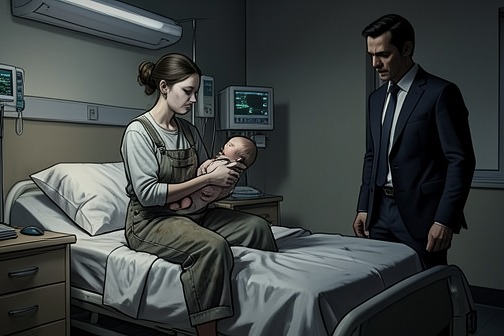
The dismissal of the charges against [Bridget Lee](entity:character-recall-character-bridget-lee-e63e701b37f0) came after six pathologists unanimously found that her baby had died of neonatal pneumonia, overturning the claim that the child had been born alive and suffocated. Lee’s case shows how a stillbirth, filtered through suspicion about a woman’s pregnancy, could become a capital prosecution—and how later forensic review could expose the error before trial.
## Background and Arrest
At about the time [Marsha Colbey](entity:character-recall-character-marsha-colbey-1ab876bb4f7f) was being prosecuted, Lee gave birth to a stillborn baby in Pickens County, [Alabama](entity:location-recall-location-alabama-2bbbae281095). She was thirty-four, a mother of two, a church pianist, and a bank bookkeeper. Her pregnancy followed an extramarital affair; frightened and depressed, she concealed it and hoped to arrange a secret adoption.
Lee went into labor five weeks before her due date, and the baby was stillborn. She did not tell her husband what had happened, and her silence aroused suspicion. The circumstances surrounding the pregnancy helped shape the interpretation of the death: the pathologist who performed the initial autopsy concluded that the baby had been born alive and then suffocated by Lee. She was arrested and charged with capital murder.
## Forensic Reassessment
Months after Lee’s arrest, six additional pathologists examined the child’s body. Their conclusion was unanimous: neonatal pneumonia had caused the death. They identified the case as a classic stillbirth, with features they described as common, directly contradicting the initial account of a live birth followed by suffocation.
The new examinations changed the course of the case. Faced with that evidence, the prosecutor dropped the charges. Lee was spared a capital trial and the possibility of a death sentence; the dismissal followed not from a trial verdict, but from the medical reassessment that undermined the accusation before trial.
## Significance
Lee’s prosecution appears in the account alongside other cases in which the unexplained death of an infant led authorities to suspect a mother of murder. The decisive distinction in her case was between an assumption of live birth and evidence of stillbirth: once six pathologists identified neonatal pneumonia as the cause of death, the capital accusation could no longer stand.
The dismissal also gives concrete form to the stakes of prosecuting infant deaths as capital crimes. A mother’s concealed pregnancy and the suspicion it provoked had helped bring Lee within reach of a capital trial; independent examination of the body reversed that trajectory. Her case is presented as part of a broader pattern in which poor or vulnerable women could face grave criminal accusations after a child’s unexplained death, while reliable forensic assistance could determine whether those accusations endured.
Event 45
Diane Banks's release
[Victoria Banks](entity:character-recall-character-victoria-banks-6f905d844a33)’s release came after proof overturned the premise of her prosecution: a tubal ligation five years before her arrest had made it biologically impossible for her to become pregnant or give birth. An intellectually disabled Black woman accused of killing a newborn who had never existed, Banks had been coerced into pleading guilty and accepting a prison sentence after facing capital-murder charges and the possibility of execution. Her freedom exposed not merely a mistaken allegation but a chain of failures that had carried an impossible story into a criminal conviction.
## The Accusation
A few years before the defense took on [Marsha Colbey](entity:character-recall-character-marsha-colbey-1ab876bb4f7f)’s case, it represented Banks and her sister, Diane Tucker. Banks lived in Choctaw County, [Alabama](entity:location-recall-location-alabama-2bbbae281095), and had an intellectual disability. Police had no credible basis for believing she had ever been pregnant. The accusation began after Banks allegedly told a deputy sheriff that she was pregnant in an effort to avoid jail on an unrelated matter. Months later, when she was seen without a child, officers treated the absence of a baby as evidence that she had killed one.
The accusation thus turned on an assumption rather than a verified pregnancy. The supposed infant’s existence was not established before Banks was accused of its death; instead, her earlier statement and the later absence of a child were made to support an imagined birth and murder. That leap placed Banks and Tucker under the weight of a capital charge without a credible factual basis for the event they were said to have committed.
## A Plea Under Capital Threat
Banks had no adequate legal assistance and was disabled. Facing capital-murder charges and the possibility of a death sentence, she was coerced into pleading guilty alongside Tucker to killing an infant who had never existed. Banks accepted a twenty-year prison sentence as part of a deal. The plea was therefore not a resolution grounded in proof that a child had been born or died; it was made under the pressure of a prosecution that exposed her to a possible death sentence.
Law enforcement officials refused to investigate Banks’s claims of innocence before sending her to prison. The case’s central factual question—whether she could have been pregnant—went unanswered at the point when it could have prevented the prosecution and plea. Her disability and lack of adequate legal help compounded that failure, leaving her to face the consequences of an accusation that could have been tested against her medical history.
## Proof and Release
The defense established that Banks had undergone a tubal ligation five years before her arrest. That fact made conception, and therefore the alleged birth, biologically impossible. Once the claim was substantiated, the supposed infant could no longer serve as the basis for her conviction. The defense won Banks’s freedom; the account does not specify the date or circumstances of her release.
The exonerating proof did not depend on reconstructing an unobserved birth or resolving uncertainty about how a baby had died. It disclosed that the foundational event had never happened. The same case that had advanced to a capital accusation and a twenty-year prison deal was undone by a concrete fact in Banks’s own medical history—one that officials had not investigated before imprisoning her.
## Wider Significance
Banks’s case appears amid a broader account of women criminalized over unexplained infant deaths. Alabama’s capital-murder law included the murder of a child under fourteen as a death-eligible offense, and the book describes the disproportionate exposure of women accused in family-related crimes. Banks’s case makes that danger stark: a woman could be threatened with death and imprisoned even though the child whose murder she supposedly confessed to had never existed.
The case also shows how distinct disadvantages reinforced one another. Banks was a Black woman with an intellectual disability; she lacked adequate legal assistance, faced a capital charge, and encountered officials who declined to investigate her innocence. Her eventual release corrected her imprisonment, but the route to that freedom revealed how an untested allegation could become a guilty plea when the person accused had little practical ability to challenge the state’s account.
Event 46
Tutwiler Prison sexual abuse investigation
The [Tutwiler Prison sexual abuse investigation](entity:event-recall-event-1b1d96a01833) exposed how women at the [Julia Tutwiler Prison for Women](entity:location-recall-location-julia-tutwiler-priso-aa3e23f0b18e) faced sexual violence from the staff responsible for their custody. What first surfaced in conversations with [Marsha Colbey](entity:character-recall-character-marsha-colbey-1ab876bb4f7f) widened into an inquiry involving more than fifty women, public reports, a complaint to the U.S. Department of Justice, and changes to prison policy.
## Conditions and the Investigation’s Impetus
Marsha’s years at Tutwiler were shaped not only by the strain of imprisonment but by the conduct of correctional staff. Women reported rape, harassment, exploitation, and assault by male officers. During prison counts, the male warden allowed guards into the showers, where they leered at naked women and made crude comments and suggestive threats. Women had no privacy in bathrooms, and dark corners and hallways were feared as places where they could be beaten or sexually assaulted. The [Equal Justice Initiative](entity:organization-recall-organization-equal-justice-in-398aa3844197) had asked the [Alabama Department of Corrections](entity:organization-recall-organization-alabama-departme-e44b01470907) to install security cameras in the dorms, but the department refused. The abuse reached beyond the guards: the prison chaplain also sexually assaulted women who came to the chapel.
After the Equal Justice Initiative began working on Marsha’s appeal, repeated meetings with her brought the sexual violence at Tutwiler into focus. The team also took on a woman who had filed a federal civil suit after being raped in the prison. Defects in her pleadings limited the legal help the team could provide, but the details of her experience made it impossible to treat the abuse as an isolated allegation. The investigation that followed sought to establish how widespread the violence was and how prison authorities had responded.
## Findings and Institutional Response
The inquiry interviewed more than fifty women and found sexual abuse to be widespread, not confined to the woman whose civil suit had first brought the team into the case. Several women had been raped and become pregnant; DNA testing confirmed that male officers had fathered some of the children, yet little was done. Officers who had received multiple sexual-assault complaints were sometimes moved temporarily to other duties or prisons, only to return to Tutwiler and continue preying on women. The pattern showed how complaints could be recorded without producing lasting protection.
The Equal Justice Initiative filed a complaint with the [United States Department of Justice](entity:organization-recall-organization-united-states-de-a9a6b733a21b) and issued public reports that drew widespread media coverage. Julia Tutwiler Prison for Women was named among the ten worst prisons in America by Mother Jones, the only women’s facility on the list. Legislative hearings and changes at the prison followed: male guards were barred from shower areas and toilets, and a new warden took over. These measures changed conditions in specific spaces where women had been exposed, while the investigation’s findings made clear that the abuse had persisted through institutional failures, including the return of officers accused repeatedly of assault.
## The Women Behind the Inquiry
Marsha Colbey entered Julia Tutwiler Prison for Women after being charged with capital murder following the stillbirth of her son. Inside, she met other women imprisoned after stillbirths, including [Efernia McClendon](entity:character-recall-character-efernia-mcclendon-7891d9b32862), a teenager who had delivered at just over five months and left the remains in a drainage ditch. Police interrogated McClendon until she acknowledged she could not be entirely certain the infant had not moved before death; with the death penalty invoked against her, she joined a growing group of women imprisoned after unplanned pregnancies and what authorities treated as bad judgment. Their presence placed Marsha’s own case within a wider pattern of poor women facing severe punishment for the unexplained deaths of infants.
The women’s lives at the prison became closely bound together: one person’s distress could weigh on everyone, while a hoped-for letter, family visit, or parole decision could lift the group. Marsha found it difficult to remain detached from women who were anxious, depressed, or separated from children and parents, and she began advocating for younger prisoners. When Equal Justice Initiative attorneys met with her repeatedly about her appeal and the strain of keeping her family together, she returned most often to the sexual violence inside the prison. The investigation grew from those conversations, while the women’s shared vulnerability made clear why accounts of abuse could not be separated from their confinement and their limited access to help.
## Marsha’s Appeal and Release
While the investigation into Tutwiler’s abuses proceeded, Marsha continued to challenge the conviction that had brought her there and to advocate for younger women in the prison. The [Alabama Court of Criminal Appeals](entity:organization-recall-organization-6a9a8a457c58) initially affirmed her conviction and sentence. The team then sought review in the [Alabama Supreme Court](entity:organization-recall-organization-alabama-supreme-4e8a792b24b6), which granted her a new trial because the trial judge had refused to exclude prospective jurors who were biased and could not be impartial. Local officials in [Baldwin County](entity:location-recall-location-baldwin-county-2e9c7413fc7e) threatened to prosecute her again, so the defense presented expert pathologists and persuaded them that there was no basis for a murder conviction. Resolving the legal case took two years; securing full credit from the Department of Corrections for the time Marsha had already served took another year. She was released in December 2012 after ten years of wrongful imprisonment. Her case and the prison investigation unfolded together, but the account distinguishes their outcomes: legal advocacy ultimately freed Marsha, while the investigation brought public scrutiny and specific policy changes to Tutwiler.
Event 47
Commutation of Illinois death sentences
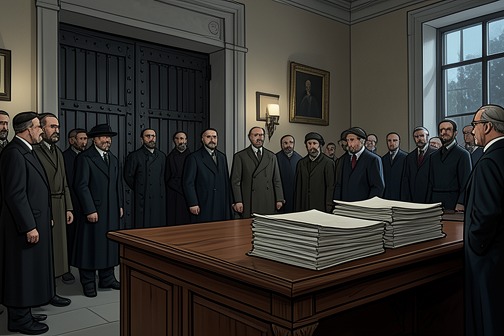
The 2003 commutation of Illinois death sentences was a sweeping response to doubts about the reliability of capital punishment: Governor [George Ryan](entity:character-recall-character-george-ryan-2fc0e6491f2d) commuted the sentences of all 167 people on the state’s death row. In [Bryan Stevenson](entity:character-recall-character-bryan-stevenson-d0edcbca5e8f)’s account, the decision came as DNA evidence was exposing wrongful convictions and public confidence in the death penalty was weakening, making a statewide action a focal point for hopes of reform.
## Background and Mounting Doubts
At a 1998 conference in [Chicago](entity:location-recall-location-chicago-eb77a855d5aa), Stevenson and [Walter McMillian](entity:character-recall-character-walter-mcmillian-4a441db351d3) joined a gathering of people exonerated after being sentenced to death. By the late [1990s](entity:time-recall-time-1990s-e168405d040a), advances in DNA evidence had helped expose dozens of wrongful convictions; in many states, exonerations outnumbered executions. The cases gave the question of innocence a force that could not be contained within individual courtroom proceedings.
Concern about wrongful convictions and the death penalty intensified in the years that followed. Support for capital punishment began to fall in opinion polls, while abolitionists grew more hopeful that substantial reform—or even a moratorium—might be possible. This changing climate formed the wider context for Illinois’s action, though the account identifies the governor’s stated reason specifically as the unreliability of capital punishment.
## The Statewide Commutation
In 2003, Republican Governor George Ryan commuted the death sentences of every person on Illinois’s death row: 167 people. The scope of the decision distinguished it from relief granted one prisoner at a time. It addressed the entire death-row population in a single executive action, making the reliability of the system itself—not only the circumstances of an individual conviction—the central issue.
The commutation was a change to the prisoners’ sentences, not a finding that every person on the row was innocent. Its stated basis, as Stevenson recounts it, was Ryan’s conclusion that capital punishment was unreliable. That distinction matters: the action responded to systemic doubts without equating commutation with exoneration.
## Consequences and Significance
For Stevenson, the Illinois decision marked a moment when evidence of wrongful convictions and declining public support seemed to open political space for broader change. The possibility of a moratorium, previously an abolitionist hope, appeared more attainable. The account places Ryan’s action within that shift, while not claiming that it ended capital punishment or resolved the underlying questions of error and fairness.
The decision’s breadth made it a particularly visible expression of concern about the death penalty’s reliability. Against the backdrop of DNA-based exonerations, commutation offered a decisive alternative to carrying out the sentences while the system’s capacity to distinguish guilt from innocence was under growing scrutiny.
Event 48
Supreme Court ruling overturning John Thompson's award
The [Supreme Court ruling overturning John Thompson's award](entity:event-recall-event-ab3efdfc7372) was a 2011 decision that nullified a jury’s $14 million award to a man whose conviction and death sentence had been overturned after evidence contradicting the State’s case came to light. Its significance lay in the distance between the misconduct the jury had found and the remedy the courts would permit: Thompson had been acquitted and released, but the Supreme Court held that the prosecutor could not be made to pay damages for intentionally suppressing evidence of innocence.
## The evidence that changed Thompson’s case
A month before [John Thompson](entity:character-recall-character-john-thompson-53717e2c0289) was scheduled to be executed in [Louisiana](entity:location-recall-location-louisiana-2de999a335e6), a crime-lab report was uncovered that contradicted the State’s case against him in a robbery-murder from fourteen years earlier. State courts overturned both his conviction and death sentence; he was later acquitted of all charges and released. The report’s discovery therefore altered more than the case’s evidentiary picture: it came close to the scheduled execution of a man who had not committed the crime.
After his release, Thompson brought a civil suit. A New Orleans jury awarded him $14 million, finding that District Attorney [Harry Connick Sr.](entity:character-recall-character-harry-connick-sr-c2b54df1e8e7) had illegally suppressed evidence of Thompson’s innocence and allowed him to spend fourteen years in prison for a crime he had not committed. The verdict translated the jury’s finding of serious wrongdoing into a concrete award for the years Thompson had lost.
## The Supreme Court’s reversal
Connick appealed the judgment, and in 2011 the [Supreme Court of the United States](entity:organization-recall-organization-supreme-court-of-1add93799b76) overturned the award in a closely divided 5–4 decision. The Court held that a prosecutor could not be held liable for misconduct in a criminal case, even if the prosecutor had intentionally and illegally withheld evidence of innocence. The ruling thus displaced the jury’s award without undoing the account of Thompson’s wrongful imprisonment described in the case.
Justice [Ruth Bader Ginsburg](entity:character-recall-character-ruth-bader-ginsburg-a5f576ea9a04) wrote a dissent. The decision was strongly criticized by scholars and Court observers, but the practical result for Thompson was stark: he received none of the $14 million. The reversal made prosecutorial immunity not an abstract procedural obstacle but a decisive limit on compensation after a wrongful conviction.
## Relevance to [Walter McMillian](entity:character-recall-character-walter-mcmillian-4a441db351d3)’s civil case
The ruling framed a similar obstacle in [Bryan Stevenson](entity:character-recall-character-bryan-stevenson-d0edcbca5e8f)’s efforts on behalf of Walter McMillian. Stevenson’s account notes that the prosecutor who tried McMillian, [Ted Pearson](entity:character-recall-character-ted-pearson-2766d476030d), had illegally withheld evidence that directly resulted in McMillian’s wrongful conviction. Yet the protections afforded to prosecutors and judges made a civil action against Pearson unlikely to succeed, despite his central role in the prosecution.
McMillian’s civil case also involved nearly a dozen state and local officials and agencies. Most defendants eventually settled after a year of depositions, hearings, and pretrial litigation, providing McMillian a few hundred thousand dollars. The unresolved claim against [Monroe County](entity:location-recall-location-monroe-county-0b25112fdf85) concerned Sheriff Tate’s misconduct and turned on whether the sheriff was a county or state employee; it was a distinct immunity question. The Thompson ruling nevertheless underscored the broader difficulty Stevenson describes: a finding that government misconduct helped send an innocent person to prison did not ensure that the responsible official—or the institution behind him—could be held financially accountable.
Event 49
Supreme Court ruling on Alabama sheriffs in McMillian's civil suit
The [United States Supreme Court](entity:organization-recall-organization-5e343c624293) ruling on [Alabama](entity:location-recall-location-alabama-2bbbae281095) sheriffs in McMillian's civil suit determined who could be held financially responsible for Sheriff [Tom Tate](entity:character-recall-character-tom-tate-2a3c43e0952f)’s misconduct toward [Walter McMillian](entity:character-recall-character-walter-mcmillian-4a441db351d3). By classifying county sheriffs as state officers rather than county employees, the closely divided Court restricted McMillian’s ability to recover damages from [Monroe County](entity:location-recall-location-monroe-county-0b25112fdf85) and underscored how official status can shape the practical reach of civil accountability.
## The civil suit and the disputed responsibility
After a year of depositions, hearings, and pretrial litigation, McMillian’s lawyers reached a settlement with most of the defendants for a few hundred thousand dollars. His claim against Monroe County over Tate’s misconduct remained unresolved, so the lawyers appealed it to the United States Supreme Court. The suit sought compensation from the local government for the conduct of its sheriff, rather than relying on Tate’s personal resources; law-enforcement officers generally lack the means to pay substantial damages themselves.
Monroe County disputed that it was responsible. The county argued that although the sheriff’s jurisdiction was limited to the county, he was elected by county residents and paid by the county, he was not a county employee but an employee of the [State of Alabama](entity:location-recall-location-36ff09a07022). That distinction mattered because state governments are broadly shielded from recovery for employees’ misconduct unless the employee works for an agency that can be sued.
## The Court’s ruling and its effect
In a 5–4 decision, the Court held that Alabama county sheriffs are state officers. The ruling meant Monroe County would not be liable for Tate’s misconduct on the theory that he was its employee; because the State of Alabama was also broadly protected from such claims, the decision sharply limited the available path to damages for the conduct at issue. The classification did not erase the underlying allegations, but it made governmental structure decisive to whether McMillian could obtain compensation.
The case eventually settled with all parties, but the ruling constrained what McMillian could recover. His lawyers had hoped for more, and the final amount disappointed them. The settlement nevertheless gave McMillian money to restart his logging business, a concrete benefit that did not undo the limits the Court had placed on accountability.
## Aftermath and significance
The decision’s consequences extended beyond the settlement. Tate was reelected sheriff and remained in office, having served continuously for more than twenty-five years. The contrast was stark: McMillian had endured wrongful imprisonment and pursued a civil remedy, yet the Court’s allocation of the sheriff to state rather than county authority narrowed the local government’s exposure, while the sheriff himself retained office.
The ruling illustrates how an accountability claim can turn on the legal identity assigned to a public official. Monroe County’s local role in electing and paying its sheriff did not make him a county employee under the Court’s decision. For McMillian, the result left a measure of compensation and a way to resume work, but not the fuller recovery his lawyers had sought.
Event 50
Joe Sullivan's prosecution and life-without-parole sentence
[Joe Sullivan](entity:character-recall-character-joe-sullivan-8ad45899601c)’s prosecution and life-without-parole sentence began with a burglary he admitted joining and ended, after a one-day trial, with a thirteen-year-old condemned to die in prison for a sexual assault he denied committing. The case turned on disputed testimony and evidence that could not establish an identification, while the circumstances of Joe’s childhood and the limits of his juvenile record were recast as reasons to punish him permanently. Years later, the state’s destruction of biological evidence foreclosed a proposed DNA test, and the defense challenged the sentence instead.
## The burglary and adult prosecution
On the morning of May 4, 1989, fifteen-year-old Michael Gulley and seventeen-year-old Nathan McCants persuaded Joe, then thirteen, to join them in entering an empty home in [Pensacola](entity:location-recall-location-pensacola-9e3c606537e0), [Florida](entity:location-recall-location-7145a4a461e6). McCants took money and jewelry, and the boys left. That afternoon, the homeowner was sexually assaulted. She did not see her attacker clearly and described him by skin color and curly hair; all three boys were African American.
Police apprehended Michael Gulley and Nathan McCants within minutes of the assault. McCants had the homeowner’s jewelry. Facing serious felony charges, Gulley accused Joe of the sexual battery. Joe had not been apprehended that day. After learning that the other boys had implicated him, he turned himself in the following day. He admitted participating in the earlier burglary but denied knowing about or taking part in the assault.
The prosecutor indicted Joe in adult court for sexual battery and other charges without a review of whether he should be tried as a juvenile or an adult. Florida law allowed prosecutors to make that choice for certain crimes and set no minimum age for trying a child as an adult. The decision therefore placed a thirteen-year-old in adult criminal proceedings without a separate hearing on his age or suitability for juvenile court.
## Evidence and the one-day trial
The prosecution relied principally on accounts from Gulley and McCants, both of whom faced their own consequences. After implicating Joe, McCants was sentenced as an adult to four and a half years but served six months. Gulley, who admitted involvement in about twenty prior burglaries and a previous sex crime, was treated as a juvenile and spent only a short time in juvenile detention. Gulley also claimed that Joe had confessed to the assault while they were held in a detention facility.
The physical evidence was limited. A state examiner testified that a latent partial palm print matched Joe, but its presence was consistent with Joe’s admitted visit to the bedroom before the assault. Police had collected seminal fluid and blood, yet the state did not present those materials at trial and destroyed them before the defense could test them. A police officer said he had caught a glimpse of an African American youth running from the home and identified Joe after seeing him at the police station, where Joe was being interrogated as a suspect.
The homeowner could not affirmatively identify Joe as her assailant, even after a rehearsal of her testimony outside the jury’s presence. Joe was asked in court to repeat words she remembered the attacker saying; she testified only that his voice could very easily have been the assailant’s. The jury of six convicted him. The entire trial lasted one day: opening statements began sometime after 9 a.m., and the verdict came at 4:55 p.m.
The appointed defense at trial was strikingly thin. Joe’s lawyer filed no written pleadings and spoke no more than twelve transcript lines at sentencing. That lawyer was later suspended from practice in Florida and never reinstated. The account stresses how much relevant information went unheard: the trial record did not give meaningful space to Joe’s developmental limitations, history of abuse, or unstable childhood.
## Childhood, sentence, and abandonment
At arrest, Joe had mental disabilities and read at a first-grade level. His father had repeatedly abused him, and state officials described his family life as marked by abuse and chaos. From age ten until his arrest, he had no stable home and lived at no fewer than ten addresses over three years. He spent much of his time on the streets and had encountered police over trespassing, bike theft, and property offenses committed with his older brother and other older teens.
Joe had been adjudicated in juvenile court only once, at age twelve. His probation officer described him as immature, naive, easily influenced, and more a follower than a leader, while also seeing potential for him to become a positive and productive person. The sentencing judge interpreted his history differently, saying the juvenile system had been incapable of doing anything with him and that he had received repeated chances to correct himself. The account makes clear that this description of multiple chances did not match Joe’s record: he had not been given a second, much less a third, opportunity to reform through juvenile adjudication. Prosecutors nevertheless characterized him at thirteen as a serial or violent recidivist. The judge imposed life imprisonment without the possibility of parole.
Joe’s appointed appellate lawyer filed an Anders brief, signaling a belief that no legitimate grounds for appeal existed, and was allowed to withdraw. Joe was sent to adult prison just as his adolescence was beginning. During the eighteen years that followed, he was repeatedly raped and sexually assaulted, attempted suicide several times, and developed multiple sclerosis that eventually left him using a wheelchair. Doctors later considered prison trauma a possible trigger for his neurological disorder.
## Renewed challenge and later release
In 2007, after an incarcerated man described Joe as disabled, mistreated, and wrongfully condemned for a non-homicide crime, [Bryan Stevenson](entity:character-recall-character-bryan-stevenson-d0edcbca5e8f)’s team wrote to him. Joe had no legal assistance and had spent eighteen years in prison without anyone helping him challenge either conviction or sentence. In his reply, written in a childlike hand, he said he was okay and asked whether, if he had done nothing, he should be able to go home. He was thirty-one but could still read only at about a third-grade level.
Bryan Stevenson’s team told Joe it would examine the case and believed he had a credible claim of innocence. A motion seeking DNA testing was denied because the state had destroyed the biological evidence. With that route closed, the challenge focused on whether it was unconstitutionally cruel and unusual to sentence a child to die in prison for a non-homicide offense. The case thus carried two unresolved questions: whether Joe had committed the assault, and whether his age and offense could justify a sentence that eliminated any possibility of release.
Joe was eventually released. On December 1, 2017, he left a Florida prison in his wheelchair, laughing and shouting with excitement. Staff brought him to [Montgomery](entity:location-recall-location-montgomery-a77051b70057); he later moved from the residential reentry program to Joseph House, a home for formerly incarcerated people with significant disabilities. His release marked a stark reversal of the sentence imposed at thirteen, while the lost biological evidence remained an obstacle to resolving his original claim through testing.
Event 51
U.S. Supreme Court bans the juvenile death penalty
The 2005 decision by the [Supreme Court of the United States](entity:organization-recall-organization-supreme-court-of-1add93799b76) barring the death penalty for juvenile offenders marked a turning point in the book’s account of efforts to limit the harshest punishments imposed on children. It recognized that children differ from adults in ways relevant to criminal responsibility and offered [Bryan Stevenson](entity:character-recall-character-bryan-stevenson-d0edcbca5e8f) and his colleagues a constitutional foothold for challenging sentences that condemned young people to die in prison.
## Background and Constitutional Standard
The ruling formed part of a line of Eighth Amendment decisions limiting punishments judged incompatible with evolving standards of decency. But the Court’s analysis required more than a finding that a sentence offended those standards: the punishment also had to be unusual. Earlier cases had involved comparatively small groups. In 2002, about a hundred people with intellectual disability were facing execution when the Court prohibited their execution; in 2005, fewer than seventy-five juvenile offenders were on death row when the Court barred the death penalty for children. The number of juvenile death sentences was therefore central to the legal context in which the ruling was made.
The constitutional reasoning also reflected a distinction between childhood and adulthood. In the account of the decision, the Court recognized that developmental differences required children to be shielded from the death penalty under the Eighth Amendment. The ruling thus treated age not as a detail incidental to a crime, but as a consideration bearing on the legitimacy of imposing an irrevocable punishment.
## From the Ruling to a Broader Challenge
For Stevenson and his staff, the decision was both a protection for children facing execution and a possible foundation for a further challenge. They reasoned that if children could not be executed because their age and development diminished their culpability, similar principles might apply to children sentenced to life without parole. That sentence also fixed a person’s fate permanently, though through imprisonment rather than execution.
The argument faced a substantial numerical obstacle. More than 2,500 children in the [United States](entity:location-recall-location-united-states-2f533bc8d0b9) had been sentenced to life without parole, a far larger group than those covered by the earlier Eighth Amendment decisions. To make a narrower constitutional claim, the legal team concentrated on two groups: children who were thirteen or fourteen when they offended, of whom fewer than a hundred had received life without parole, and children sentenced to life without parole for non-homicide offenses, estimated at fewer than two hundred. The juvenile death-penalty ruling did not itself resolve those cases, but its reasoning helped shape the strategy for bringing them before the courts.
## Significance and Limits
The decision’s importance in the narrative lies partly in how its reasoning traveled. Stevenson and his colleagues argued that a child’s immaturity, limited experience, and capacity for growth made a permanent judgment about the whole of that child’s life constitutionally suspect. The earlier ruling supplied a precedent for taking developmental difference seriously; extending its logic to life without parole remained a separate legal fight, not an automatic consequence of the ban.
That distinction mattered in practice. [Joe Sullivan](entity:character-recall-character-joe-sullivan-8ad45899601c)’s challenge to his sentence initially met a judge’s rejection, and the legal team encountered similar resistance elsewhere. After exhausting state options in Sullivan’s case, they appealed to the Supreme Court of the United States. In May 2009, the Court agreed to review his case and a companion [Florida](entity:location-recall-location-7145a4a461e6) case involving [Terrance Graham](entity:character-recall-character-terrance-graham-e1e3ca8224bb), both concerning juvenile offenders sentenced to life without parole for non-homicide crimes. The 2005 ban had opened a path of constitutional argument, but whether that path could reach children condemned to spend their lives in prison was still unresolved.
Event 52
Supreme Court review of the Sullivan and Graham juvenile life-without-parole cases
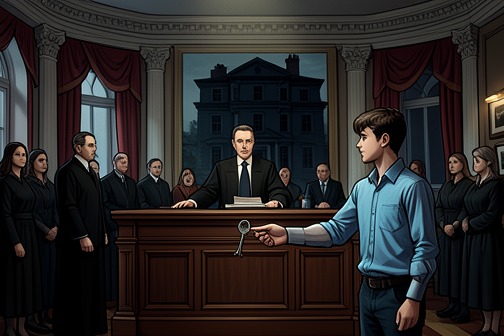
The [Supreme Court review of the Sullivan and Graham juvenile life-without-parole cases](entity:event-recall-event-53e861ae4608) brought the question of whether children could be condemned to die in prison before the [Supreme Court of the United States](entity:organization-recall-organization-supreme-court-of-1add93799b76). What began as two [Florida](entity:location-recall-location-7145a4a461e6) cases became a nationally watched constitutional challenge: [Bryan Stevenson](entity:character-recall-character-bryan-stevenson-d0edcbca5e8f) argued that children’s developmental capacity and the nonhomicide nature of their offenses made a permanent sentence without hope of release fundamentally different from ordinary punishment.
## The cases reach the Court
The challenge grew out of [Joe Sullivan](entity:character-recall-character-joe-sullivan-8ad45899601c)’s sentence. His judge had initially dismissed the constitutional claims as meritless, and the defense met similar skepticism elsewhere. After exhausting the options available in Florida, the defense appealed to the Supreme Court of the United States. In May 2009, the Court agreed to review Sullivan’s case, an uncommon decision that offered a chance to change sentencing rules beyond Florida.
The Court also accepted [Terrance Graham](entity:character-recall-character-terrance-graham-e1e3ca8224bb)’s case. Graham, a sixteen-year-old from Jacksonville, had been on probation when he was accused of trying to rob a store. Following the new arrest, the judge revoked his probation and sentenced him to life without parole. Because both Sullivan and Graham involved nonhomicide offenses, the cases presented a focused possibility: a favorable ruling might bar juvenile life without parole for nonhomicide crimes, without necessarily resolving sentences for every juvenile offense.
## The constitutional argument
The defense framed life without parole as more than a long prison term. It was a final judgment that a person could never again belong to civil society, imposed on children whose development was unfinished and whose capacity for change remained substantial. The argument stressed that almost all young people eventually outgrow criminal behavior, while it is practically impossible to identify in advance the few who will not.
Stevenson also emphasized the contradiction in treating children as too immature to smoke, drink, vote, drive without restrictions, give blood, or buy guns, yet treating the most neglected and impaired children as fully responsible adults when imposing the harshest sentences. At oral argument, he told the Court that the [United States](entity:location-recall-location-united-states-2f533bc8d0b9) was the only country in the world to sentence children to life without parole, and argued that international law prohibited the practice. He further contended that the sentences fell disproportionately on children of color and arose in part from severe laws designed for career adult criminals, not children. A sentence telling a thirteen-year-old that prison was the only possible future, he argued, was cruel.
## A national audience
The cases attracted extensive national media attention. Organizations supporting the challenge filed friend-of-the-court briefs, including the American Psychological Association, the American Psychiatric Association, the American Bar Association, and the American Medical Association, as well as former judges and prosecutors, social workers, civil-rights and human-rights groups, and some victims’ rights groups.
Support also came from people whose own histories complicated the idea that a child’s worst conduct predicts an entire life. Former Senator [Alan Simpson](entity:character-recall-character-alan-simpson-336907bdbbf9), who had been adjudicated delinquent at seventeen for offenses including arson, theft, aggravated assault, and gun violence, submitted support. Former child soldiers also filed a brief describing recovery after being forced into violent militias. Their experiences underscored the defense’s central distinction: grave conduct in childhood does not, by itself, establish that a young person is incapable of change.
In November 2009, Stevenson traveled to Washington for his third Supreme Court oral argument. The Court was packed, and hundreds of people gathered outside. Children’s rights advocates, lawyers, and mental-health experts watched as the defense asked the justices to declare juvenile life-without-parole sentences unconstitutional. The justices’ questions were spirited, but their reactions gave Stevenson no reliable indication of how they would rule.
## The argument’s human aftermath
Stevenson had promised to visit Sullivan after the argument. The publicity surrounding the case had first excited Sullivan, whose name and sentence were frequently discussed on television. It also brought a cost inside prison: guards and other prisoners began mocking him and treating him more harshly, apparently resentful of the attention. Stevenson told him that the argument was over and that conditions would settle down.
At the visit, Sullivan was more eager to share a poem than to hear a report about the case. He had spent weeks memorizing it and had promised to recite it; another prisoner had helped him write it, but that did not diminish his excitement. Stevenson shortened his account of the argument so Sullivan could perform. The scene brought the constitutional dispute back to its human scale: while lawyers debated whether the law could treat children as permanently beyond redemption, a young man in prison was waiting to share something he had made.
## Significance and limits
The review placed two nonhomicide cases before the Court as a test of whether childhood, capacity for growth, and the severity of an irreversible sentence imposed constitutional limits on punishment. Its reach was deliberately defined by the offenses in Sullivan’s and Graham’s cases, while the argument connected those individual sentences to racial disparity, international standards, and the way adult criminal laws were applied to children.
The hearing did not make the outcome predictable. Stevenson left without knowing whether the justices had been persuaded, and Sullivan’s sentence remained in place while the Court considered the cases. Even so, the Court’s decision to hear them transformed arguments that had been rejected in state proceedings into a national constitutional question. The prison visit afterward kept that question from becoming abstract: for Sullivan, the case was not only a debate about doctrine, but also a source of public attention that changed how he was treated and a rare occasion to recite his poem.
Event 53
Supreme Court ruling in Nelson v. Campbell
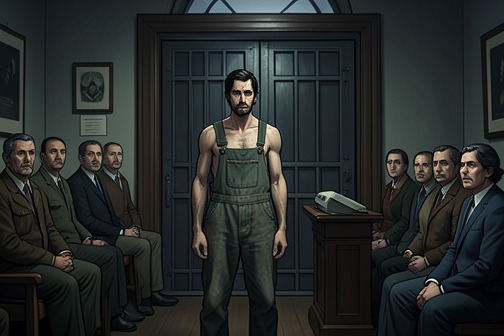
The [Supreme Court ruling in Nelson v. Campbell](entity:event-recall-event-7d39a70e344a) established that a condemned prisoner could challenge an arguably unconstitutional method of execution through a civil-rights lawsuit. The unanimous decision came after [Alabama](entity:location-recall-location-alabama-2bbbae281095) planned an invasive procedure to obtain intravenous access for [David Nelson](entity:character-recall-character-david-nelson-75d291681ce4), turning the mechanics of execution into a question the courts could hear before the procedure was carried out.
## The execution protocol and its risks
In 2004, [Bryan Stevenson](entity:character-recall-character-bryan-stevenson-d0edcbca5e8f) argued a case challenging Alabama’s lethal-injection protocol. Nelson, who was in his sixties, had severely compromised veins; his history of drug addiction made it difficult for correctional staff to insert an IV. Because the Hippocratic oath barred doctors and other medical personnel from participating in executions, Alabama planned to have untrained correctional staff make a two-inch incision in Nelson’s arm or groin to locate a vein for the lethal drugs. The challenge argued that, without anesthesia, this procedure would inflict needless pain and amount to cruel treatment.
The dispute exposed a practical contradiction in lethal injection’s presentation as a controlled, clinical method of execution: when ordinary access to a vein failed, the state’s planned solution was a surgical incision performed by staff without medical training. The legal challenge focused not only on the state’s choice of drugs or the final act of injection, but on the painful bodily intervention the protocol required to make that act possible.
## The Court’s decision
Alabama argued that procedural rules prevented Nelson from bringing a civil-rights challenge to the execution protocol. The [Supreme Court of the United States](entity:organization-recall-organization-supreme-court-of-1add93799b76) intervened to address whether a condemned prisoner could use that form of lawsuit to contest an arguably unconstitutional method of execution. During oral argument, Justice [Sandra Day O’Connor](entity:character-recall-character-sandra-day-o-connor-d103f40e1578) pressed Stevenson with questions about the propriety of correctional staff performing medical procedures.
The Court ruled unanimously in Nelson’s favor on the procedural question: a condemned prisoner could bring a civil-rights action to challenge an allegedly unconstitutional execution method. The ruling opened a legal avenue for such challenges; it did not declare that every lethal-injection protocol or drug combination was unconstitutional. Its immediate significance was that procedural barriers could not foreclose a prisoner from bringing this kind of claim.
## Aftermath and significance
Nelson died of natural causes a year after the Court ruled. The decision nevertheless had consequences beyond his individual case: it confirmed that prisoners could ask federal courts to examine the constitutionality of execution methods through civil-rights litigation. In the account of capital punishment, the case shifts attention from the sentence alone to the procedures through which the state carries it out—and to whether the condemned person can obtain judicial review of those procedures.
Event 54
Baze v. Rees
[Baze v. Rees](entity:event-recall-event-97ec388440f2) was a [United States Supreme Court](entity:organization-recall-organization-5e343c624293) ruling that allowed executions using the challenged lethal-injection protocols and drug combinations to resume. It came amid disputes over whether execution procedures inflicted needless pain and a widening, increasingly irregular scramble by states to obtain the drugs they used.
## The drug-supply crisis
Many states relied on lethal-injection drugs that had been banned for animal euthanasia because they could cause a painful and torturous death. The drugs were not readily available in the [United States](entity:location-recall-location-united-states-2f533bc8d0b9), so states began importing them from European manufacturers. When those manufacturers learned that their products were being used in executions, they stopped making them available, turning an already controversial method into a supply problem for correctional authorities.
The resulting scarcity produced an extraordinary consequence: some state correctional authorities obtained drugs illegally, without complying with FDA rules governing interstate sale and transfer. Drug raids of state correctional facilities followed. The pursuit of a supposedly controlled medical procedure had become a surreal form of drug dealing carried out in the service of execution.
## The constitutional question
The ruling followed litigation over [Alabama](entity:location-recall-location-alabama-2bbbae281095)’s lethal-injection procedures in [David Nelson](entity:character-recall-character-david-nelson-75d291681ce4)’s case. Because Nelson’s veins were severely compromised, correctional staff could not insert an IV without medical complications. Doctors and medical personnel could not participate in executions under the Hippocratic oath, so Alabama planned to have untrained correctional staff make a two-inch incision in Nelson’s arm or groin to find a vein. The challenge argued that performing the procedure without anesthesia would cause needless pain and cruelty.
In that earlier case, the United States Supreme Court had allowed a condemned prisoner to challenge an arguably unconstitutional execution method through a civil-rights action. Baze v. Rees addressed the later question of the protocols and drug combinations themselves. The Court held that they were not inherently unconstitutional; the executions would resume.
## Resumption and aftermath
For Alabama death-row prisoners and EJI staff, the practical consequence was immediate and stark: seventeen executions in thirty months. That pace coincided with the organization’s representation of children sentenced to life without parole across the country, as well as an exceptionally demanding Alabama docket. The ruling therefore marked more than a conclusion to a dispute over procedure. It reopened the machinery of execution while the lawyers challenging capital punishment continued to carry cases across several states.
## Significance
The decision arrived in a setting where the means of execution were being challenged not only in court but also through the consequences of the drugs’ manufacture, scarcity, and acquisition. The ensuing raids on correctional facilities exposed the strained logistics behind lethal injection; the Court’s ruling nevertheless permitted executions to proceed. In the account of the litigation, that reversal—from controversy over pain and procurement to resumed executions—makes the ruling a turning point in the practical limits of challenges to execution methods.
Event 55
Jimmy Dill's execution in Alabama
[Jimmy Dill](entity:character-recall-character-jimmy-dill-3813185be5f0)'s execution came after a hurried final effort to challenge a death sentence imposed in a case marked by unanswered questions about intent, medical causation, disability, and the quality of his defense. The [Equal Justice Initiative](entity:organization-recall-organization-equal-justice-in-398aa3844197) became involved only weeks before the scheduled execution, and the courts refused to hear newly raised claims. In the book's account, Dill's last hours are both a record of that procedural failure and an intimate encounter: as his speech grew more difficult, he persisted in thanking the people trying to save him.
## The case behind the sentence
The Equal Justice Initiative had no prior involvement in Dill's case. With only thirty days before the execution date, its staff had to learn the record while already stretched by other cases. Dill had been accused of shooting someone during a drug deal after an argument. The victim survived the shooting, and Dill was first arrested and charged with aggravated assault. He spent nine months in jail awaiting trial while the victim left the hospital and recovered.
The course of the case changed after the victim's wife apparently abandoned him following several months of caring for him at home. He later became gravely ill and died. Prosecutors then changed Dill's charge from assault to capital murder. The account emphasizes the distance between the original shooting and the eventual death: the victim had survived for months, and questions about the medical care he received were not adequately investigated. The new charge made Dill eligible for execution, although the cause of death and the required intent remained central issues.
Dill had an intellectual disability and had endured sexual and physical abuse throughout his childhood. He had also struggled with drug addiction before his arrest. These facts were not developed into a meaningful account of his life for the sentencing process. His appointed lawyer did little trial preparation, and almost no investigation examined the victim's medical treatment, which the defense later argued was the actual cause of death. The state had made a plea offer of twenty years, but the offer was never adequately communicated to Dill. He went to trial, was convicted, and received a death sentence; the appellate courts affirmed both conviction and sentence.
## A late challenge meets procedural barriers
By the time the Equal Justice Initiative reviewed the case, no court had considered important questions about the reliability of the conviction and sentence. Capital murder required an intent to kill, and the lawyers saw a persuasive argument that Dill had not intended to kill the victim. They also questioned whether the victim's death resulted from the shooting or from poor medical care in the months afterward. The case thus presented a striking gap between the gravity of the punishment and the unresolved facts on which it depended.
Dill's intellectual disability raised a separate constitutional issue. The [Supreme Court of the United States](entity:organization-recall-organization-supreme-court-of-1add93799b76) had already prohibited executing people with intellectual disabilities, but no one had investigated Dill's condition or presented supporting evidence. His disability was therefore not a claim that had been fully assessed and rejected on its merits; it was an issue the defense had not properly developed before the late stage of the case.
The lawyers urgently sought a stay of execution so the courts could consider the newly identified issues. They received none. Once a condemned prisoner has completed an initial round of appeals, courts are deeply resistant to reopening claims, and Dill's disability claim was blocked because the courts would not grant a hearing so late. The response was procedural rather than an examination of the evidence the new lawyers hoped to present. Each court rejected the requests, leaving the execution date in place.
## The final day
On the scheduled day, Stevenson asked Dill to call throughout the day while the lawyers awaited the outcome of their final stay request to the Supreme Court of the United States. Dill sounded anxious early on, but continued to insist that things would work out and that he would not give up hope. He thanked Stevenson for sending staff to visit regularly. The lawyers had also located family members with whom Dill reconnected, and they had told him that they believed he had been unfairly convicted and sentenced. Their work could not yet secure judicial relief, but it gave him contact, support, and a reason to keep speaking with them through the day.
The final request was denied. With less than an hour before the execution, Stevenson had to tell Dill that the court would not grant a stay. Shortly before Dill was taken into the execution chamber, they spoke again by phone. Dill's stutter, already severe, became worse as he grew agitated. Guards made noise behind him, and he struggled to get his words out. Stevenson stayed on the line rather than interrupting him. The scene turns on the effort it took Dill to communicate: even as the time remaining narrowed, he was trying to express gratitude.
## Memory, speech, and witness
During the call, Stevenson remembered an encounter from his own childhood. Outside a church, he had laughed when a visiting boy with a severe speech impediment could not say the name of his town. His mother had looked at him with anger and shame. The memory returned as Dill struggled to speak, nearly forty years later; Stevenson realized he was crying in his office while Dill continued laboring to thank him. The recollection does not resolve the case, but it changes the emotional register of the final conversation. Dill's halting speech is not presented as an abstraction or a sign of lesser humanity: it is the means by which, under immense pressure, he insists on addressing another person with gratitude and love.
Dill eventually managed to thank Stevenson for fighting for him and caring about him, and to say that he loved the people who had tried to save him. Stevenson hung up with a wet face and a broken heart. The execution followed the denial of relief, while the call remained with him as a painful measure of what the courts had refused to reconsider. Dill had committed a serious act of violence; the account does not treat that responsibility as an excuse for it. Instead, it places that responsibility beside his disability, his childhood abuse, the inadequacies of his defense, and the unresolved questions surrounding the victim's death. In doing so, the episode asks whether punishment can be called just when a person's circumstances and the reliability of the sentence have never been meaningfully examined.
Event 56
Execution of Jimmy Dill

The execution of [Jimmy Dill](entity:character-recall-character-jimmy-dill-3813185be5f0) is recounted through its immediate aftermath: [Bryan Stevenson](entity:character-recall-character-bryan-stevenson-d0edcbca5e8f) realizes Dill is dead, drives home without hearing the execution mentioned on a local religious station, and reflects on grief, mercy, and the work still ahead. Rather than presenting the event through procedural details, the narrative traces its weight in Stevenson’s exhaustion and in his decision to return the next day.
## The Hours Around the Execution
At 6:30 P.M., Stevenson looked at the clock and understood that Jimmy Dill was dead by then. He had been deeply affected by the day’s events and was ready to stop, but a recent exchange with [Rosa Parks](entity:character-recall-character-rosa-parks-801e0a19c94b), [Johnnie Carr](entity:character-recall-character-johnnie-carr-75da7e47e6b6), and [Virginia Durr](entity:character-recall-character-virginia-durr-6523f5b18245) had left him with their urging to be brave. The execution makes that appeal immediate: courage is no longer an abstract virtue but the resolve to continue after a death he could not prevent.
An email invited Stevenson to speak to students in a poor school district about remaining hopeful. The teacher wanted him to serve as a role model and encourage the students to do great things. Sitting in his office, drying his tears and reflecting on his own brokenness, he found the invitation almost laughable. Thinking instead about the unfair challenges confronting children, he began typing that he would be honored to come. The decision did not undo his grief; it gave that grief a direction beyond itself.
## A Death Unreported
On the drive home, Stevenson turned on the radio, looking for news about Dill’s execution. A local religious station’s news broadcast said nothing about it. He left the station on, and a preacher began a sermon about weakness, hardship, and strength. The silence around the execution and the sermon that followed form a stark contrast: Dill’s death received no mention in the broadcast, while its words offered Stevenson a way to reckon with what he had witnessed.
## [Mercy](entity:concept-recall-concept-mercy-437ba0cccdd7) and the Work Ahead
As he drove slowly home, Stevenson understood suffering and healing as intertwined: people could be caught in a web of hurt and brokenness, but also in a web of healing and mercy. He recalled a little boy who had hugged him outside a church, an act that had created a moment of reconciliation and love. For Stevenson, mercy mattered precisely because it was not reserved for those who had earned it; he saw it as capable of breaking cycles of victimization, retribution, and suffering.
He arrived home brokenhearted about Jimmy Dill, but resolved to return the next day. The execution thus ends the immediate possibility of saving Dill, not Stevenson’s work. The narrative closes on that distinction: grief remains, while the obligation to keep showing up survives it.
Event 57
Graham v. Florida ruling
The [Graham v. Florida ruling](entity:event-recall-event-graham-v-florida-ruling-09f77596e1dd) marked a constitutional turning point for children sentenced to die in prison for crimes that did not involve homicide: on May 17, 2010, the [United States Supreme Court](entity:organization-recall-organization-5e343c624293) declared such life-without-parole sentences cruel and unusual punishment and constitutionally impermissible. For [Bryan Stevenson](entity:character-recall-character-bryan-stevenson-d0edcbca5e8f) and the people his organization represented, the decision transformed a long campaign against extreme juvenile sentences into an immediate prospect of relief.
## Background and Scope
The ruling addressed children convicted of non-homicide crimes and categorically barred life imprisonment without parole for that class of cases. Its significance lay not only in the sentences it reached, but in the Court’s willingness to prohibit a punishment across an entire category of cases. Stevenson described it as the first time the Court had imposed a categorical ban on a punishment other than the death penalty.
## Announcement and Immediate Response
Stevenson was waiting anxiously in his office when the decision was announced. He and his staff jumped up and down in celebration; within moments, calls poured in from media outlets, clients, families, and children’s-rights advocates. The ruling’s constitutional language quickly became practical news for people serving sentences that it put in question.
## Relief and Wider Consequences
[Joe Sullivan](entity:character-recall-character-joe-sullivan-8ad45899601c) was entitled to relief under the decision. Scores of others, including [Antonio Nuñez](entity:character-recall-character-antonio-nu-ez-76b6ac83eaf5) and [Ian Manuel](entity:character-recall-character-ian-manuel-3dd3a321bd04), became eligible for reduced sentences that could give them a meaningful opportunity for release. The decision therefore reached beyond the case before the Court: it offered a possible path out of permanent imprisonment to children whose non-homicide offenses had previously left no prospect of parole.
Event 58
2012 California Three Strikes reform ballot initiative
The [2012 California Three Strikes reform ballot initiative](entity:event-recall-event-2012-california-three-s-7b5603671993) marked a statewide rejection of mandatory sentences for nonviolent offenders. [Bryan Stevenson](entity:character-recall-character-bryan-stevenson-d0edcbca5e8f) supported the ballot measures in [California](entity:location-recall-location-7255928c66a8), and voters chose by a huge margin to end the [California Three Strikes law](entity:rule-recall-rule-1a214cbbb5cb), a reform he placed within a rare national turn away from decades of prison growth.
## Background and Stakes
The vote came as the country’s prison population was beginning to change direction. For the first time in close to forty years, it had not increased in 2011; in 2012, the [United States](entity:location-recall-location-united-states-2f533bc8d0b9) recorded its first decline in decades. Stevenson saw the California initiative against that wider backdrop, where a policy imposing mandatory sentences on nonviolent offenders had become a subject of popular reconsideration.
## The Vote
California voters approved the reform by a huge margin. Its support extended across the state: the initiative won a majority in every county. The breadth of that result made the vote more than a narrow local exception to punitive policy; it showed that reform could command support throughout California.
## A Wider Political Opening
The initiative unfolded alongside a separate California ballot measure to abolish the death penalty. That measure came close but lost by only a couple of percentage points. Stevenson described the prospect of nearly abolishing the death penalty by popular referendum in an American state as unimaginable just a few years earlier. Together, the results revealed both the reach and the limits of the political opening: voters decisively ended mandatory sentences for nonviolent offenders, while abolition of the death penalty remained just beyond reach.
Event 59
2012 California death-penalty abolition ballot initiative
The [2012 California death-penalty abolition ballot initiative](entity:event-recall-event-2012-california-death-p-76e6ae77a0dd) brought repeal close to a popular vote in a state, but it failed by only a couple of percentage points. Its near success marked a striking contrast with the measure’s defeat: just a few years earlier, such a referendum would have seemed unimaginable.
## Background and Campaign
The initiative emerged amid signs of a broader shift in criminal-justice policy. For the first time in nearly forty years, the [United States](entity:location-recall-location-united-states-2f533bc8d0b9) prison population did not increase in 2011; in 2012, it declined for the first time in decades. [Bryan Stevenson](entity:character-recall-character-bryan-stevenson-d0edcbca5e8f) spent much of that year in [California](entity:location-recall-location-7255928c66a8) supporting ballot initiatives, placing the effort to abolish capital punishment within a period of growing public willingness to reconsider punitive policies.
## Vote and Outcome
California voters came close to ending the death penalty, but the abolition initiative lost by only a couple of percentage points. The narrow margin distinguished it from another reform campaign that year: voters approved an end to the state’s three-strikes law for nonviolent offenders by a huge margin, with majority support in every county. The two results showed both the reach and the limits of the moment’s appetite for change.
## Significance
Although abolition did not prevail, bringing the question so close to success through a statewide referendum was itself a significant change in the political landscape. Stevenson regarded the near-vote as something that would have been difficult to imagine only a few years earlier. The result therefore registered not a completed abolition, but a newly visible possibility: opposition to the death penalty had become strong enough to approach a statewide majority.
Event 60
Release of Robert Caston and Joshua Carter
The release of [Robert Caston](entity:character-recall-character-robert-caston-4f2ba108292c) and [Joshua Carter](entity:character-recall-character-joshua-carter-f241c8c0d4ce) transformed a court ruling into two immediate departures from prison. In a New Orleans courthouse, a judge resentenced Caston after forty-five years at Angola for a non-homicide crime committed when he was sixteen; a second judge then granted Carter a sentence that also meant immediate release. The courtroom’s unexpected applause marked a collective recognition of time served, while the arrangements that followed showed that freedom required more than a favorable order.
## Legal Relief and the Barriers to Release
The cases arose from the Supreme Court’s ban on life-without-parole sentences for children convicted of non-homicide offenses. Although the ruling should have made relief straightforward, implementing it proved difficult. Trial courts often required lawyers to argue again that children should not be treated as if they were adults, even after the Supreme Court had recognized that distinction. Some judges imposed sentences close to a person’s life expectancy rather than creating a meaningful possibility of release.
The practical obstacles were especially consequential in [Louisiana](entity:location-recall-location-louisiana-2de999a335e6). [Bryan Stevenson](entity:character-recall-character-bryan-stevenson-d0edcbca5e8f)’s team represented all sixty people there who were eligible for relief under the ruling. Almost all were held at [Angola (Louisiana State Penitentiary)](entity:location-recall-location-angola-afc40caa8201), where many had arrived in the [1970s](entity:time-recall-time-1970s-2f89f32df2c9) and [1980s](entity:time-recall-time-1980s-3c00692f91a5). Prisoners faced dangerous manual labor, violence, and disciplinary penalties; refusing field work could bring write-ups and months in solitary confinement. Those accumulated disciplinary records later became material for state lawyers arguing against favorable resentencing. The legal promise of a new sentence thus met a history of confinement whose punishments could be used to prolong it.
The wider response to that gap included a re-entry program developed by the [Equal Justice Initiative](entity:organization-recall-organization-equal-justice-in-398aa3844197) for people imprisoned for years after being incarcerated as children. Its intended support included housing, job training, life skills, counseling, and other services needed after release. In the courtroom, however, the immediate question was narrower and urgent: whether each judge would impose a sentence that actually permitted a person to leave prison.
## Caston’s Resentencing
A couple of weeks before Christmas, Stevenson returned to court for the fourth time in his effort to secure the release of Caston and Carter. The men’s cases were heard before different judges in different courtrooms, but the legal team hoped that success in one might make success in the other easier. Stevenson and Carol Kolinchak, local counsel with the [Juvenile Justice Project of Louisiana](entity:organization-recall-organization-0cc7a8f71f87), worked through papers and the many unresolved issues keeping the men incarcerated.
Caston’s hearing began in the noisy, unsettled atmosphere of a busy courtroom. Angola inmates were usually not brought to New Orleans for such proceedings; they watched by video from the prison instead. After the lawyers’ arguments, the judge granted the motion to resentence him. As she recited the circumstances of Caston’s conviction and decades of imprisonment, the room changed. Lawyers stopped conferring, prosecutors waiting on other cases paid attention, family members fell silent, and even handcuffed inmates awaiting their own cases listened.
The judge described the central facts: Caston had spent forty-five years at Angola for a non-homicide offense committed at sixteen, and he had been sent there in the [1960s](entity:time-recall-time-1960s-fa3d18a6c9cb). She then pronounced the new sentence that meant he would be released immediately. The silence gave way to applause from an unlikely assembly of people who were ordinarily divided by the proceedings. Defense lawyers, prosecutors, family members, deputy sheriffs, and inmates in handcuffs all joined in. Kolinchak wiped tears from her eyes, and the judge, usually unwilling to tolerate disruptions, appeared to accept the moment’s emotion.
Caston could not see the whole scene from the prison video monitor. Stevenson therefore had to explain by phone what had happened. Caston was overjoyed. He became the first person released as a result of the Supreme Court’s ban on sentences condemning juvenile offenders in non-homicide cases to die in prison. His release made the ruling tangible: after decades in custody, the new sentence did not merely reconsider his punishment but ended it.
## Carter’s Sentence and the Release Arrangements
The legal team went down the hall to Carter’s courtroom and won a second immediate-release sentence. Carter’s family, which had maintained a close relationship with him over the years, was ecstatic. In the aftermath of Hurricane Katrina, relatives had scattered from New Orleans, and some traveled hundreds of miles—including from [California](entity:location-recall-location-7255928c66a8)—to attend the hearings. His mother was nearly a hundred years old and had promised him for decades that she would not die before he came home. The new sentence answered that long-held hope with an immediate prospect of reunion.
The hearings produced court orders, but getting Caston and Carter out of prison still required practical arrangements. Stevenson and Kolinchak began organizing their releases that evening. Angola’s protocol was to release prisoners at midnight and provide bus fare to New Orleans or another Louisiana city of their choice. Rather than leave the men to make that journey after release, the team sent staff on the several-hour trip to Angola to meet them. The intervention addressed a simple but consequential vulnerability: a person released after decades in prison could otherwise have started his first night of freedom with a midnight bus trip.
## Meaning and Aftermath
The proceedings joined judicial action to public recognition. Caston’s sentence was pronounced in a room where ordinary courtroom noise gave way to attentive silence, then to applause that crossed the usual lines between lawyers, prosecutors, families, deputies, and incarcerated people. Carter’s separate victory carried its own weight through the family members who had repeatedly traveled to court and through his mother’s decades-long promise. The two outcomes were distinct, but both converted the same legal protection into an immediate change in a person’s life.
The event also made visible the difference between winning relief and securing release. Earlier, the Supreme Court ruling had established that children convicted of non-homicide crimes could not be condemned to life in prison without parole; resistance and procedural complications had continued to obstruct implementation. In these hearings, resentencing finally produced release rather than a sentence calibrated to approach natural death. The staff’s journey to Angola completed what the court orders began, while the planned re-entry support recognized that leaving prison after decades required more than opening a gate.
Caston and Carter’s releases were early, concrete consequences of the ruling. Their courtroom scenes did not erase the decades spent at Angola or the structural barriers facing other eligible people. They showed, instead, how a legal change could become real through persistent representation, a judge’s sentence, families who kept showing up, and practical help at the moment of release.
Event 61
Anthony Ray Hinton’s exoneration and release
[Anthony Ray Hinton’s exoneration and release](entity:event-recall-event-anthony-ray-hinton-s-ex-44ee34d98e40) in 2015 ended nearly thirty years of wrongful imprisonment on [Alabama](entity:location-recall-location-alabama-2bbbae281095)’s death row. His freedom came only after new testing confirmed that the gun evidence at the center of his conviction could not connect him to the crimes, and after the [United States Supreme Court](entity:organization-recall-organization-5e343c624293) forced prosecutors to revisit evidence they had resisted reexamining for fifteen years.
## Conviction and Evidence
Hinton was convicted of two robbery-murders outside [Birmingham, Alabama](entity:location-recall-location-birmingham-alabama-99c6c4a363ab), after state forensic employees concluded that a gun recovered from his mother’s home had been used in the crimes. The defense was poorly equipped to challenge that conclusion: Hinton’s appointed lawyer received only $500 from the court to hire a gun expert and retained a mechanical engineer who was blind in one eye and had little experience testifying as a firearms expert.
The prosecution also relied on a witness who identified Hinton in connection with a third crime. The defense investigation later found a half-dozen people and security records establishing that Hinton had been locked inside a secure supermarket warehouse, working a night shift fifteen miles away when that crime occurred. Experts among the nation’s best also reviewed the gun evidence and concluded that Hinton’s weapon could not be matched to the murders.
## Decades on Death Row
Hinton arrived at [Holman Correctional Facility](entity:location-recall-location-holman-correctional-f4bcf5ffc44d) in the [1980s](entity:time-recall-time-1980s-3c00692f91a5), before [Walter McMillian](entity:character-recall-character-walter-mcmillian-4a441db351d3) was sent to death row. He spent almost thirty years in solitary confinement in a five-by-seven-foot cell, just down the hall from the execution chamber. More than fifty condemned people were executed during his time on the row. In the years when the electric chair was used, Hinton complained that after midnight executions he could smell burning flesh.
The evidence of innocence did not quickly change his circumstances. In 2000, [Bryan Stevenson](entity:character-recall-character-bryan-stevenson-d0edcbca5e8f) presented test results confirming Hinton’s innocence and urged prosecutors to retest the gun evidence, the sole basis for his conviction. They refused for fifteen years. As the State continued moving toward execution, appellate courts issued a series of close decisions denying relief, while media outlets turned away from the case, describing the public as tired of innocence stories. Hinton nevertheless remained upbeat and encouraging when Stevenson visited him, even as Stevenson grew increasingly desperate to overturn the conviction.
## Reexamination and Release
In February 2015, the United States Supreme Court unanimously ruled in a way that compelled prosecutors to reexamine the evidence. The resulting tests confirmed that Hinton was innocent. On a warm Good Friday morning that year, he walked out of a Birmingham, Alabama, jail after nearly three decades under a death sentence. He became the 152nd person to be exonerated after being wrongly convicted and sentenced to death.
The release reversed the meaning imposed on Hinton by the conviction: the forensic claim that had helped place him on death row could not be sustained, while evidence of his whereabouts contradicted the identification used against him. Yet the correction came only after years of confinement and repeated refusals to reopen the evidence. His exoneration was both a return to freedom and a measure of how long an unsupported conviction could endure.
## Life After Exoneration
Hinton went on to work as a community educator at the [Equal Justice Initiative](entity:organization-recall-organization-equal-justice-in-398aa3844197) in [Montgomery, Alabama](entity:location-recall-location-montgomery-alabama-7b4bd92e3324). His story also became the subject of the book The Sun Does Shine. The postscript’s account of his release follows a long campaign to establish what the evidence could show; it closes not with the death-row sentence that had defined his legal status, but with Hinton’s life and work after prison.
Event 62
Opening of the Legacy Museum and National Memorial for Peace and Justice
In April 2018, the [Equal Justice Initiative](entity:organization-recall-organization-equal-justice-in-398aa3844197) opened the [Legacy Museum: From Enslavement to Mass Incarceration](entity:organization-recall-organization-5261d154fdc0) and the [National Memorial for Peace and Justice](entity:organization-recall-organization-7cda45eaac4b) in [Montgomery, Alabama](entity:location-recall-location-montgomery-alabama-7b4bd92e3324). Described as the country’s first comprehensive memorial dedicated to victims of racial-terror lynching, the opening gave public form to years of work confronting the history of racial inequality and its continuing presence in American life.
## Background: Whose history is remembered
The opening followed a sustained effort to change how the nation talks about racial history and understands contemporary racial injustice. [Bryan Stevenson](entity:character-recall-character-bryan-stevenson-d0edcbca5e8f) had long hoped to develop this work at the Equal Justice Initiative. Its projects included a racial-history calendar for 2013 and 2014, work with poor children and families in Black Belt counties across the South, and supplemental education and discussions about rights and justice for hundreds of high school students who visited the organization’s office.
The project also took shape against a local and national landscape where racial history could be celebrated selectively. [Monroeville, Alabama](entity:location-recall-location-monroeville-alabama-8de449c1ebd9), had turned [Harper Lee](entity:character-recall-character-harper-lee-33e0cfd07a37)’s To Kill a Mockingbird into a civic attraction: the old courthouse became a museum, and local performers took the stage adaptation on national and international tours. Yet the harder implications of the novel often went unheeded. [Tom Robinson](entity:character-recall-character-tom-robinson-bb29064a1055), the innocent Black defendant represented by [Atticus Finch](entity:character-recall-character-atticus-finch-722e789a0fc2), is convicted and later shot dead while trying to escape prison. The contrast between the public celebration of a fictional story about racial injustice and the difficulty of reckoning with real racial violence gives the museum and memorial’s work of public remembrance particular force.
## From research to public history
The Equal Justice Initiative’s race-and-poverty initiative connected education and historical research to its ongoing criminal-justice work. The organization produced reports on slavery, lynching, and segregation, seeking to deepen the national conversation about the legacy of slavery and the country’s history of racial injustice. Stevenson saw these histories not as remote background but as part of the context shaping contemporary ideas about race, crime, and punishment.
His account traces a sequence of racial institutions: slavery, followed after the collapse of [Reconstruction](entity:time-recall-time-reconstruction-5b91ed72d2e4) by a reign of terror that shaped the lives of people of color until World War II, and the continuing effects of that history. He also connected racial terror to the modern death penalty, describing speedy executions as partly an effort to redirect the violence of lynching while assuring white Southerners that Black men would still pay the ultimate price. The memorial’s focus on lynching therefore sits within a larger historical argument about how racial violence changes form without simply disappearing.
## The 2018 opening
In April 2018, the initiative’s historical work became a pair of public institutions in [Montgomery](entity:location-recall-location-montgomery-a77051b70057): the Legacy Museum: From Enslavement to Mass Incarceration and the National Memorial for Peace and Justice. The museum’s name frames its subject as a history extending from enslavement to mass incarceration; the memorial was dedicated to victims of racial-terror lynching. Together, their opening made the organization’s research and public-education work accessible through a museum and a memorial rather than reports and classroom programs alone.
Stevenson invited readers to visit both sites and learn about the effort to create greater justice. The invitation presents the opening not as the completion of a settled history but as an opportunity for visitors to encounter it and take part in a continuing public conversation.
## Significance and continuing work
The opening was part of the Equal Justice Initiative’s broader effort to connect historical memory with present-day advocacy. Stevenson remained the organization’s executive director, continuing to represent people on death row, children prosecuted as adults, and incarcerated people who had been wrongly convicted or unfairly sentenced. In 2019, the organization won a landmark Supreme Court ruling barring the execution of people who become incompetent because of dementia or neurological disease.
The museum and memorial thus stand within an ongoing institutional mission: to expose histories obscured or minimized in public life while pursuing justice for people affected by the criminal legal system. Their significance lies both in honoring victims of racial terror and in insisting that remembrance inform how the present is understood.
Event 63
2019 U.S. Supreme Court ruling on execution and dementia
The [2019 U.S. Supreme Court ruling on execution and dementia](entity:event-recall-event-2019-u-s-supreme-court-ed881c6651d9) was a landmark decision secured by the [Equal Justice Initiative](entity:organization-recall-organization-equal-justice-in-398aa3844197) in February 2019. It barred the execution of condemned people who become incompetent as a result of dementia or neurological disease, placing a limit on the state’s power to carry out a death sentence under those circumstances.
## The Decision
The ruling addressed condemned people whose competence had been lost through dementia or neurological disease. Its stated consequence was direct: they could not be executed. The account identifies the decision as landmark but does not describe the case’s individual litigant, the Court’s reasoning, or the precise legal test it applied.
## EJI’s Work
[Bryan Stevenson](entity:character-recall-character-bryan-stevenson-d0edcbca5e8f) recounts the ruling as a victory for the Equal Justice Initiative, which he continued to lead. He places it within the organization’s ongoing representation of people on death row, children prosecuted as adults, and incarcerated people who had been wrongly convicted or unfairly sentenced. The decision thus appears not as a departure from EJI’s work, but as one result of sustained legal advocacy on behalf of people exposed to severe punishment.
## Significance
The ruling recognized a boundary on execution when dementia or neurological disease leaves a condemned person incompetent. In Stevenson’s account, its significance lies both in that protection and in its place among the continuing efforts to challenge unjust treatment in the criminal legal system. The passage gives no further details about the case or how the ruling would be applied in individual proceedings.